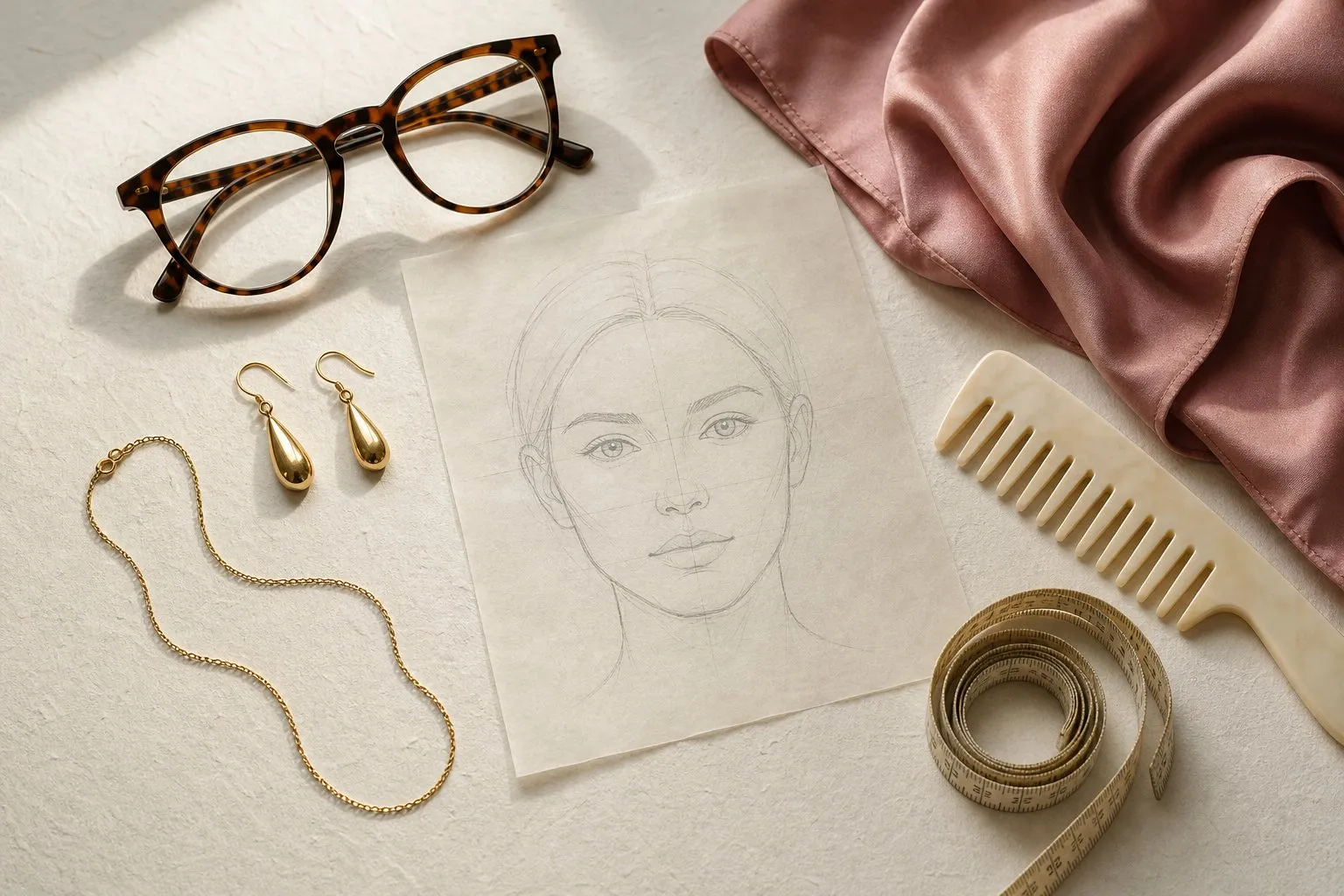
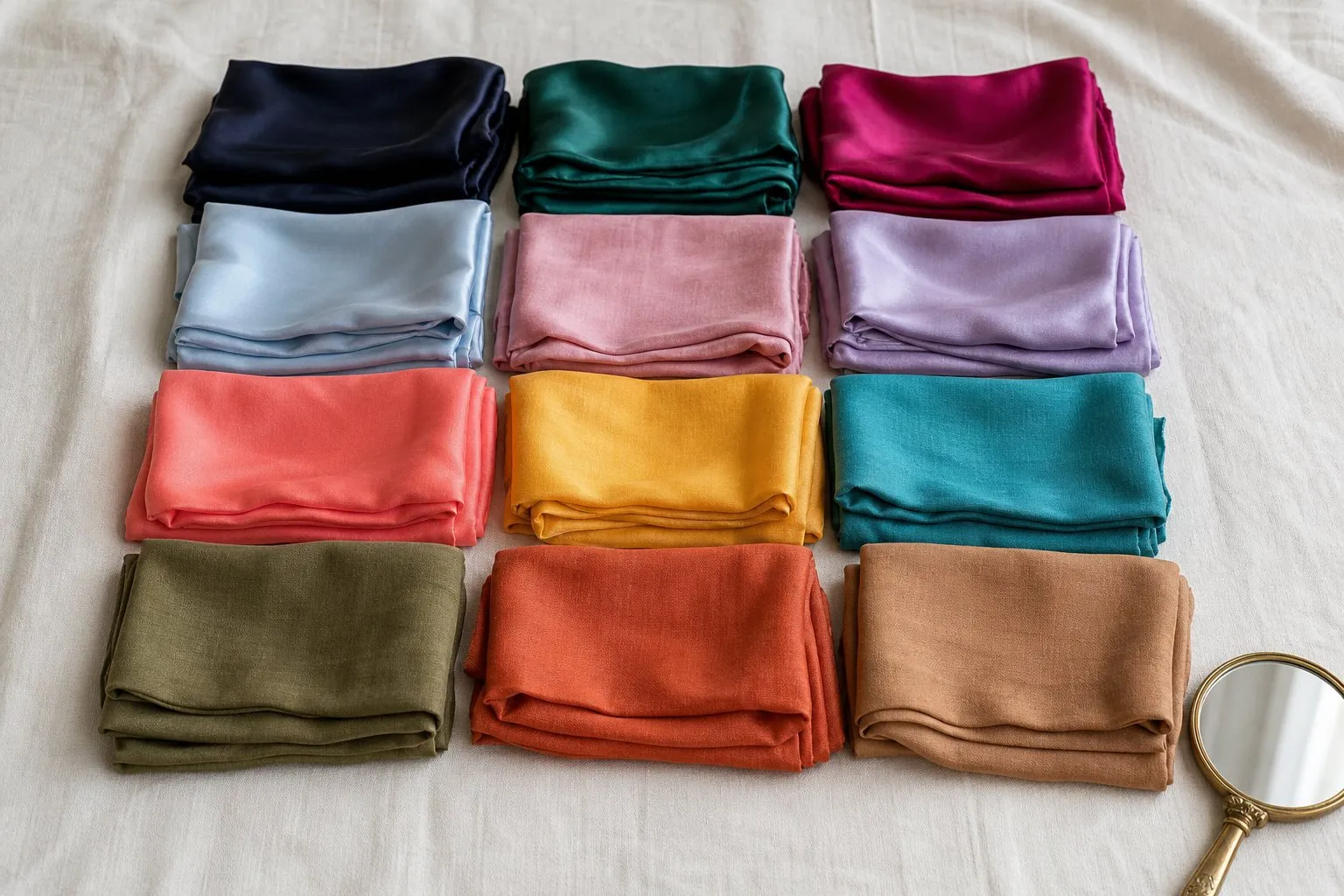
To find your style, work in two passes. The first pass reads what you have: face shape, eye shape, skin tone, hair color, eye color, color season and body shape. It takes a ruler, a tape measure and daylight. The second pass decides what you like. Then the first filters the second, so that from everything you like you keep the versions that work on you.
Face shapes, color seasons, body shapes and Kibbe types are styling frameworks. They sort what you see into names so that advice can be matched to it. None of them measures your worth or your health.
The order, and why it matters
The steps go from what can be measured to what has to be judged. A ruler gives the same answer on any day, while two fabrics under your chin take daylight and a second look, and taste can change with the season. Doing the firm steps first means the later ones have something to stand on.
One step also depends on others. A color season is built from skin, hair and eyes, so those three come before it.
| Step | Feature | How you read it | What it changes |
|---|---|---|---|
| 1 | Face shape | Four measurements with a ruler | Haircut, glasses, earrings, necklines, contour |
| 2 | Eye shape | Six questions at a mirror | Eyeliner, shadow placement, brows |
| 3 | Skin tone | Depth and undertone, in four tests | Foundation, metals, the base of your season |
| 4 | Hair color | Level and tone at the roots | Contrast, brow color, dye choices |
| 5 | Eye color | A chart, in daylight | Shadow and clothing colors that bring it out |
| 6 | Color season | Twelve questions, then two fabrics | Your whole palette |
| 7 | Body shape | Three tape measurements and one mirror check | Cuts, waist placement, hems |
| 8 | Line and taste | Two short quizzes and your own closet | Silhouettes and the words you dress by |

You don’t have to finish in one sitting, since each step stands alone. Write each result down as you go, because the last section puts them on one page.
Step 1: face shape
Pull your hair back and take four straight measurements with a rigid ruler: forehead, cheekbones, jaw and face length. Our Face Shape Calculator divides three of them by the cheekbone width and ranks seven shapes by how close you are to each. Length counts most.
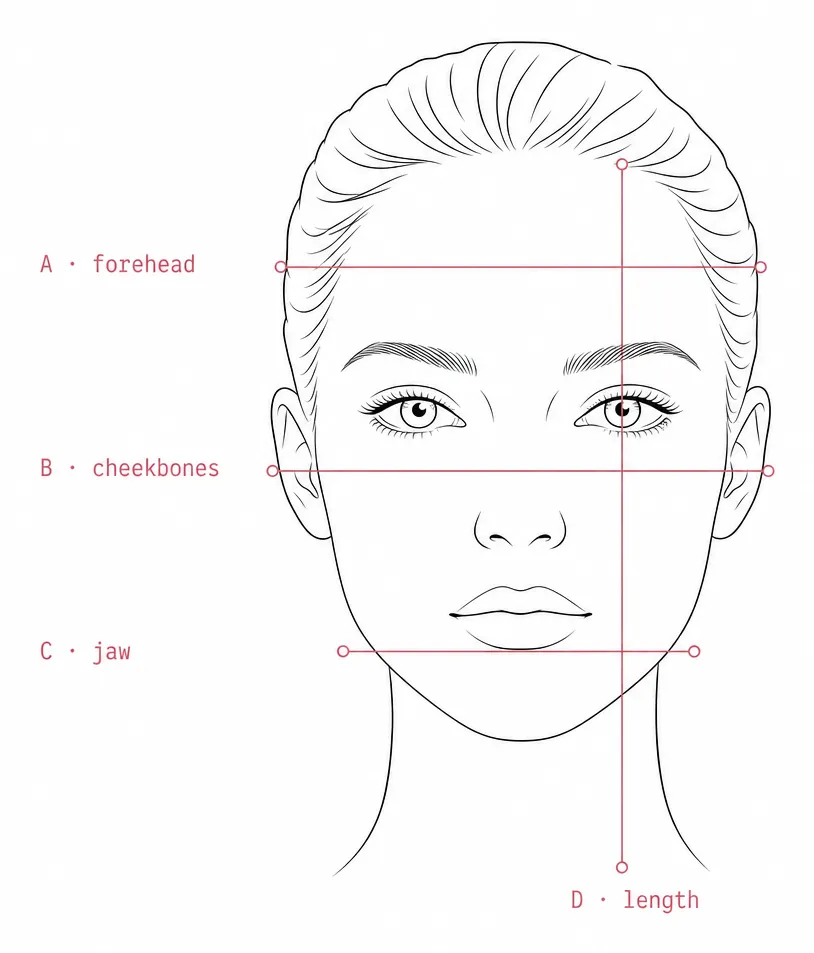
Expect a ranking, with a winner and a runner-up. A gap under 10 points is a close call, and then the advice for both shapes applies.
Face shape decides lines near your face. It tells you where a haircut should end, how wide a frame should be and which shape it should take, where earrings should stop and which necklines help. All seven shapes are compared side by side in what suits your face shape.
Step 2: eye shape
This one doesn’t need a ruler, only a mirror. The eye shape chart asks six questions, such as whether a crease shows when your eyes are open and whether the outer corners sit above or below the inner ones.
Eye shape decides where makeup goes. Liner, shadow placement and the brow arch all follow from it, and the colors come later.
Step 3: skin tone
Skin tone has two parts. Depth is how light or dark you are: fair, light, medium, tan or deep. Undertone is the hue beneath that: cool, warm, neutral or olive. Your name on the chart is one of each, such as “light, cool”.
The skin tone chart finds the undertone in four tests. The quickest is gold against silver in daylight. Olive is easy to miss, and it has its own guide.
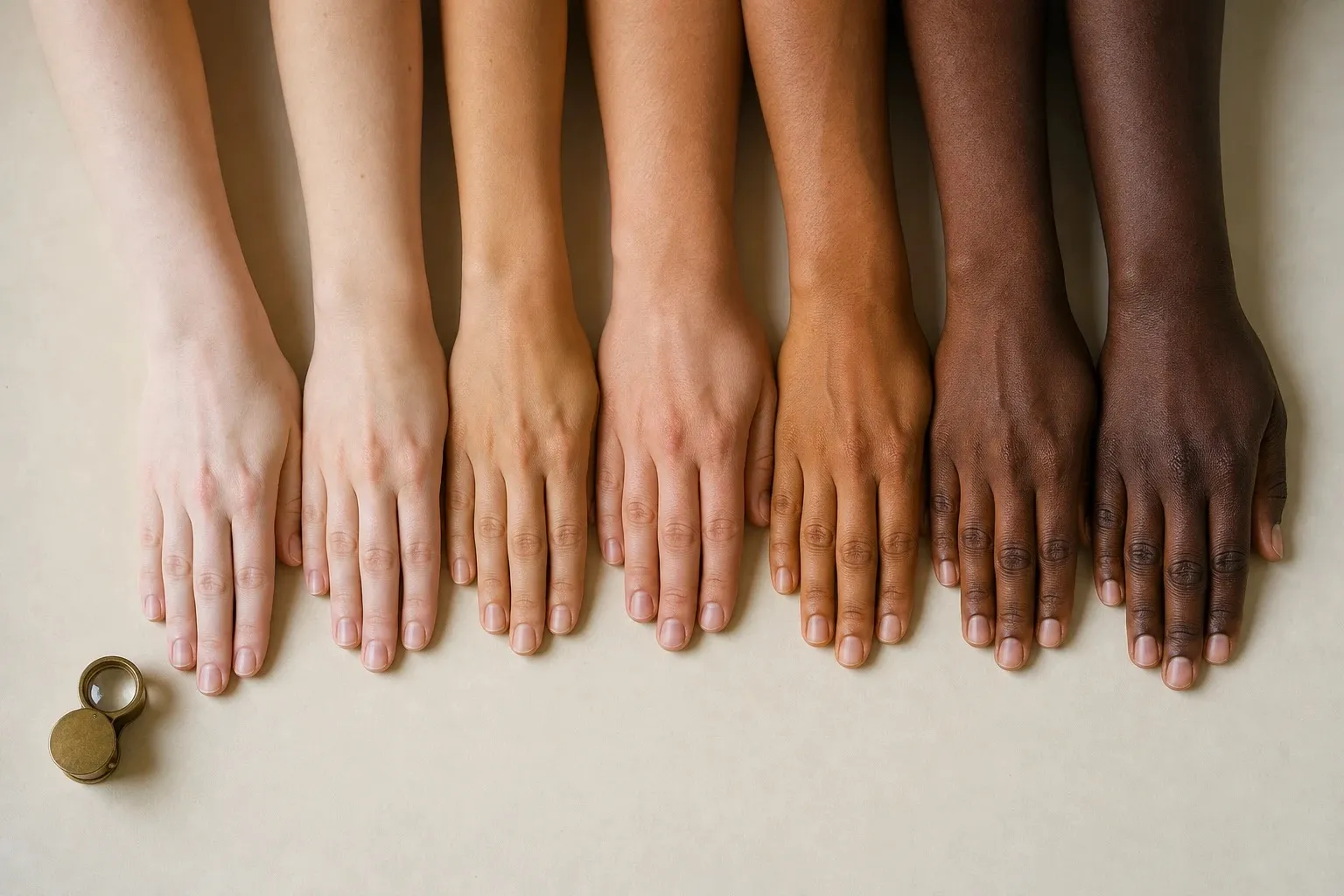
Skin tone decides your foundation shade and whether gold or silver sits better on you. It’s also the first of the three inputs to your color season, and the strongest.
Step 4: hair color
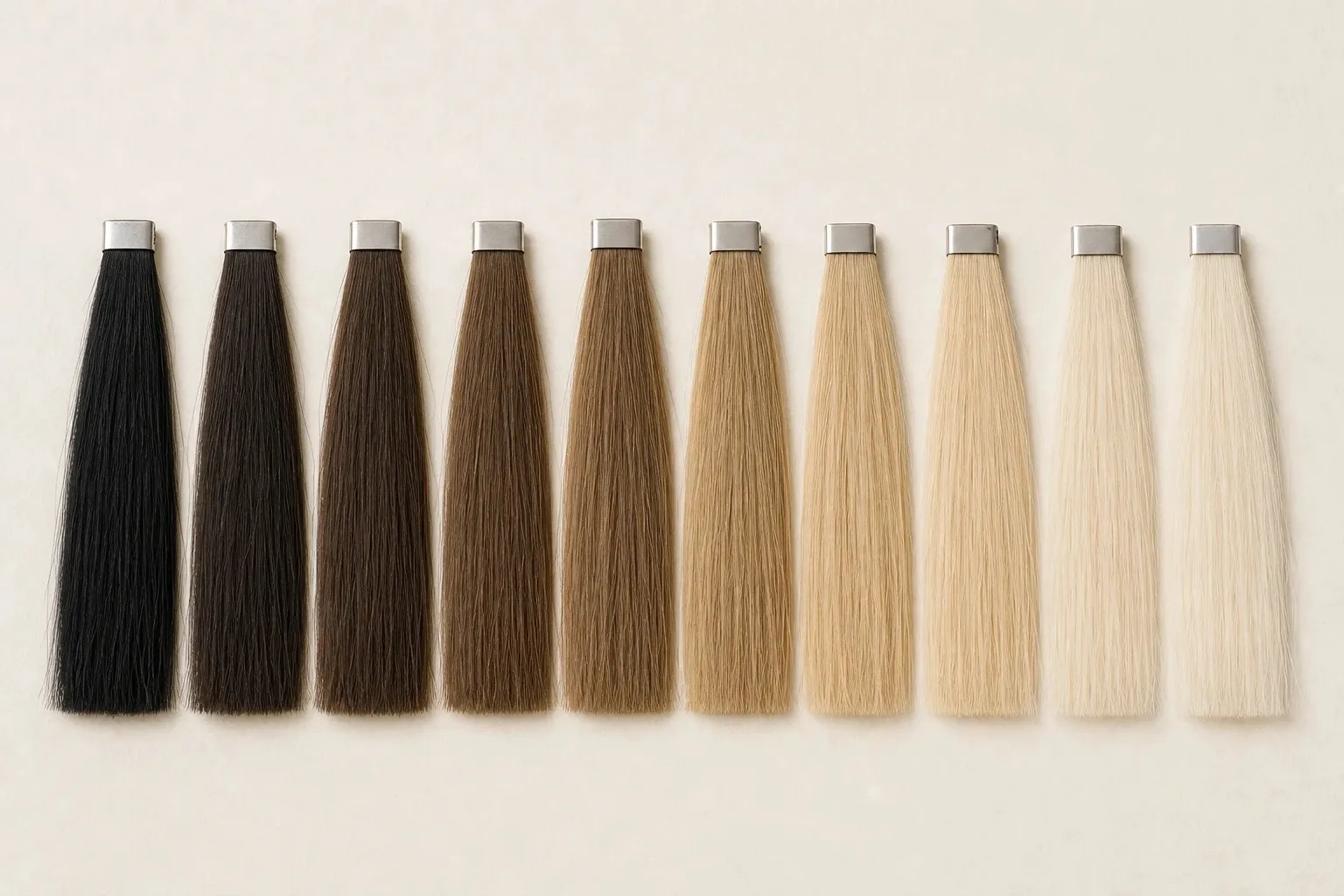
Read your natural color at the roots, on dry hair, in daylight. It has two parts as well. Level is depth, from 1 (black) to 10 (lightest blonde). Tone is the lean: ash, neutral, golden or copper.
- 1 Black
- 2 Darkest brown
- 3 Dark brown
- 4 Medium brown
- 5 Light brown
- 6 Dark blonde
- 7 Medium blonde
- 8 Light blonde
- 9 Very light blonde
- 10 Lightest blonde
The hair color chart has the full test. If your hair is dyed, use the regrowth. If it’s gray, use the color it was before.
Hair level sets your contrast. Dark hair beside light skin is high contrast, and hair close to your skin in depth is low. Contrast decides how strong the colors and patterns near your face can be. Hair tone also sets brow color and narrows the dye shades that suit your skin.
Step 5: eye color
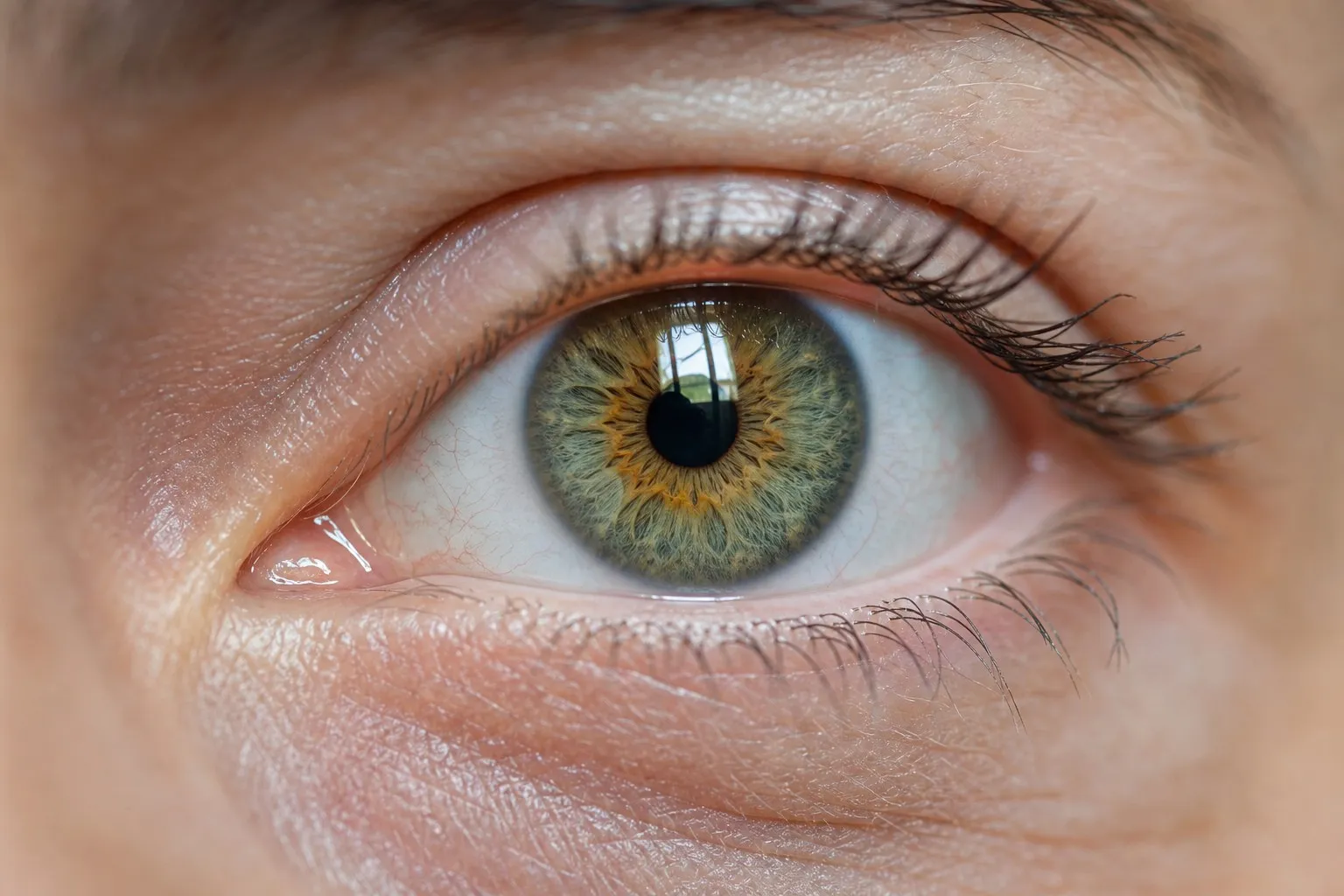
Look at your eyes in daylight, by a window, without a colored top on. The eye color chart names the color, including the mixed ones such as hazel and gray-green.
Eye color is the smallest of the three color areas. It decides which eyeshadow shades and which colors near your face make the iris stand out. In our quiz it mostly moves chroma. Clear, bright eyes raise it, and soft, grayed ones lower it.
Step 6: color season
Now the three color readings combine. Our Color Season Quiz asks twelve questions and scores three axes: temperature (cool to warm), value (light to deep) and chroma (soft to bright). The strongest axis picks the family and the second picks the side, which gives one of twelve seasons.
Winter
Summer
Spring
Autumn
Treat the quiz result as a first answer and check it with fabric. Two colors that differ on one axis, held under your chin in daylight, will usually settle it. Seasonal color analysis explains which pairs to use.
The season decides color everywhere: clothes near the face, lipstick and blush, hair tone, frame color and metals.
Step 7: body shape
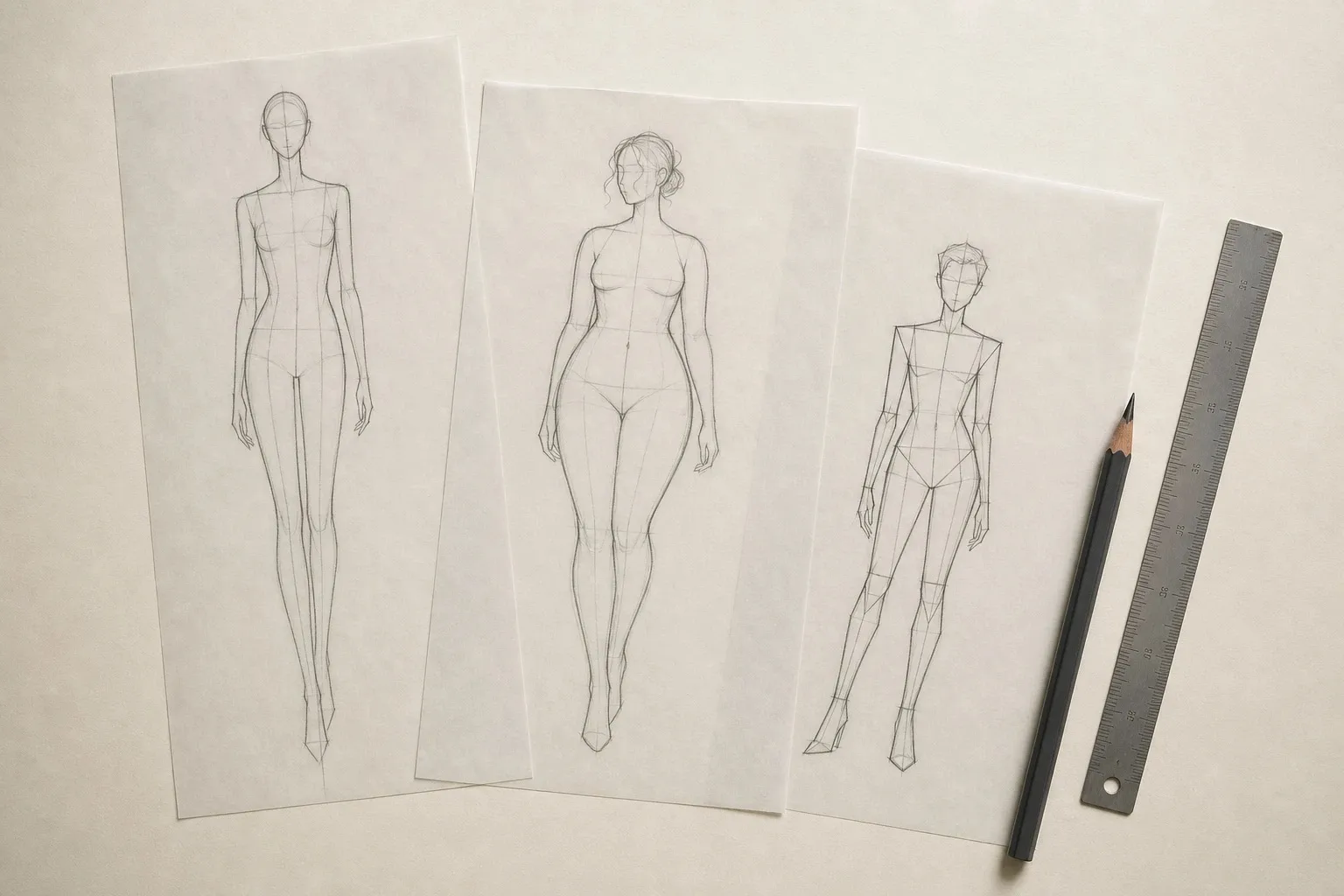
Measure bust, natural waist and hips with a soft tape held level. Our Body Shape Calculator turns them into two ratios, bust to hips and waist to hips, and ranks five shapes. A mirror check of shoulders against hips adjusts the result.
Shape is a proportion, so it appears at every size, and most bodies sit between two shapes.
Body shape decides cuts. It tells you where a waistband and a hem should land and which part of an outfit should carry the detail. The same guide covers frame size, which sets the scale of jewelry and prints.
Step 8: line and taste
The last step is the least exact, so it comes last.
The Kibbe Test reads the overall line of your body in fourteen questions and returns one of ten image identities. It answers a different question from body shape: which silhouettes follow you, long and sharp or soft and curved. Kibbe body types explains the system and its limits.
The Style Quiz is the taste pass. Nine questions about what you wear and what you admire place you among eight style personalities and suggest three words to dress by. The three-word method comes from stylist Allison Bornstein’s book Wear It Well (2023). Your closet is the check on the quiz. The clothes you wear most say more than any answer you tick, and the closet audit shows how to read them.
How your features work together
Every decision near your face or on your body has two parts, a line and a color. Different features answer each part.
| Decision | What sets the line or size | What sets the color |
|---|---|---|
| Glasses | Face shape: frame width and shape | Season: frame color and metal |
| Haircut and hair color | Face shape: where the cut ends | Undertone and contrast: tone and level |
| Brows | Face shape and eye shape: the arch | Hair color: brow shade |
| Eye makeup | Eye shape: where liner and shadow go | Eye color and season: which shades |
| Blush and contour | Face shape: placement | Season: shade |
| Necklines and necklaces | Face shape, neck and bust | Season, for anything worn at the neck |
| Prints and jewelry | Frame size: scale | Contrast: how strong |
| Clothes | Body shape and line: the cut | Season: the color |
This is why the readings rarely collide. Face shape has nothing to say about frame color, and your season has nothing to say about frame width. Glasses are covered from both sides in what glasses suit your face and in frames and metals.
Taste sits above the table. The features tell you which version of a piece works, and taste decides whether you want the piece at all. If your three words say Edgy and your season is Soft Summer, the biker jacket stays and its color moves from black to slate or soft navy.
Sometimes a chart and your taste disagree outright. A round face is told to add angles, and you may love round frames. Then choose with open eyes. Echoing a feature makes it the point of the look, contrasting with it balances it, and both are legitimate choices.
Your profile on one page
Put the results in one place. A filled-in profile looks like this:
| Feature | Example result | Where it came from |
|---|---|---|
| Face shape | Oval, runner-up round | Face Shape Calculator |
| Eye shape | Almond | Eye shape chart |
| Skin tone | Light, cool | Skin tone chart |
| Hair color | Level 6, ash | Hair color chart |
| Eye color | Gray-blue | Eye color chart |
| Color season | Soft Summer | Color Season Quiz |
| Body shape | Rectangle | Body Shape Calculator |
| Style words | Tailored, Polished, Calm | Style Quiz |
The five tools can save their results in your browser. Nothing is sent to a server, and a saved result stays on that device.
With the page filled in, shopping questions get shorter. A frame has to match the face row for shape and the season row for color. A dress has to match the body row for cut, the season row for color and at least one of your three words. Anything that fails two rows can stay in the shop.

Redo the measurements when something changes. Weight moves the body ratios and can move a face result near a border. Gray hair can lower contrast. Taste shifts on its own schedule, so retake the Style Quiz whenever your three words stop helping you choose.