HourglassB ≈ D, waist clearly smaller
Bust and hips are balanced and the waist is defined. Wrap dresses, belted coats and fitted waists follow the line you already have.
Your body shape is a set of proportions, not a verdict. Three numbers and a mirror tell you where to add structure, where to define and where to let fabric fall.
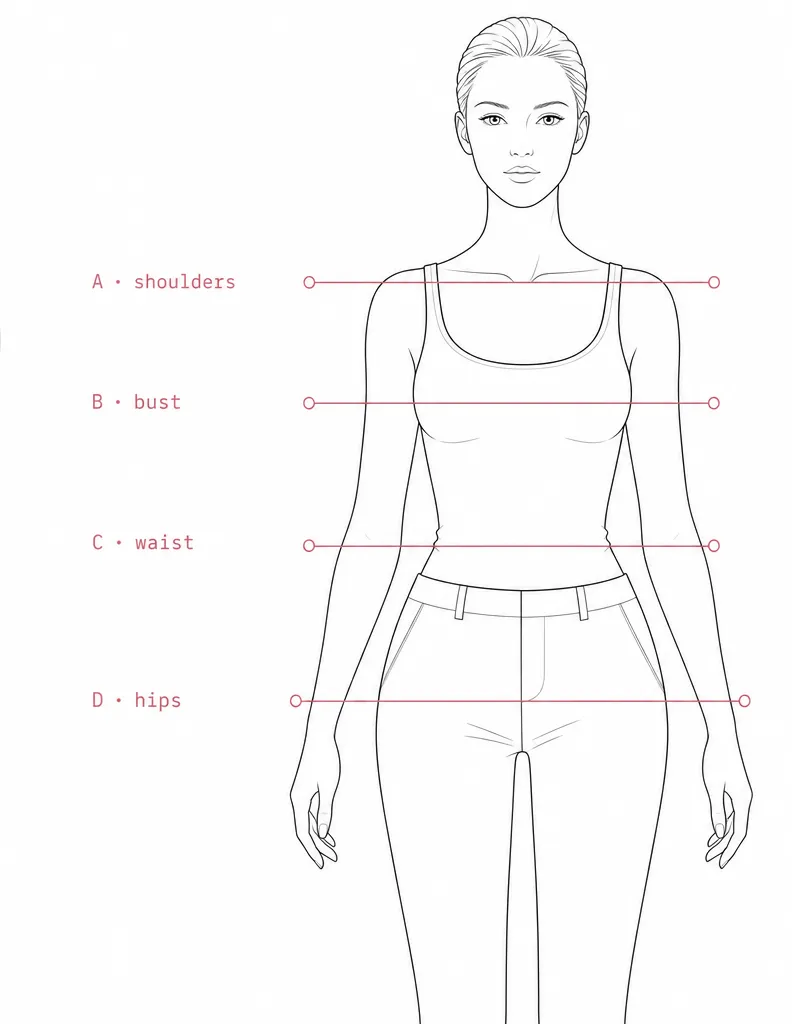
Look, don’t measure: in a mirror, are your shoulders wider than your hips, about the same, or narrower?
Measure around the fullest part of your bust, tape level across your back, in a light bra.
Measure around your natural waist, the narrowest part of your torso, after a normal breath out.
Measure around the fullest part of your hips and seat, feet together, tape level.
These five shapes describe the relationship between bust, waist and hips. They say nothing about size, and none of them is better than another.
Bust and hips are balanced and the waist is defined. Wrap dresses, belted coats and fitted waists follow the line you already have.
Hips are wider than bust, with a defined waist. Structure and detail at the shoulders, and A-line or straight skirts, balance the lower half.
Bust and hips are balanced and the waist is only lightly defined. Dress the line with structure and vertical emphasis. See what to wear for a rectangle shape.
Shoulders or bust are wider than the hips. Soft, simple tops with volume and detail below the waist even out the line.
Weight is carried through the middle, often with slimmer legs. Empire lines, open necklines and fabrics that skim rather than cling work well.
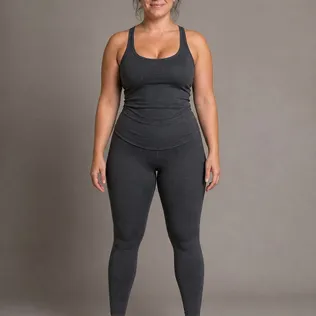
Measure bust, waist and hips the way fitting professionals do, then read your body shape from two simple ratios. Plus the common mistakes that skew the numbers.
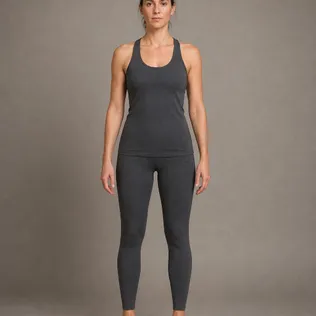
A rectangle body shape has balanced bust and hips and a gently defined waist. How to dress it with structure, vertical lines and smart waist definition.
Measuring is more reliable: mirrors and photos exaggerate whatever you already worry about. Three tape measurements take two minutes.
Proportions often stay similar as weight changes, because they depend largely on your frame. Where you gain first can shift the read, so re-measure after big changes.
No. Kibbe types combine bone structure, flesh and facial features into style identities. The five shapes here are only about bust, waist and hip proportions.