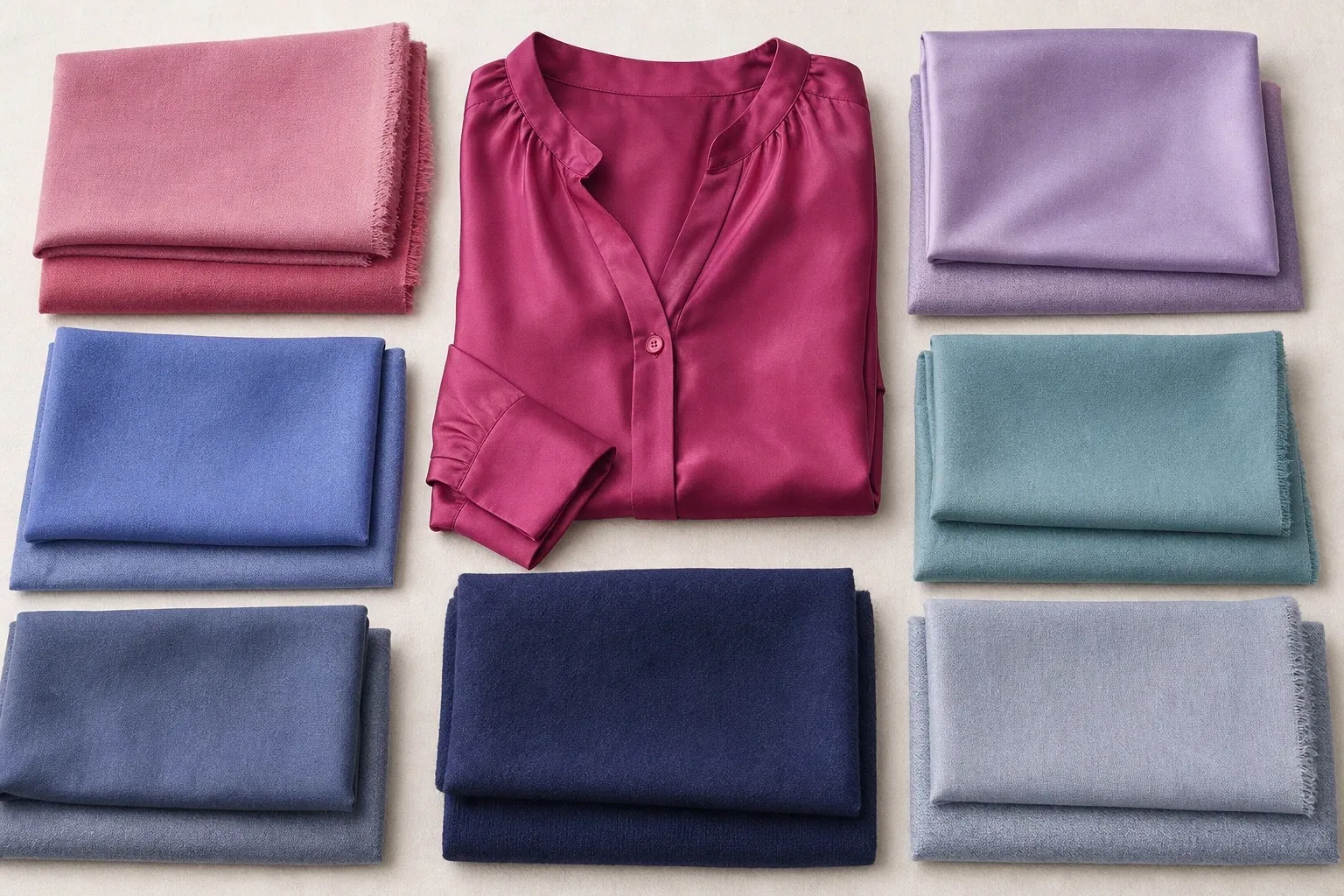
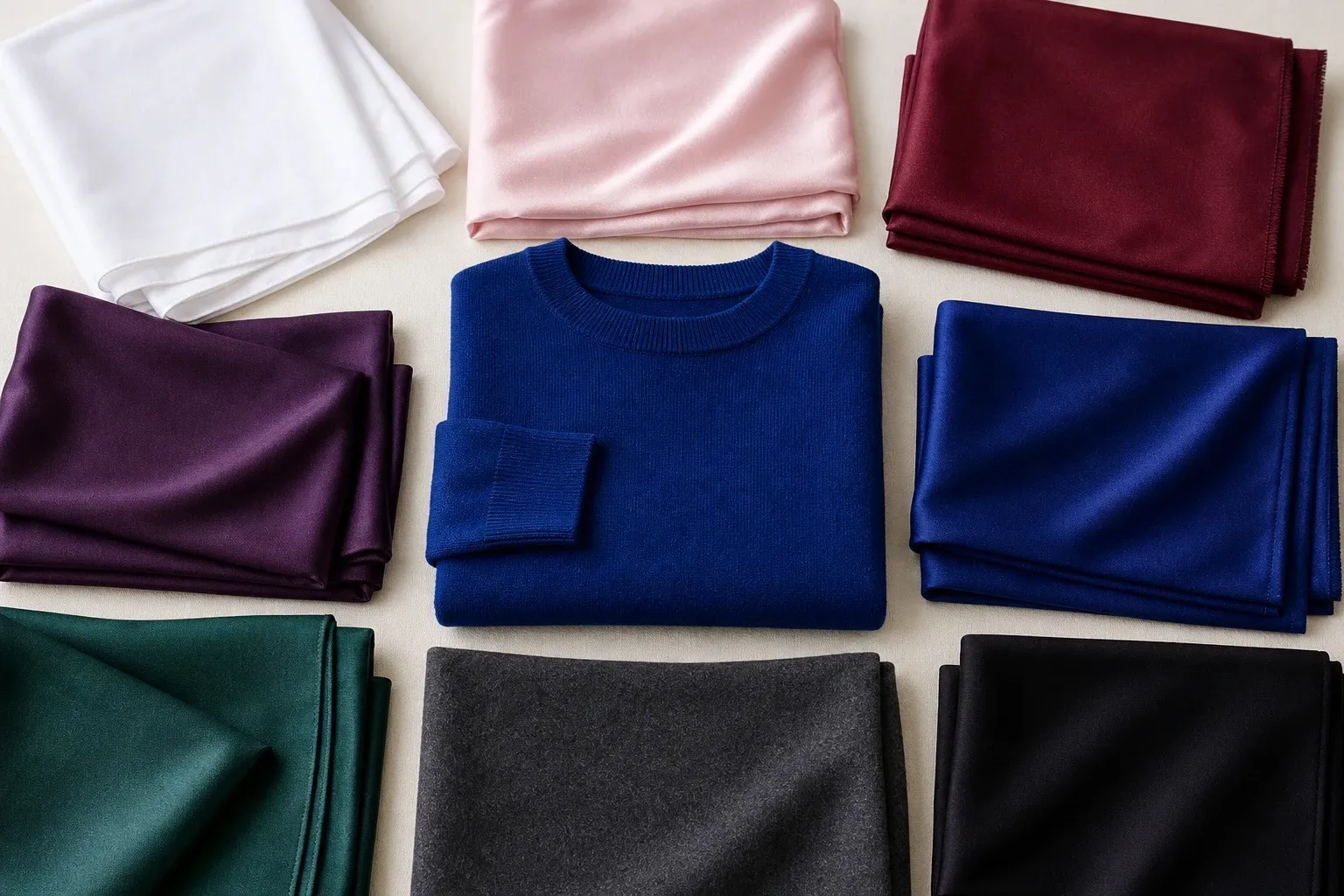
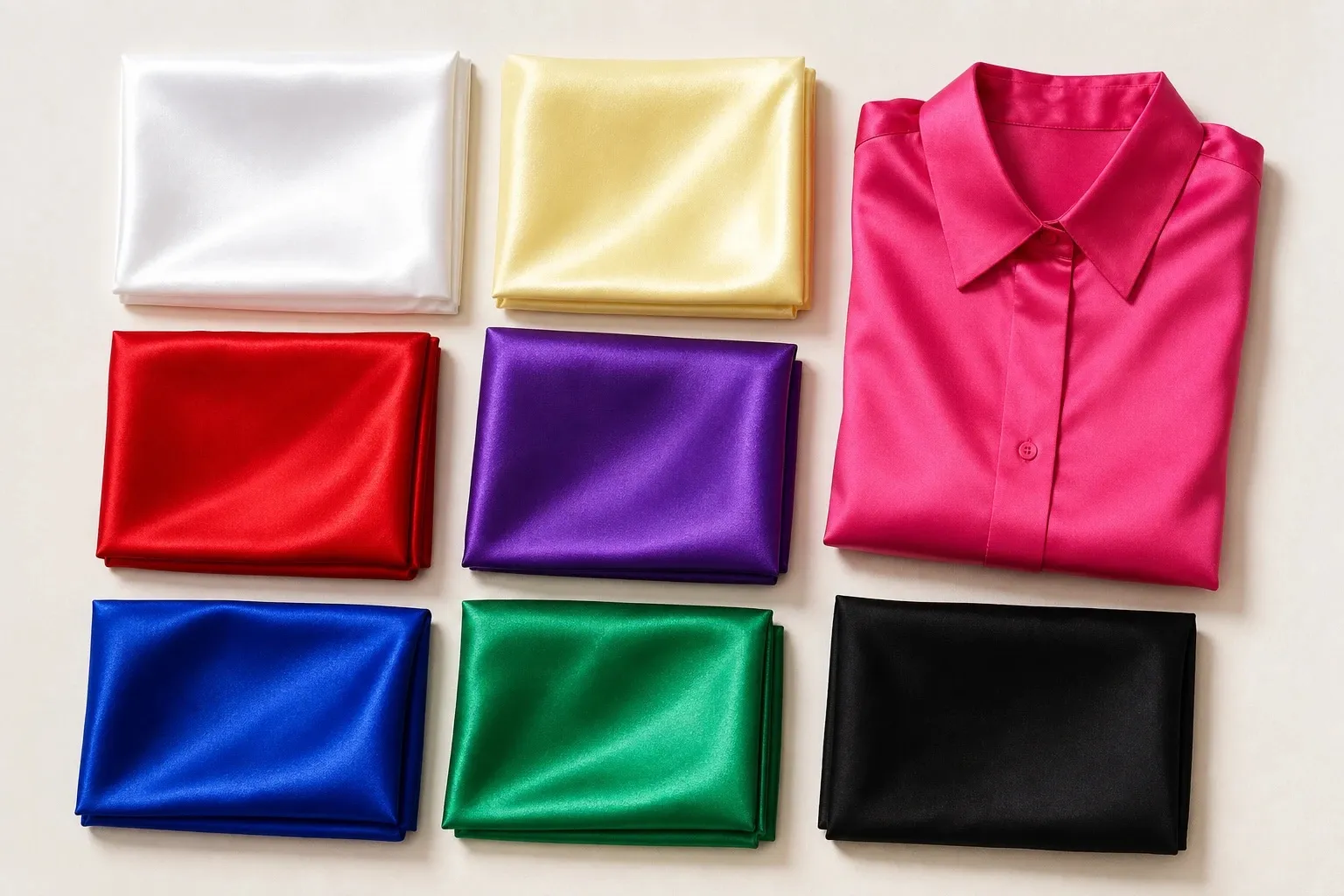
True Winter, also called Cool Winter, is cool first and clear second, and it is the coolest of the three Winters. Its palette puts true red, fuchsia, royal blue and emerald against black and pure white, with icy lavender and silver gray as the quiet colors and no earth tones at all. If coolness is your strongest trait and black with white looks natural on you, this is your palette. If depth or brightness leads, you are one of the other two Winters, and if your coolness is soft rather than crisp, you are a True Summer.
- white
- icy lavender
- true red
- fuchsia
- royal blue
- emerald
- silver gray
- black
What True Winter coloring looks like
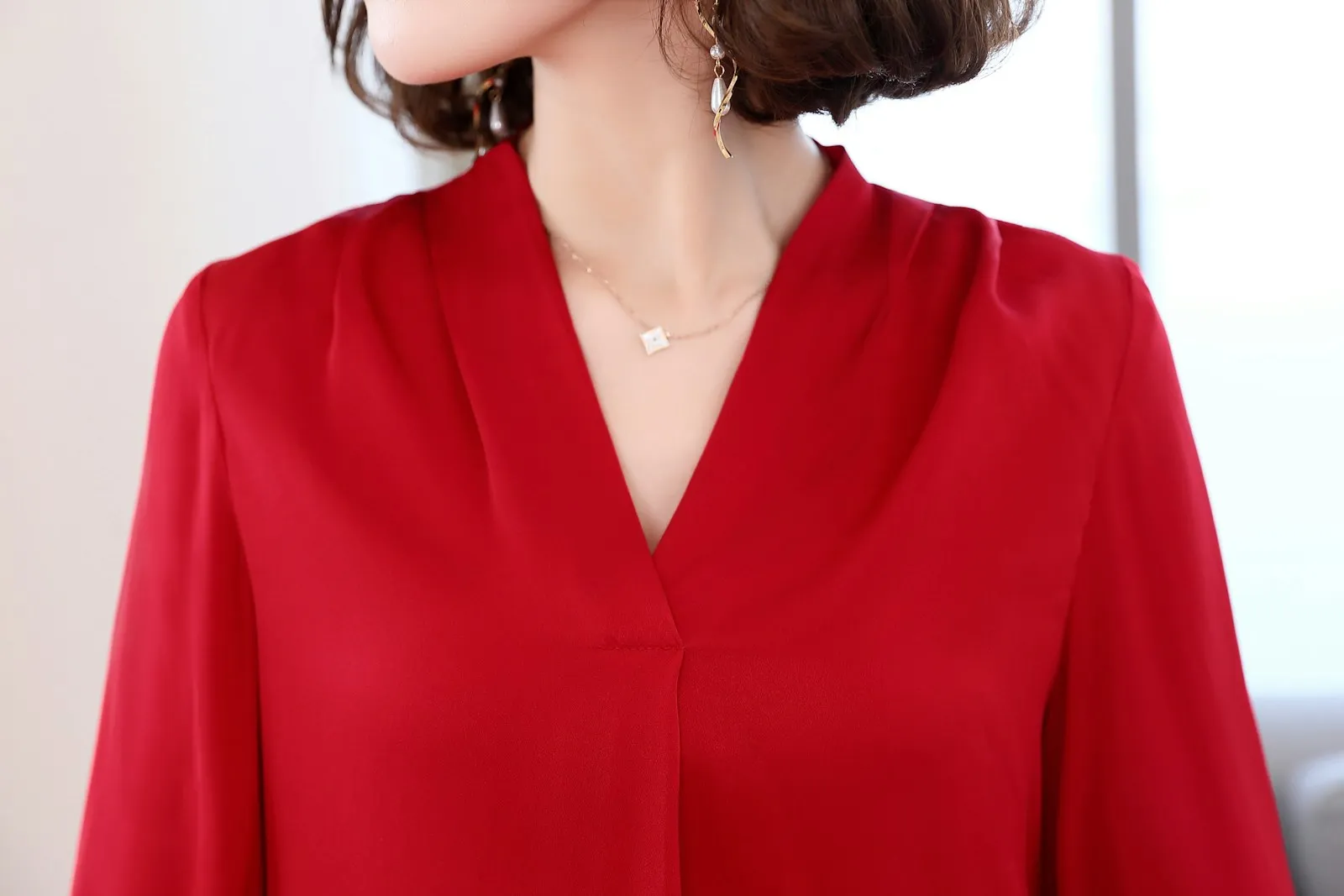
Coolness runs through the whole face. Skin tends to show pink or rose rather than gold, at any depth from porcelain to very deep. Hair is often dark brown to black, with an ash or blue sheen rather than red glints. Eyes are commonly cool blue, gray or a cool brown, and the whites look bright beside the iris.

On the three axes, True Winter is defined by temperature. It sits further toward cool than the other Winters, clear rather than soft, with value anywhere from medium to deep. Deep Winter and Bright Winter each border a warm season, Deep Autumn and Bright Spring, which pulls them slightly toward neutral; True Winter has no warm neighbor. Undertones and color seasons are a styling framework, not a measurement of your skin. Where we cite research, we say what it measured. On a True Winter the signs are easy to see in a mirror: orange and gold make the skin look sallow, soft heathered colors look dull, and black with pure white looks natural rather than harsh.
Contrast is high and nothing in the face looks dusty. A black-and-white photo shows it plainly: hair and brows stand well apart from the skin, and the eyes keep their sparkle without color to help them.
The True Winter palette by role
| Role | True Winter colors | Where it goes |
|---|---|---|
| Light neutral | White | Shirts and tops under the face |
| Mid neutral | Silver gray | Knits, tailoring, quieter days |
| Dark neutral | Black | Coats, trousers, shoes |
| Accents | Icy lavender, fuchsia, royal blue, emerald | Tops, jackets, scarves |
| Signature | True red | The color you repeat most |
True red is the signature: a red that leans neither orange nor brown, which is why it reads clean beside black and white. Fuchsia is the cool pink at full strength, royal blue the clear blue and emerald the green. None of them has gray or brown mixed in, and none is pushed to the electric edge that Bright Winter wears.
Icy lavender does the job a pastel does for softer seasons, light but still clear, and silver gray is the one color that looks soft, kept light and cool. There are no browns, beiges or golden yellows in the palette at all, and its avoid list names warm earth tones first.
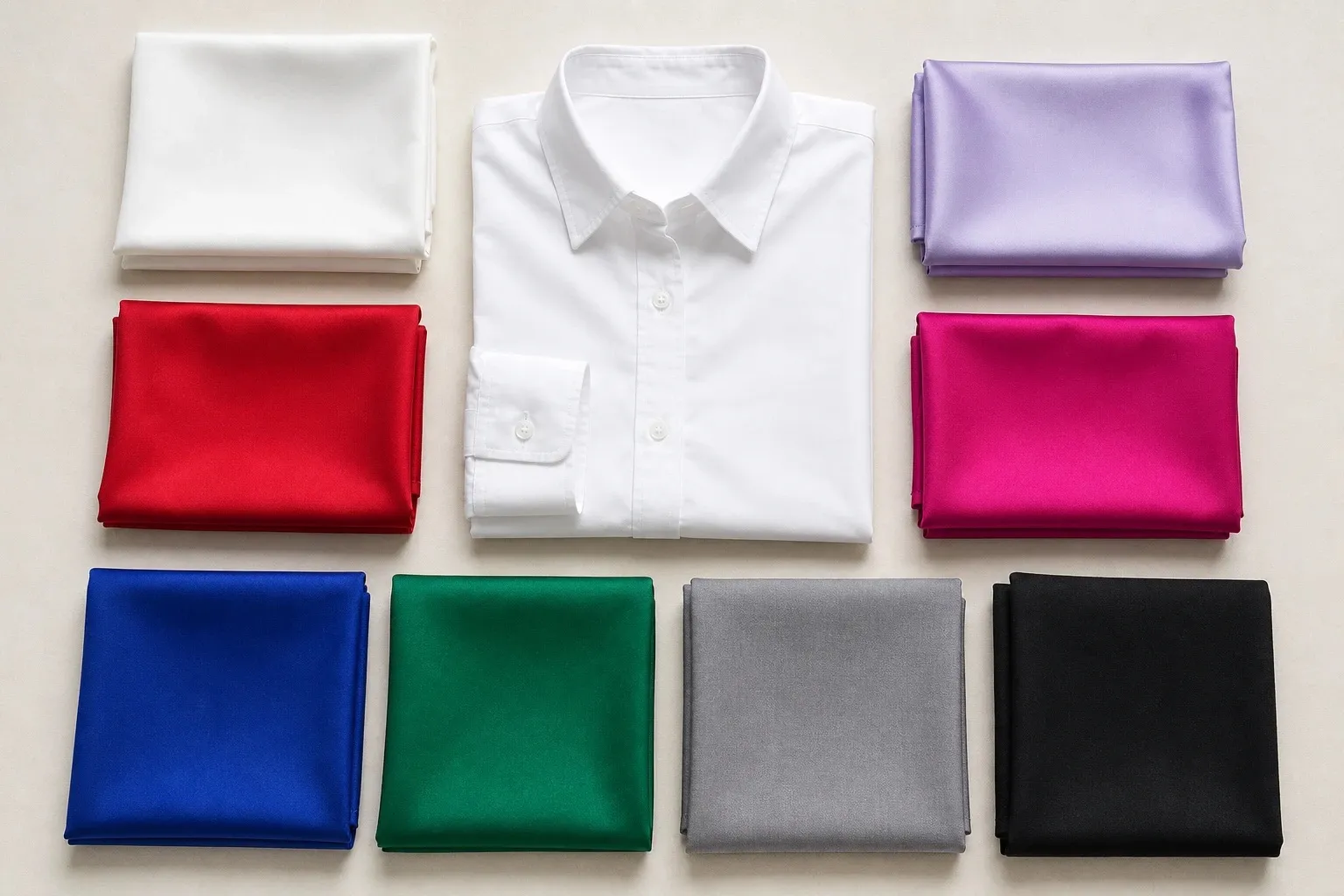
Neutrals: black, white, ivory and navy
| Neutral | Verdict | How to wear it |
|---|---|---|
| Black | Yes | Beside pure white, at full contrast |
| Pure white | Yes, your light neutral | Shirts, T-shirts, collars |
| Silver gray | Yes, your mid neutral | Knitwear and tailoring |
| Charcoal | Works | A darker alternative to silver gray |
| Navy | A clear, dark navy | Suits and coats when black feels heavy |
| Ivory, cream | Swap for pure white | Trousers or skirts, not tops |
| Brown, camel, beige | Leave out near the face | Shoes or a belt at most |
True Winter can wear black and pure white together at full strength, like ink on paper. Only a face with a similar gap between hair and skin carries that pairing without looking stark, and it is the base of most True Winter outfits. Graphic black-and-white prints, such as stripes and houndstooth, repeat it.
Ivory is the question Winters ask most. Under a True Winter face it usually loses: ivory and cream carry a little warmth and softness, and next to cool, clear skin they make the teeth and the whites of the eyes look duller rather than brighter. For a wedding or an occasion dress, the True Winter white is pure white or an icy white, and ivory and champagne are the harder choices.

Navy is a useful second dark, as long as it is clear and close to ink; a grayish navy is a Summer color. Brown is where True Winter has the least room of the three Winters. Black, charcoal and navy do everything brown would do and do it better, so keep brown to shoes and belts. A black-brown knit can pass, but compare it with a black one in daylight before it stays.
True Winter colors by hue
Reds and pinks. True red and fuchsia, both at full strength. A true red sits close to the middle of the temperature range, leaning very slightly cool, which also makes it the safest red for anyone near neutral. For everyday lips and cheeks, a cool pink is the softer version. Dusty rose and mauve look gray against True Winter contrast.
Blues and greens. Royal blue and emerald, both clear. Royal blue against cornflower is a clarity question rather than a temperature one: both are cool, but cornflower is softened and belongs to True Summer. Teal and turquoise lean toward green, which puts them on the warm side of blue; emerald covers that slot instead.
Purples. Icy lavender at the light end and fuchsia where a stronger purple-pink is needed. Soft violet, its grayed cousin, sits in the True Summer palette instead.

Yellows and oranges. None. Golden yellow and mustard are on the avoid list, and so is orange in every depth. When an outfit needs a light, bright note, pure white or icy lavender does the job that yellow does in warmer palettes.
Colors to avoid, and the swap for each
The palette avoids warm earth tones, orange and gold. All three fight the cool undertone: next to them cool skin turns sallow, and redness around the nose and cheeks shows up more. Earth tones are muted as well, so they miss on clarity too, and soft heathered colors fail for that reason even when they are cool.
| Avoid | Misses on | Wear instead |
|---|---|---|
| Orange, pumpkin | Temperature | True red |
| Rust, terracotta | Temperature, clarity | True red, fuchsia |
| Mustard, golden yellow | Temperature | Emerald or royal blue for color, icy lavender for light |
| Camel, beige | Temperature, clarity | Silver gray |
| Chocolate, golden brown | Temperature | Black, charcoal |
| Olive, khaki | Temperature, clarity | Emerald |
| Ivory, cream | Temperature, clarity | Pure white |
| Mauve, dusty rose | Clarity | Fuchsia, icy lavender |
| Oatmeal, heathered beige | Temperature, clarity | Silver gray |
Each swap does the job the avoided color was doing: a strong color for a strong one, a light neutral for a light one. Gold counts twice on this list, as a color and as a metal near the face, and it slips in through details: gold buttons on a black blazer, a camel coat over a white shirt, a golden-brown bag carried at chest height.
Below the waist the rules relax. Khaki trousers under a white shirt and a royal blue jacket barely touch the face, since only what sits near the chin bounces its color up onto the skin.
Bright, True or Deep Winter: which one is yours
All three Winters share cool or neutral-cool skin, a visible gap between hair and skin, and eyes that look clear against the whites. They also share what fails: orange, gold-based colors and dusty, earthy shades. The four-season system in Carole Jackson’s Color Me Beautiful (1980) had one Winter. Twelve-season systems split it into three by the trait that leads.
Deep Winter is the dark end: burgundy, deep plum, sapphire and charcoal suit dark hair and eyes. You may see it called Dark Winter. True Winter is the center and the coolest. Bright Winter is the intense end: hot pink, electric blue and vivid purple suit coloring that sparkles, usually in the eyes. Some systems call it Clear Winter.
- white
- icy pink
- burgundy
- deep plum
- sapphire
- emerald
- charcoal
- black
- white
- icy lemon
- hot pink
- true red
- vivid purple
- electric blue
- bright emerald
- black
Every Winter can wear black. The difference is what goes next to it.
Six questions sort the three. Answer D, T or B for each and count the letters.
- From across a room, your coloring reads as: dark and dramatic (D); cool and crisp (T); sparkling, with your eyes noticed first (B).
- Your eyes: dark brown or black-brown (D); cool blue, gray or cool brown (T); bright blue, green or a clear brown that stands out sharply (B).
- The best red under your chin: burgundy (D); true red (T); hot pink (B).
- The best blue: sapphire (D); royal blue (T); electric blue (B).
- The best icy accent: icy pink (D); icy lavender (T); icy lemon (B).
- When a color fails on you, it is usually: too pale (D); too warm or yellow (T); too dull or dusty (B).
Four of one letter settles it. A three-three split puts you on a border inside the family. Here is a worked tally: crisp from across a room (T), gray-blue eyes (T), burgundy beating true red (D), royal blue (T), icy lavender (T), and failures that look dusty (B). That is four T, one D and one B, so True Winter, with burgundy worth a second look when you shop for reds.
| Deep Winter | True Winter | Bright Winter | |
|---|---|---|---|
| Strongest trait | Deep | Cool | Bright |
| Sister season | Deep Autumn | True Summer | Bright Spring |
| Red | Burgundy, cranberry | True red | True red, bright cherry |
| Pink | Deep berry, icy pink | Fuchsia | Hot pink |
| Blue | Sapphire | Royal blue | Electric blue |
| Purple | Deep plum | Icy lavender | Vivid purple |
| Icy accent | Icy pink | Icy lavender | Icy lemon |
| Mid neutral | Charcoal | Silver gray | Cool mid gray |
| Black, used as | The everyday neutral | One half of black and white | A frame for vivid color |
| Avoid | Soft muted shades, orange, camel | Warm earth tones, orange, gold | Dusty, muted and earthy colors |
When two letters tie, test where the palettes part. True red beside burgundy shows whether coolness or depth leads; true red beside hot pink shows whether coolness or brightness does. The quiz draws the same lines. A True Winter result usually names another Winter as runner-up, the season of your second-strongest trait: Deep Winter when depth comes second, Bright Winter when clarity does.
True Winter or True Summer?
True Summer is your sister season. It is cool first like you, but softened, as if the colors were seen through a light haze: raspberry, cornflower and navy sit where you wear true red, royal blue and black. Warm or cool is settled already. The question is how much clarity your face can hold.
The quiz will not name True Summer as your runner-up, because the two seasons share their strongest trait. Look at the soft-to-bright marker instead. A True Winter result with that marker close to the middle means you sit near this line, and a few softer answers would tip it to True Summer.
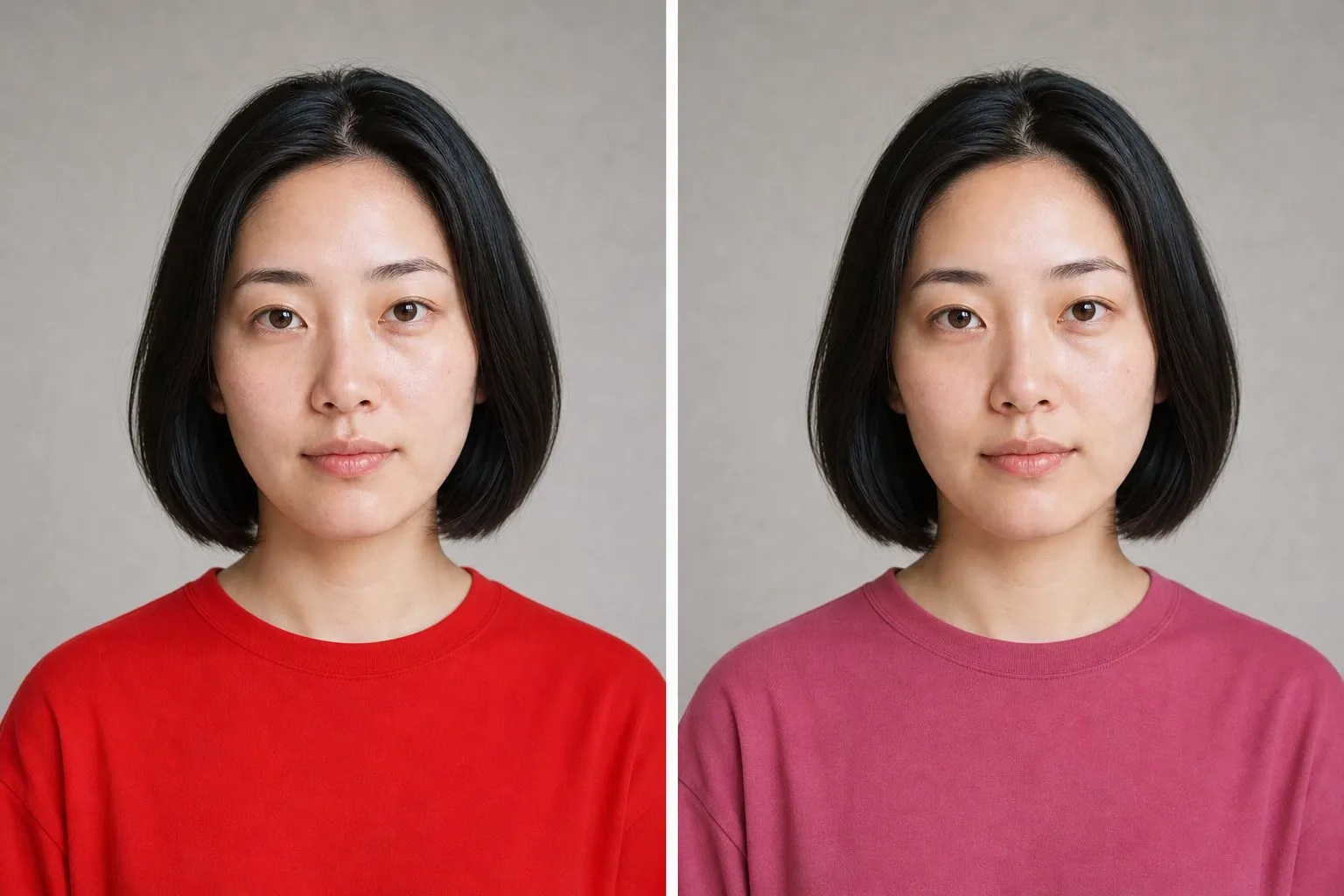
Measure contrast first. Take a photo of your face in daylight, hair loose, no makeup, and switch it to black and white on your phone. Without hue to distract you, you see only value. A jump from very dark hair to light skin suggests high contrast, which points to Winter; a gap of a few shades suggests the medium contrast that most True Summers have.
Then drape, in daylight, bare-faced, with your hair covered:
| Pair | True Summer side | True Winter side | What to watch |
|---|---|---|---|
| Reds | Raspberry | True red | Does the clear red make your skin look clean or flushed? |
| Darks | Slate blue | Black | Does black frame the face or sit like a shadow under it? |
| Blues | Cornflower | Royal blue | Do your eyes look brighter, or does the blue take over? |
Two of three on one side is your answer. If the clear side wins, the softened colors make you look slightly gray or less defined; if the soft side wins, the clear ones look like they are wearing you.
| True Summer | True Winter | |
|---|---|---|
| Contrast | Medium | High |
| Clarity | Softened | Clear |
| Lightest color | Soft white | Pure white, icy lavender |
| Darkest color | Navy | Black |
| Red | Raspberry, rose | True red |
| Blue | Cornflower, slate blue | Royal blue |
| Metal | Brushed silver, pewter | Polished silver, platinum |
When the drapes disagree, wear the cool colors of middling clarity while you decide: navy, berry, a cool medium gray and soft white. The True Summer color palette shows the softer side in full.
- rose
- raspberry
- soft violet
- cornflower
- slate blue
- soft teal
- blue gray
- navy
Outfits and a capsule wardrobe
Start with the pair most seasons cannot wear together. A white shirt, black trousers and a royal blue or fuchsia jacket looks finished on a True Winter and would overpower softer coloring.
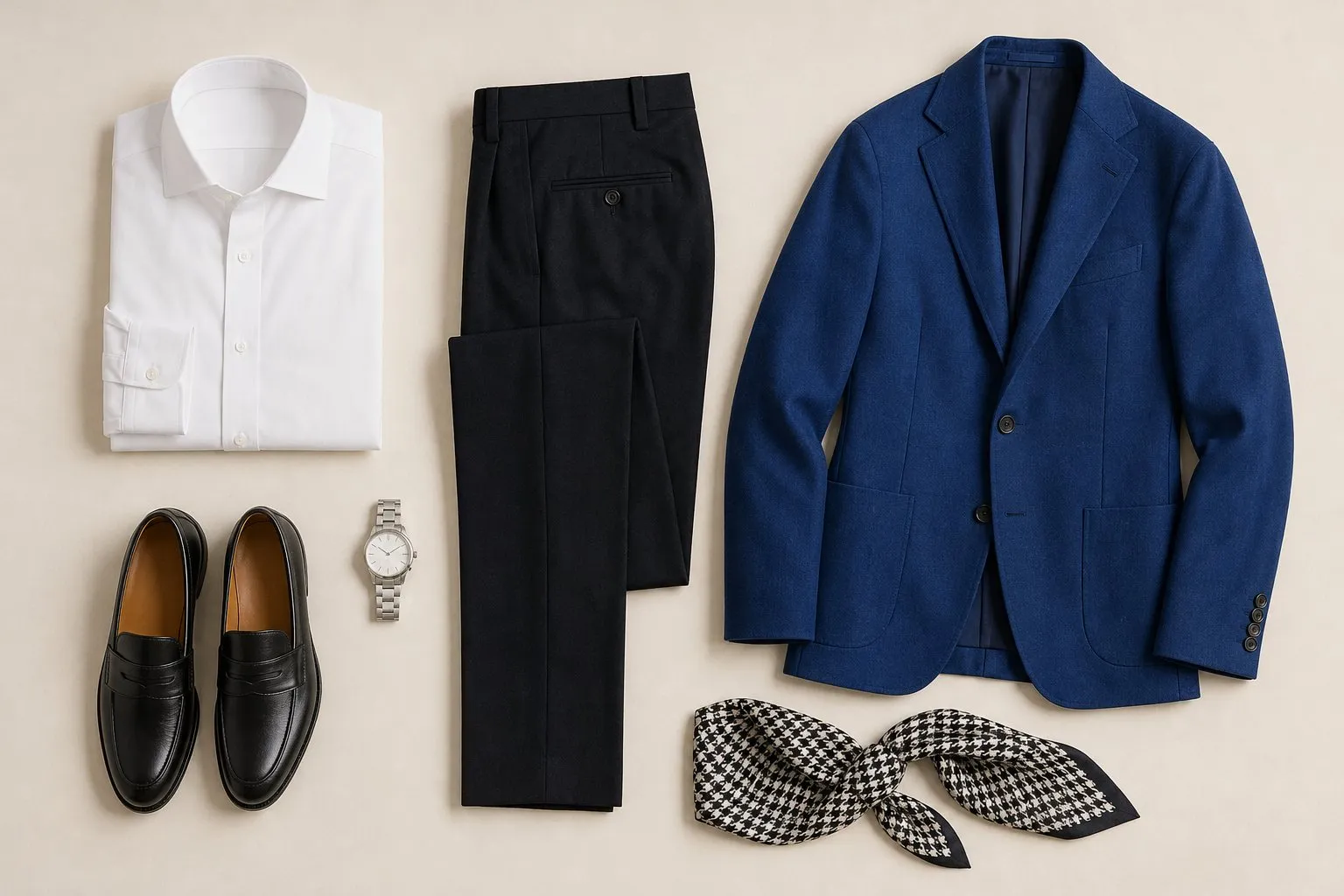
Color blocking suits the palette: royal blue with white, emerald with black, true red with both. Keep each color solid and clean rather than mixing several accents in one print. One strong color per outfit, plus black and white, is a rule that rarely fails, and on quieter days silver gray can stand in for black while the strong color stays near the face.
Crisp fabrics match crisp color: cotton poplin, silk, satin, smooth leather and fine wool all have a clean surface. Washed, faded and nubby textures soften the color, and softness is the one thing this palette does without.
For a capsule, take the three neutrals and four accents from the role table and repeat true red as the signature. Five outfits cover most weeks:
- White shirt, black trousers, a true red scarf or lip.
- Royal blue knit, silver gray trousers, black shoes.
- Black from coat to shoes, with fuchsia at the neck.
- True red dress under a black coat.
- Emerald and royal blue together, over black.
About two thirds of a twenty-piece capsule then sits in black, white and silver gray, and every colored piece goes near the face, where it does the most work.
Hair color for True Winter
| Safe | Stretch | Avoid |
|---|---|---|
| Black, cool dark brown | Icy platinum or silver, with dark brows | Golden, copper, caramel |
Dark, cool hair keeps the contrast that the black-and-white palette relies on. Blue-black and cool dark brown look natural; warm highlights are the usual misstep, because they bring in exactly the gold the palette leaves out.

Of the three Winters, True Winter carries blonde best, as icy platinum or silver worn as a deliberate high-contrast look. Dark brows keep the face defined against the light frame. Golden and honey blondes do not work, at any level.
If your gray grows in steely rather than creamy, it keeps the coolness, though it lowers contrast. Check black at the neckline again once the frame has lightened; icy lavender and royal blue near the face are often the easier picks.
Makeup: lips, cheeks, eyes and nails
| Everyday | Stronger | Finish | |
|---|---|---|---|
| Lips | Cool pink | Fuchsia; true red as the statement | Cream, gloss |
| Blush | Cool pink | Sheer fuchsia | Satin |
| Eyes | Icy lavender, silver gray | Black or royal blue liner | Satin, clean shimmer |
| Nails | Rose-beige or sheer cool pink | True red; black or royal blue | Gloss |
True red lipstick is the True Winter signature in makeup as in clothes, and it looks its best with the rest of the face kept clean: a cool pink blush applied lightly and a precise black or royal blue line rather than a smoky eye. Brown, orange and muted nude lipsticks tend to look dull.
For a nude nail, match the depth of your fingers rather than your face, on the rose side: rose-beige on lighter hands, a deeper rose-brown on deeper ones. A true red or a glossy black is the strongest True Winter manicure.
Metals, glasses, denim and prints
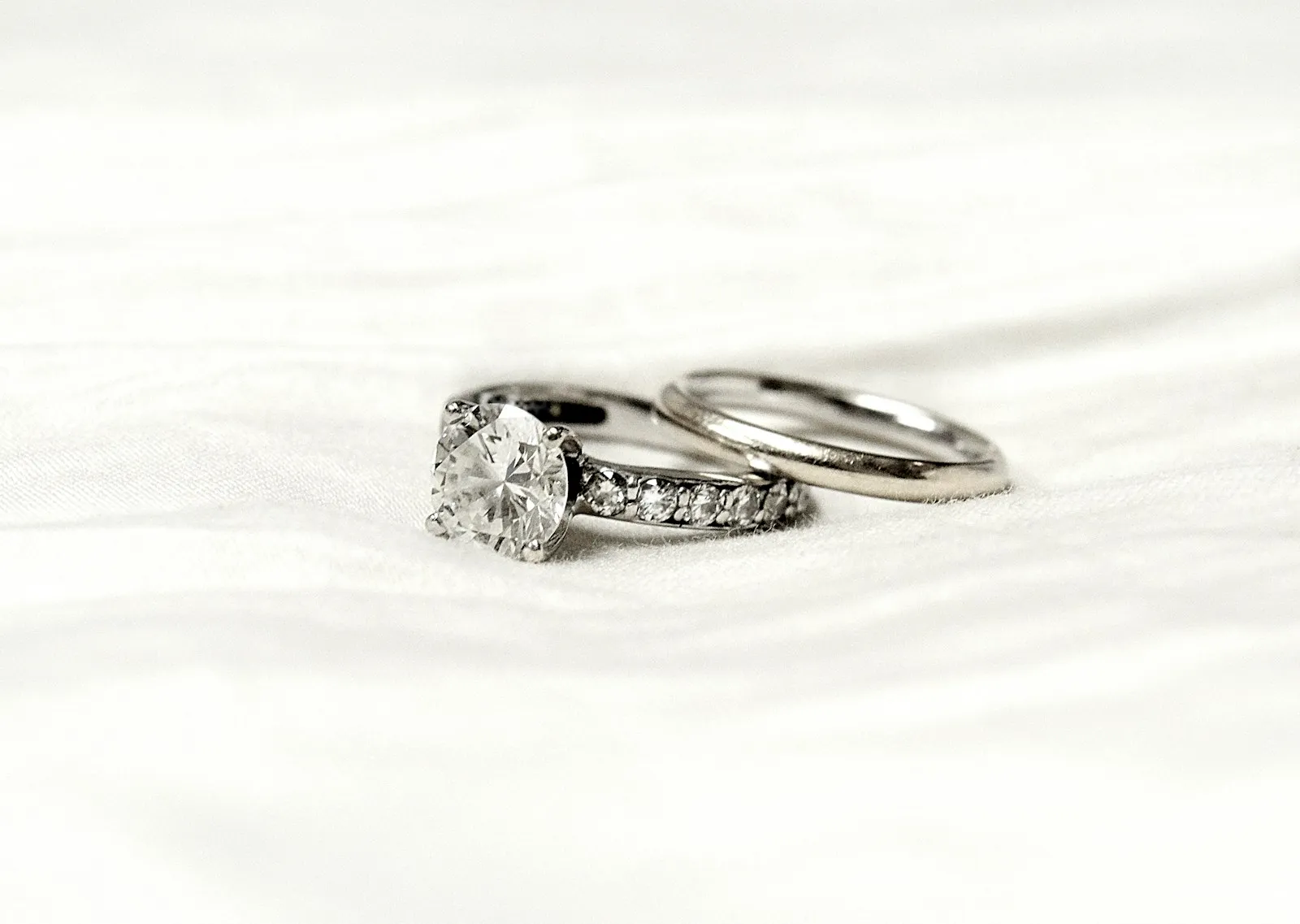
Polished silver, platinum and white gold. Gold is on the True Winter avoid list as a metal worn near the face as well as a color, so silver earrings and a silver watch do more for the face than gold ones. The finish matters too: bright polish matches the palette better than brushed or antiqued metal.
Black, charcoal, true red and royal blue frames in glossy acetate, or polished silver metal frames, suit the palette; warm tortoiseshell and golden brown are the ones to skip. A black frame works because True Winter brows are usually dark. If yours are lighter, charcoal keeps the frame from becoming the darkest thing on your face.
A dark rinse, kept crisp, is the True Winter denim, with black and pure white jeans as the alternatives. A white shirt over dark jeans is the casual version of black and white.
Graphic prints in two or three palette colors suit the season: stripes, houndstooth, checks and polka dots in black and white, or a single accent on white. Soft-edged, faded or earthy prints miss on clarity.