Seasonal color analysis sorts personal coloring (skin, hair and eyes) into groups named after the four seasons, then gives each group a palette of colors that make the face look clear, rested and in focus. Wear a color from outside your palette near your face and the effect is usually the opposite: shadows deepen, skin looks sallow or flushed, and people notice the color before they notice you.
Where it comes from
The idea grew out of art education. Johannes Itten, who taught color at the Bauhaus, observed that students chose palettes that echoed their own coloring, and wrote about color harmony in The Art of Color. In the 1970s and 1980s, books such as Bernice Kentner’s Color Me a Season and Carole Jackson’s Color Me Beautiful turned it into a four-season system for clothes and makeup. Later consultants split each season into three, which gives the twelve seasons most people use today.
The three axes
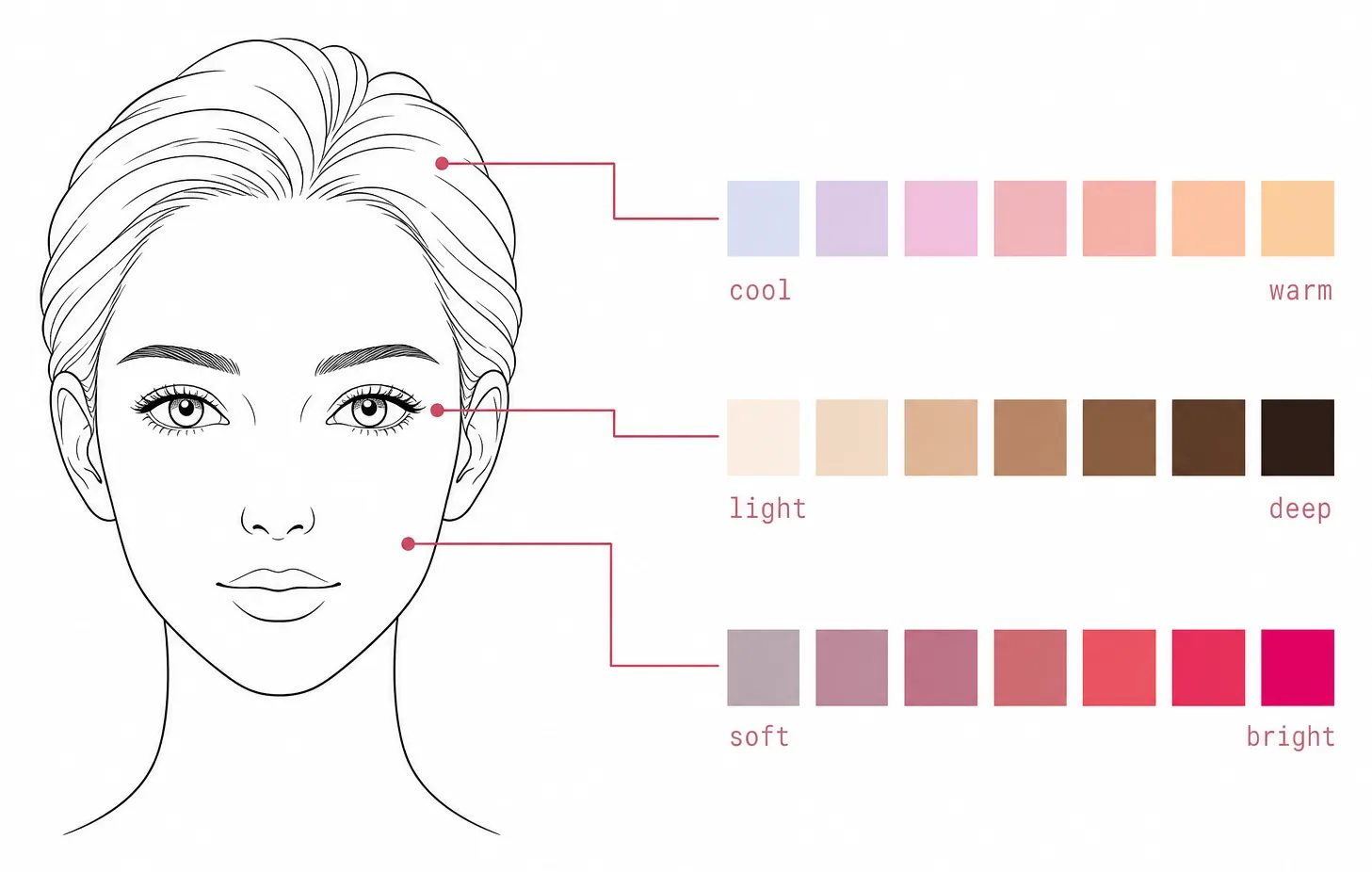
Every color can be described by three properties. The Munsell system calls them hue, value and chroma. Color analysis uses the same three to describe a person:
- Temperature (undertone). Does your coloring lean cool, with pink or blue in the skin, or warm, with peach or gold? Read warm vs cool undertone for four quick tests.
- Value (depth). How light or deep are your hair, skin and eyes overall?
- Chroma (clarity). Do clear, saturated colors make you look vivid, or do soft, greyed colors look more natural on you?
Contrast, the difference between your hair, skin and eyes, is a fourth signal that tips the call between neighbouring seasons.
Your season is named after your strongest trait. Everything else decides which side of it you fall on.
The twelve seasons
| Season | Strongest trait | Leans | Typical colors |
|---|---|---|---|
| Light Spring | Light | Warm | Peach, butter, aqua, light coral |
| True Spring | Warm | Clear | Golden yellow, coral, kelly green |
| Bright Spring | Bright | Warm | Vivid coral, clear aqua, royal blue |
| Light Summer | Light | Cool | Powder pink, lavender, powder blue |
| True Summer | Cool | Soft | Rose, raspberry, cornflower |
| Soft Summer | Soft | Cool | Mauve, dusty rose, slate, sage grey |
| Soft Autumn | Soft | Warm | Camel, olive, sage, soft terracotta |
| True Autumn | Warm | Rich | Rust, mustard, olive, pumpkin |
| Deep Autumn | Deep | Warm | Chocolate, brick, forest green |
| Deep Winter | Deep | Cool | Black, burgundy, sapphire, emerald |
| True Winter | Cool | Clear | True red, fuchsia, royal blue |
| Bright Winter | Bright | Cool | Hot pink, electric blue, emerald |
Here is what one season looks like as a working palette:
- powder
- rose
- mauve
- periwinkle
- dusty blue
- seafoam
- sage
- soft navy
- slate
- pewter
- ivory
Each season’s full palette, with the colors to avoid, is on the color season page.
How to find yours
- Start with temperature. Run the undertone tests in daylight, without makeup.
- Judge depth. Compare your hair, brows and eyes with your skin. Are they all light, all deep, or mixed?
- Test clarity. Hold a vivid color and a dusty version of the same color under your chin. Which one makes your skin look smoother?
- Take the quiz. The Color Season Quiz combines all three and tells you which trait decided the result.
If two seasons come up close, they are neighbours on the wheel. Try both palettes with real fabric in daylight; the one that makes you look rested, not made-up, is yours.