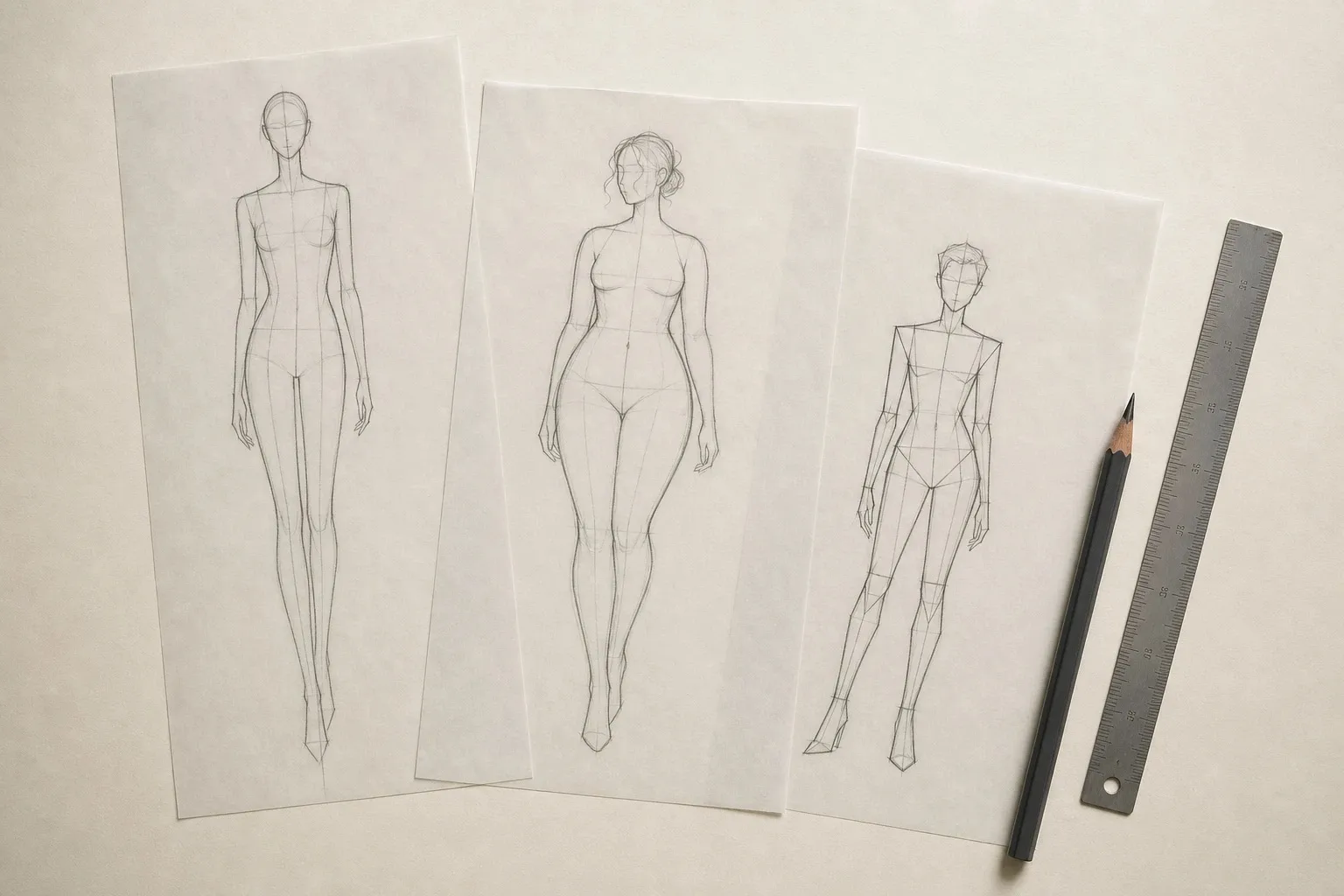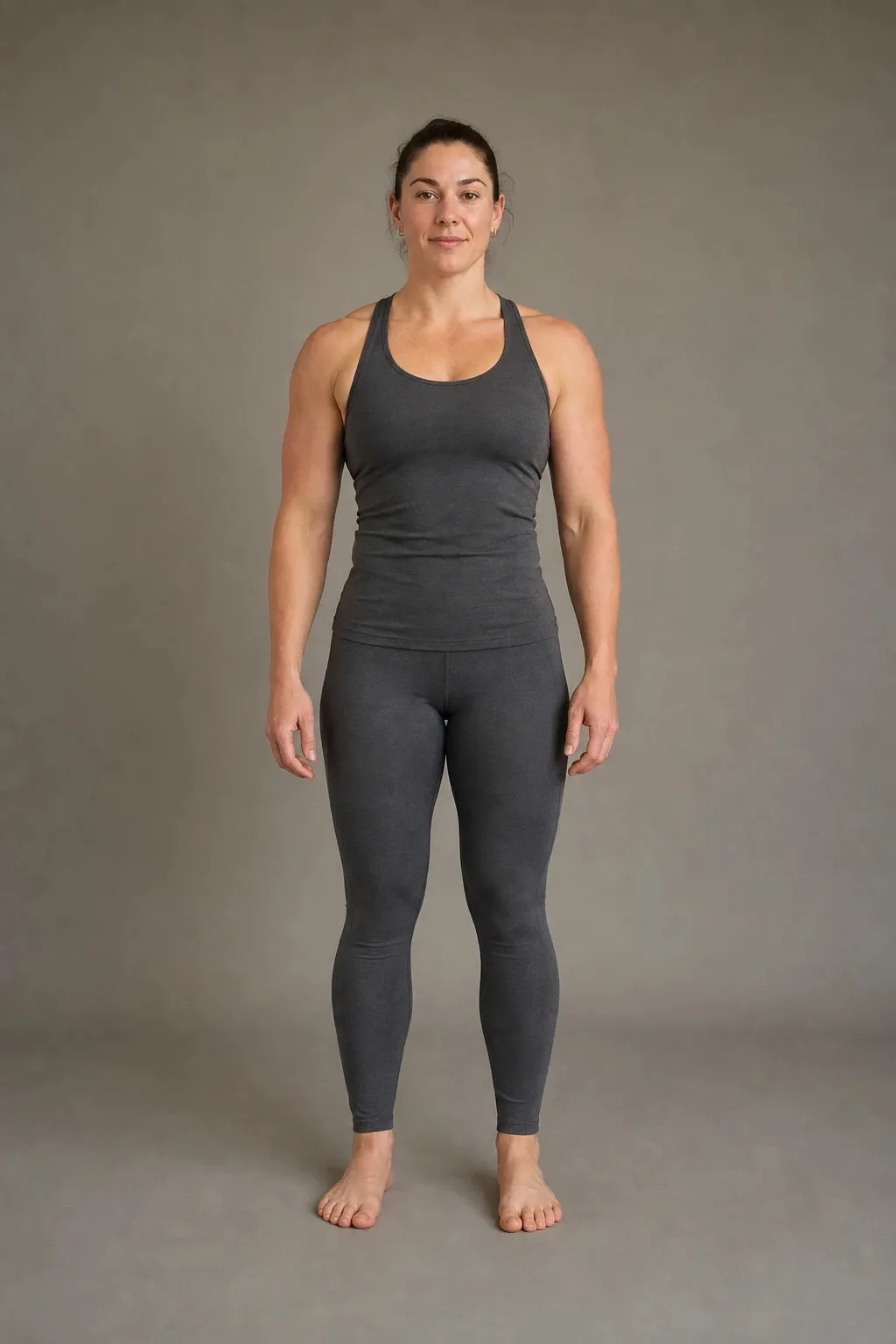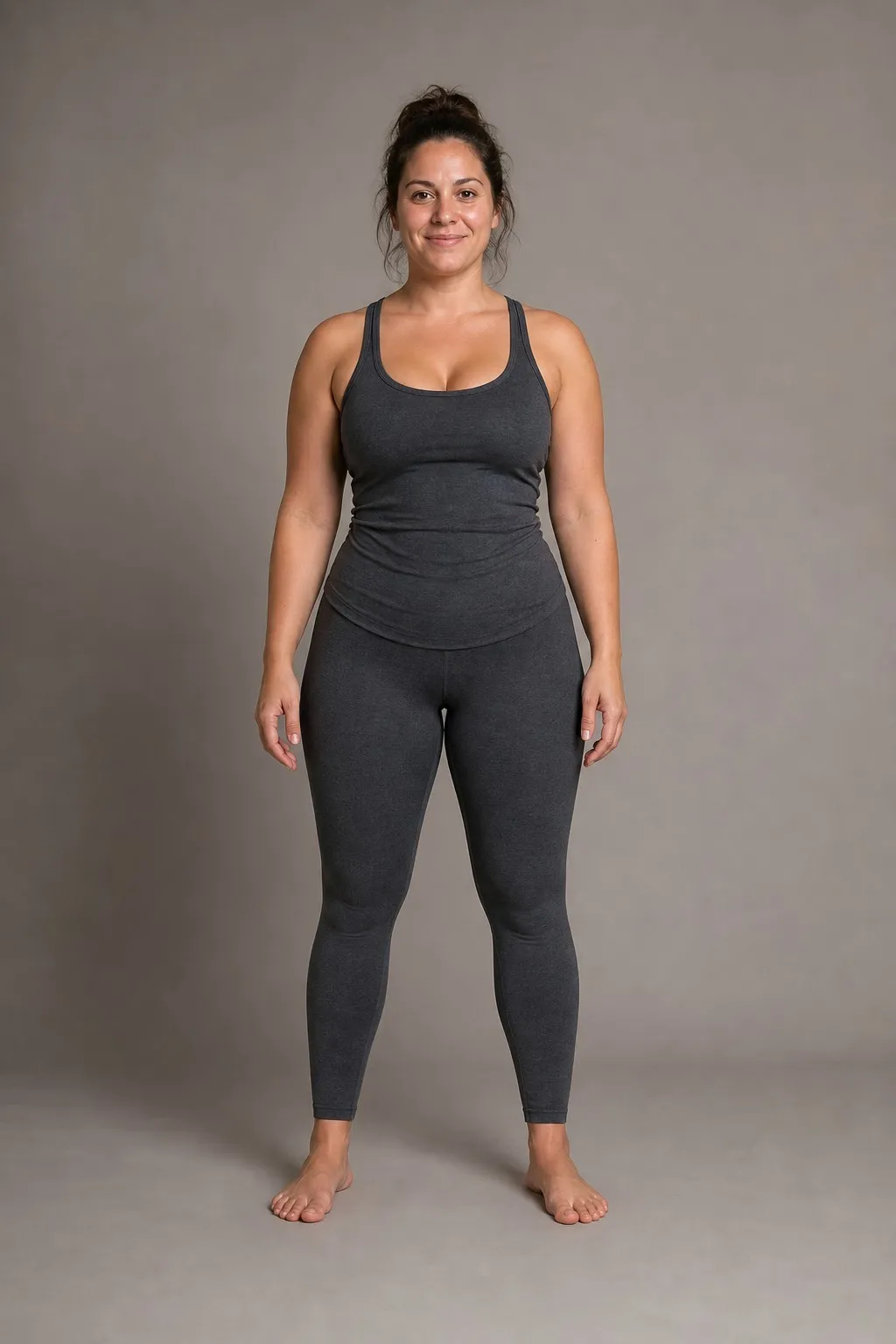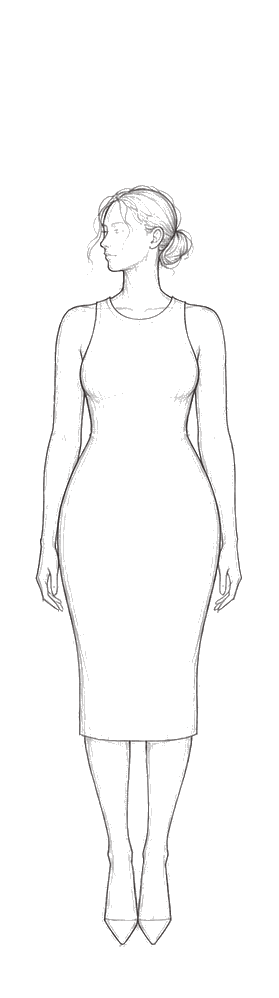
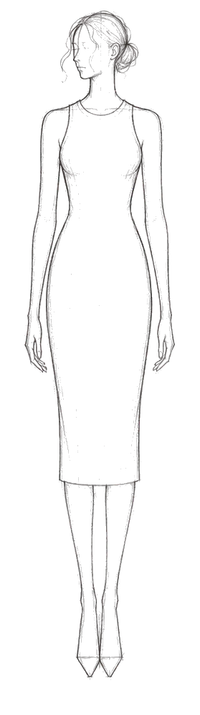
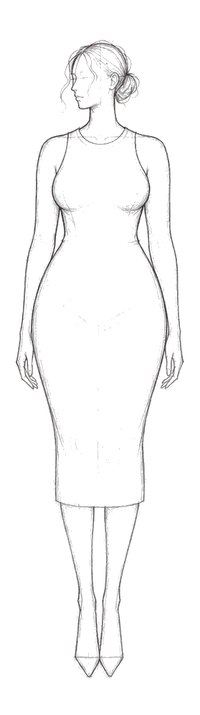
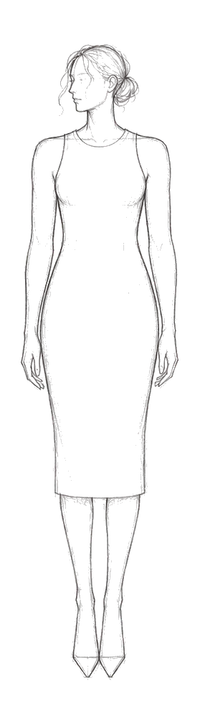
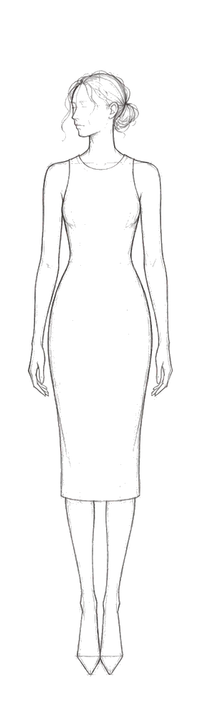
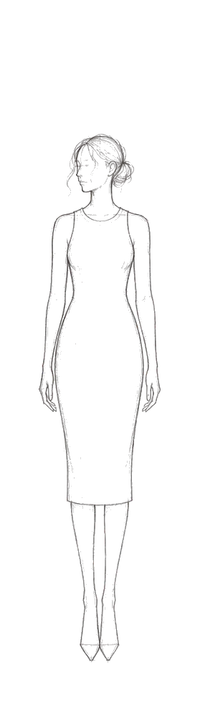
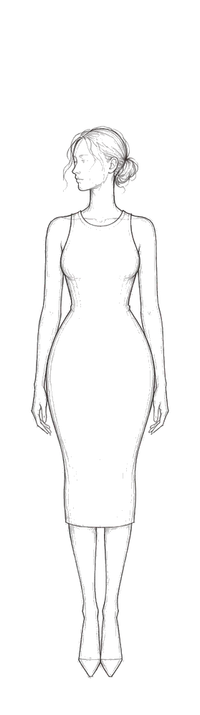
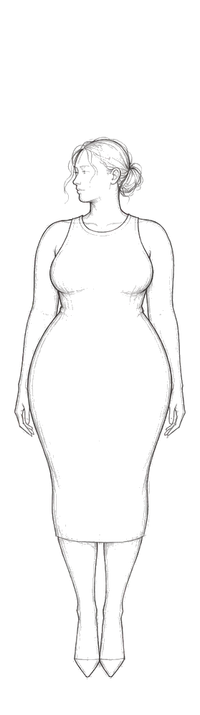
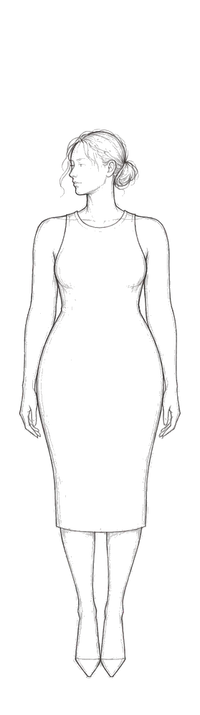
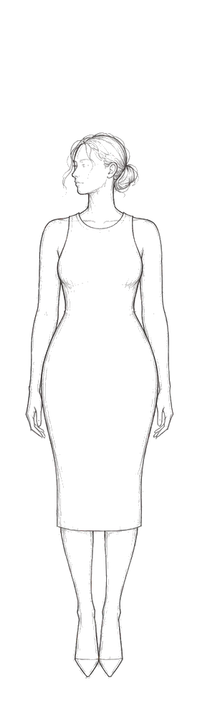
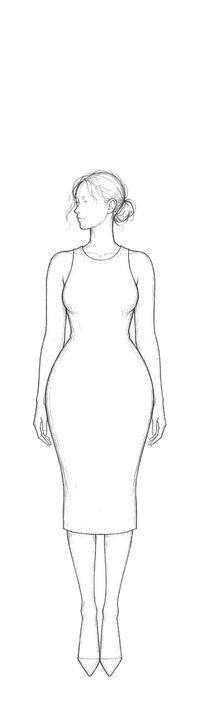
The Kibbe Test reads two things from your answers: where your line sits between curve and vertical, and which of five additional characteristics is strongest. Your result is the image identity where the two meet, with a runner-up and a warning when the call is close.
How the test is built
The fourteen questions come in four parts, and the parts carry different weight.
| Part | Questions | Weight |
|---|---|---|
| Overall line | Height; your line in a full-length photo; column or wrap dress; limbs against torso | 1.5 |
| Bone structure | Shoulders; hands and feet; the frame overall | 1.5 |
| Body flesh | Bust and hips; waist; upper arms and thighs; crisp tailoring on you | 1 |
| Face | Jawline; cheekbones; eyes, nose and lips together | 0.75 |
The weights follow a simple reading order: overall line and bones first, then flesh, then the face.
Each answer can move two kinds of score: one axis from curve to vertical, and five bars for the additional characteristics, narrow, width, balance, petite and curve. “Broad and square, blunt rather than sharp” shoulders, for example, add to width and nudge the line toward vertical; “Sloped and rounded” ones add to curve and pull the line toward curve.
Two rules sit on top of the raw scores. The answer “5’6” (168 cm) or taller” sets your line at vertical whatever else you say, as the height rule explains. And the dominant line absorbs part of its kindred characteristic: a long, lean line is already what vertical means, and soft curves are what curve means, so the test takes part of the narrow score from a vertical reader, and part of the curve score from a curvy one, in proportion to how far the line leans. Without that step every vertical reader would also score high on narrow and every curvy one on curve, and the two mixed types, Soft Dramatic and Theatrical Romantic, could not come out.
You need at least nine answers for a result; any question can be skipped with “Not sure, skip” and then adds nothing. The live reading beside the questions moves with every answer.
The test in Metamorphosis worked differently. It had three parts, bone structure, body flesh and facial features, and every question offered five answers, A to E, running from yang to yin. You counted the letters part by part. Reproductions of the test read them like this:
| Letter | Impression | Where it points |
|---|---|---|
| A | Sharp yang: long, narrow, angular | Dramatic |
| B | Soft yang: broad, blunt, sturdy | Natural |
| C | Balance: even, moderate, symmetrical | Classic |
| D | Yin, short of the extreme | No family of its own; it softens a result |
| E | Extreme, soft yin: rounded, lush | Romantic |
Gamine had no letter. It came from a near-even mix of the opposite extremes, A and E, and the subtypes came from a dominant letter with a strong second one, such as mostly B with some A for Flamboyant Natural.
How to answer honestly
Before you start, take two photos: a full-length one in fitted clothes from two or three meters away, zoomed in, and a straight-on photo of your face from the same distance. A phone held at arm’s length enlarges whatever is closest to the lens, usually the nose and the middle of the face; the Face Shape Calculator guide covers that effect with measurements. Answer from the photos, not the mirror, where your posture changes as you look.
Your line. The second question asks how your body reads in the photo, not how tall you are. A woman of 5’3” (160 cm) with a long neck and long legs can read longer than one of 5’5” (165 cm) with a long torso.
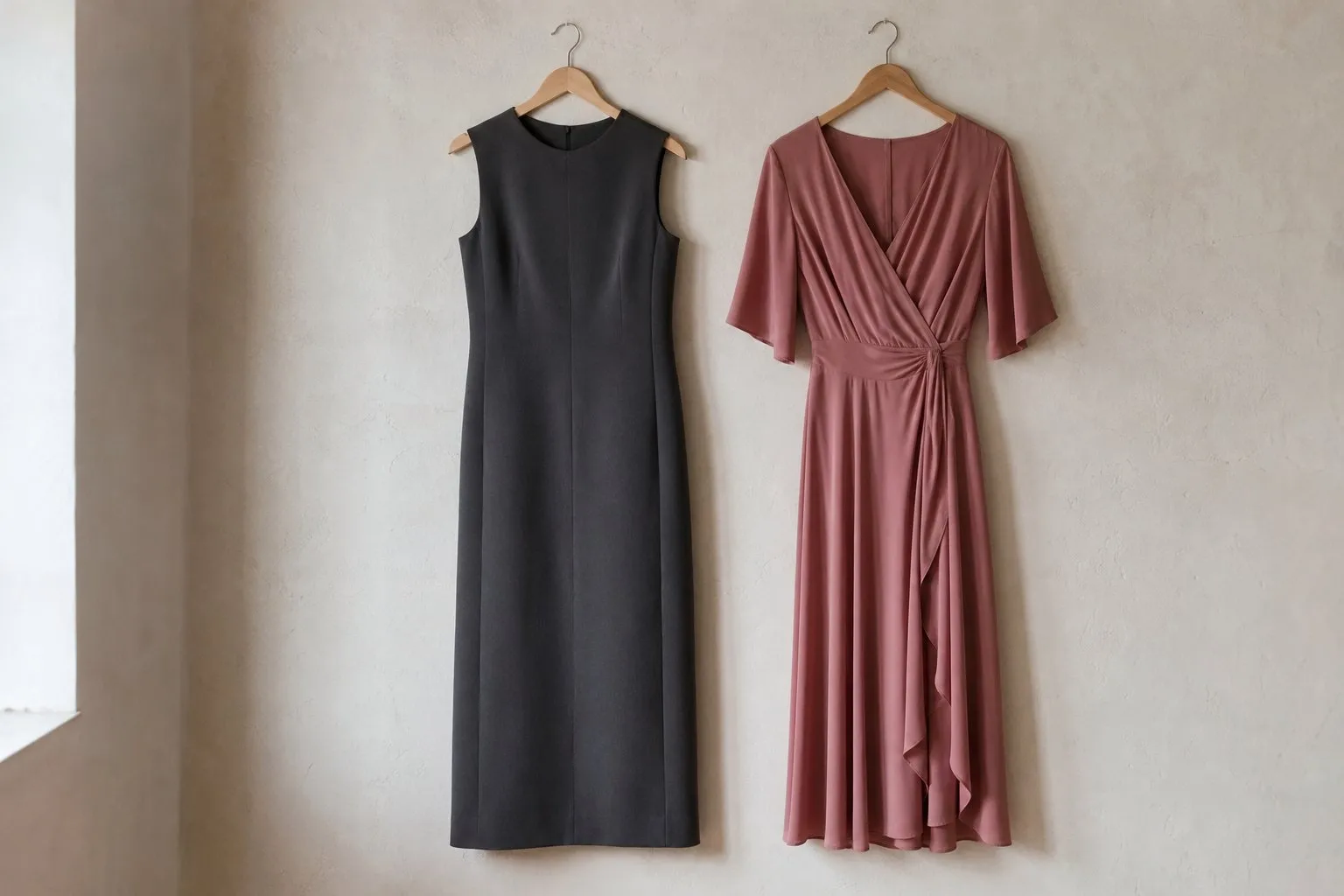
The dress question. If you can, answer it for real: put on a straight column dress and a wrap dress and photograph both. It is the question the 2025 book puts first, vertical or curve, asked with clothes instead of adjectives.
Shoulders. The hint says shape, not just width: shoulders wider than your hips can still be narrow and angular in Kibbe’s sense.
Flesh. Answer for how fabric falls over your bust, hips, arms and thighs, not for your weight. Softness in Kibbe’s sense stays when you are slim, and a heavier year does not turn a sharp frame into a soft one. If your weight has changed a lot, answer for the structure you have kept throughout.
Your fruit shape. Leave it out. A defined waist on a tape measure is not Kibbe’s curve, so answer the waist question by eye, even if the Body Shape Calculator calls you an hourglass.
Your face. Use the distant photo and a bare face, since contour, liner and lip pencil are made to change exactly these readings. A strong nose or a sharp jaw is just information.
Reading your result
The result names one image identity and its formula, such as “curve + width” for Soft Natural, with the dominant line first. Under it, the test says how far your line leaned on a scale of 100, and below 12 it adds “close to the middle”: the vertical-or-curve call was nearly even. At 5’6” or taller it says instead that vertical is your dominant line, and the result can only be Dramatic, Soft Dramatic or Flamboyant Natural.
The map of ten marks your type and a runner-up. When your line is clear, the runner-up keeps it and takes your second-strongest characteristic. When the line sits close to the middle, the runner-up flips the line and keeps your characteristic, unless your top two characteristics are nearly tied. Either way, a line close to the middle or two characteristics within 0.08 of each other, on bars that run from 0 to 1, adds a sentence telling you it is a close call and naming the runner-up to try.
Two runs show it. A reader at 5’4” (163 cm) answers “Compact and curvy” for her line, picks the wrap dress, and describes broad, blunt shoulders, large hands, a strong frame, full curves, soft flesh and tailoring that feels too stiff. She gets Soft Natural, her line read as curve at 32. Her width bar reaches 0.71, far ahead of balance at 0.17, so there is no close call, and the runner-up is Soft Classic.
Now change three answers: her body reads “Even and moderate” in the photo, both dresses work, and her arms and legs look long. The line tips to vertical, but only to 5, close to the middle, and the result becomes Flamboyant Natural, with Soft Natural as the runner-up and a close call. Her width answers did not change, only the line, so the useful next step is a column dress and a wrap dress, not another quiz.

An old result from the 1987 letters needs two updates. Mostly B, mostly C or a Gamine mix of A and E points to a pure type that no longer exists, so pick that family’s vertical or curve type by how your other answers lean. And at 5’6” or taller, the three tall types are the only options left, whatever the letters say.
The ten types this test can return
| Image identity | Dominant + additional | Lines that follow you |
|---|---|---|
| Dramatic | Vertical + narrow | Long, clean, sharp lines |
| Soft Dramatic | Vertical + curve | Long lines with drape and a marked waist |
| Flamboyant Natural | Vertical + width | Long, relaxed, unstructured lines |
| Dramatic Classic | Vertical + balance | Tailored, clean lines close to the body without tightness |
| Flamboyant Gamine | Vertical + petite | Straight, geometric lines broken into sections |
| Theatrical Romantic | Curve + narrow | Fitted lines that show the curves, with a sharply defined waist |
| Romantic | Curve + double curve | Round, soft lines, flowing but fitted |
| Soft Natural | Curve + width | Drape, ease and soft waist definition |
| Soft Classic | Curve + balance | Smooth, symmetrical lines that skim gentle curves |
| Soft Gamine | Curve + petite | Rounded lines with crisp edges, fitted, waist marked, in sections |
The test reads the ten image identities of Power of Style from this same data. The Kibbe body types chart shows how to read them in pairs and what changed from the original 13. Each family is described there with its try-on tests: Dramatic and the tall types, Natural, Classic, Gamine, Romantic and the three soft types.
Is the Kibbe test accurate?
Kibbe types are one stylist’s framework for choosing clothes, not a measurement. This page describes the system as his books and his readers present it.
No Kibbe body type test is accurate the way a tape measure is. It asks you to place yourself on scales without units, often about features you cannot see well, and people tend to answer toward who they would like to be. The rules have moved as well: three of the 1987 outcomes are gone, and the height guidance changed before it settled at 5’6”.
Kibbe dropped the quiz from Power of Style. As one reviewer reports his reasoning, a quiz leads people who do not already know their answer to the wrong type, and the book replaces it with exercises that lead up to the vertical-or-curve choice. The warning applies to this test too: treat the result as a hypothesis to try on in clothes, and the runner-up as the first thing to try it against.