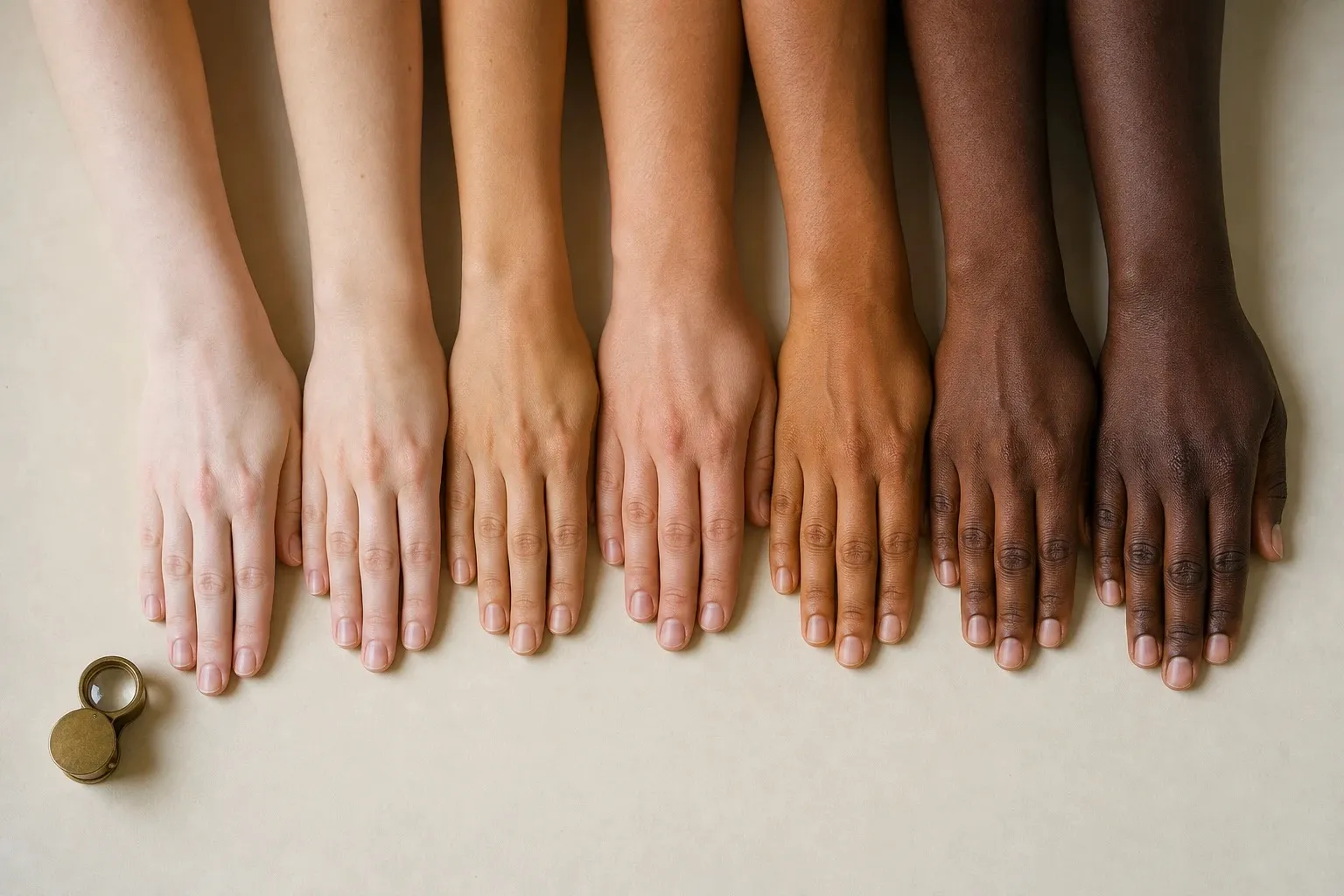
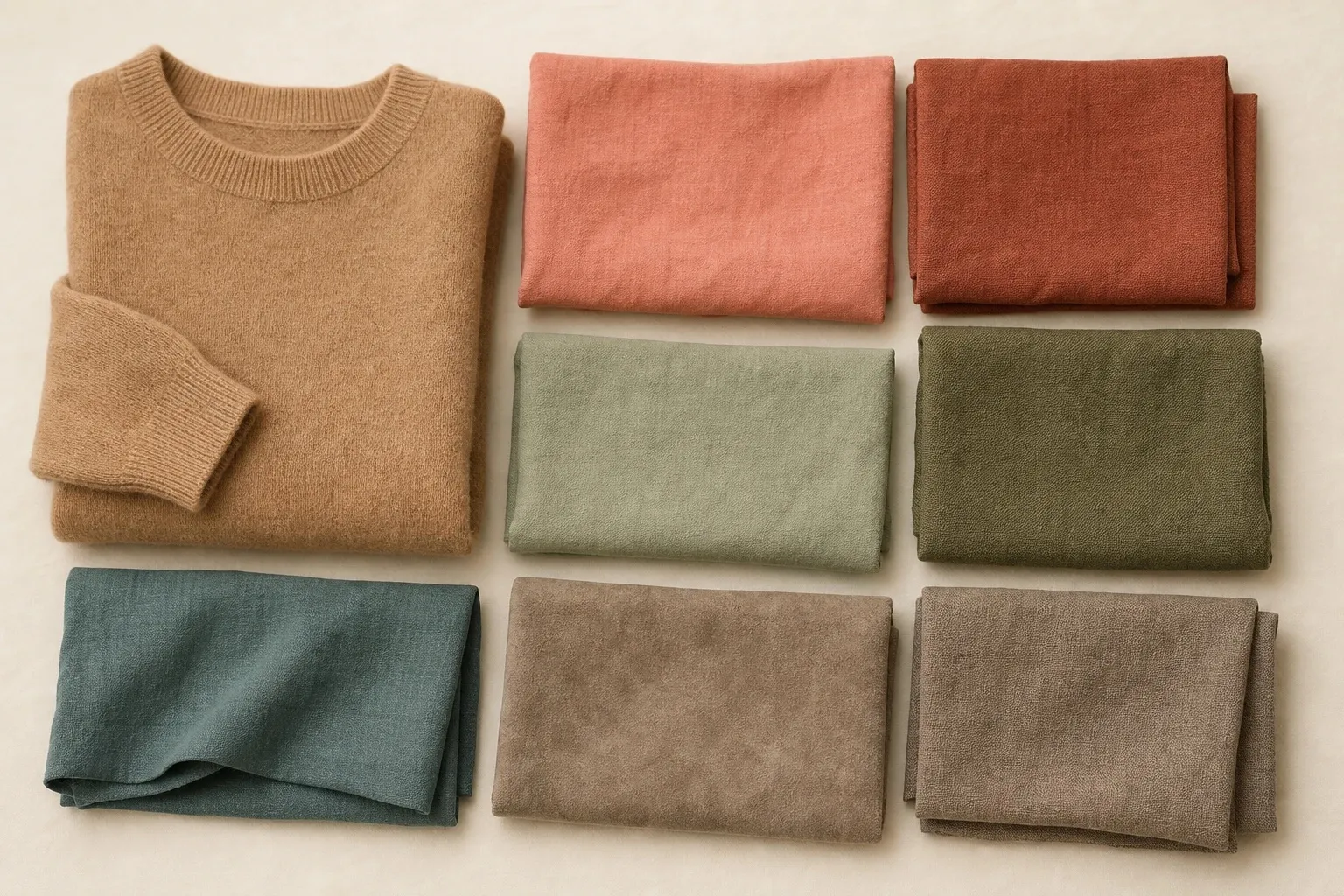
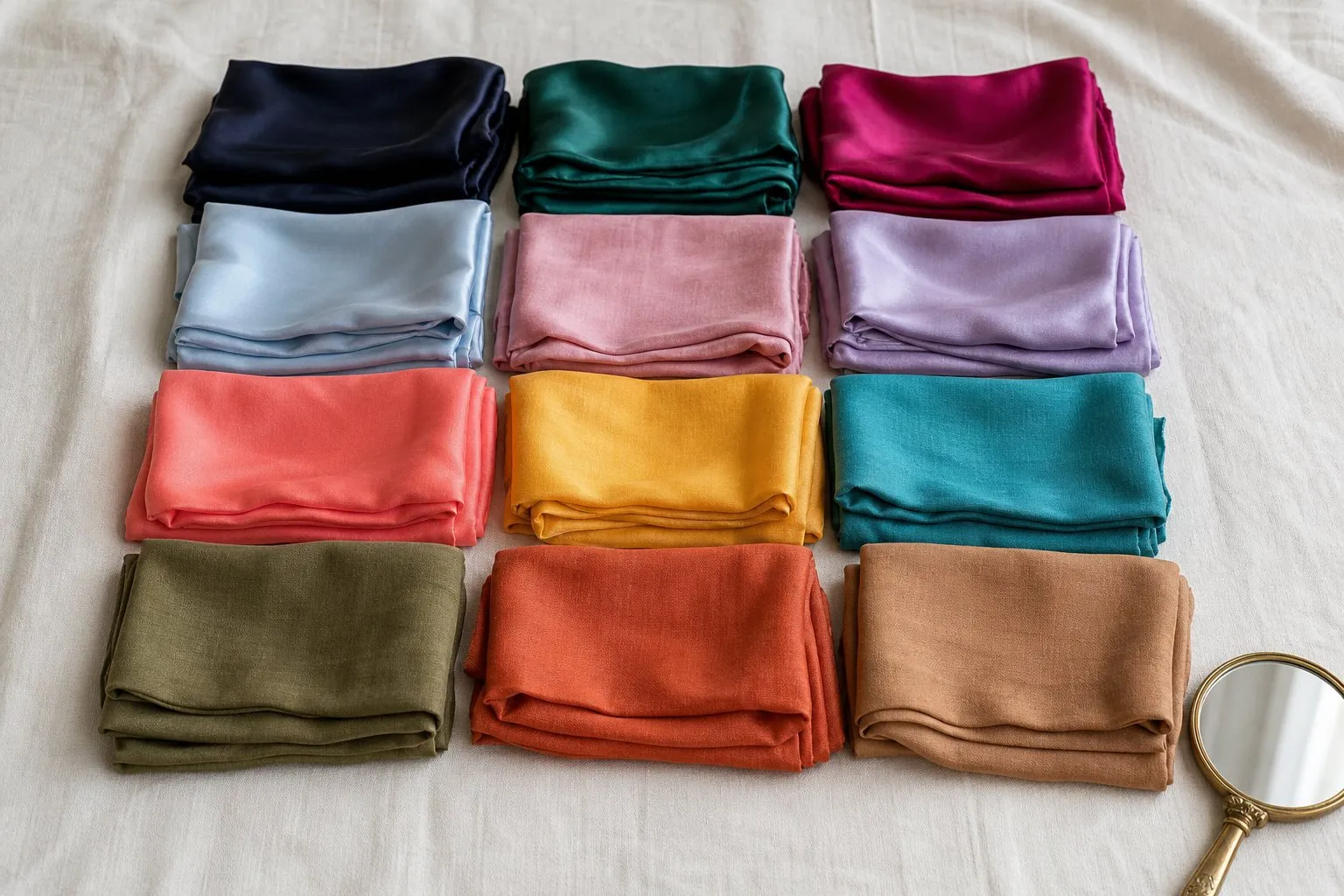
Olive skin tone is an undertone, not a shade: a golden base with a muted green-gray cast on top, and it comes at every depth from fair to deep. It is the reason so many undertone tests feel broken, because warm colors turn olive skin orange or sallow while cool ones turn it gray. What suits it is muted, medium to deep color: red-violets and teals, soft-finish gold, rose-brown makeup and soft brown hair. Most olive complexions land in a soft or deep color season.
To see where your own coloring sits on all three axes, the Color Season Quiz includes olive among its skin answers.
What olive skin is
The base of olive skin is yellow or golden. Over it sits a slight green or gray cast that shows most at the jawline, the sides of the nose and around the mouth, and it is easiest to see in daylight. The name comes from the color olive, a dark yellowish green: skin with plenty of yellow and little pink reads the same way, especially next to something white.
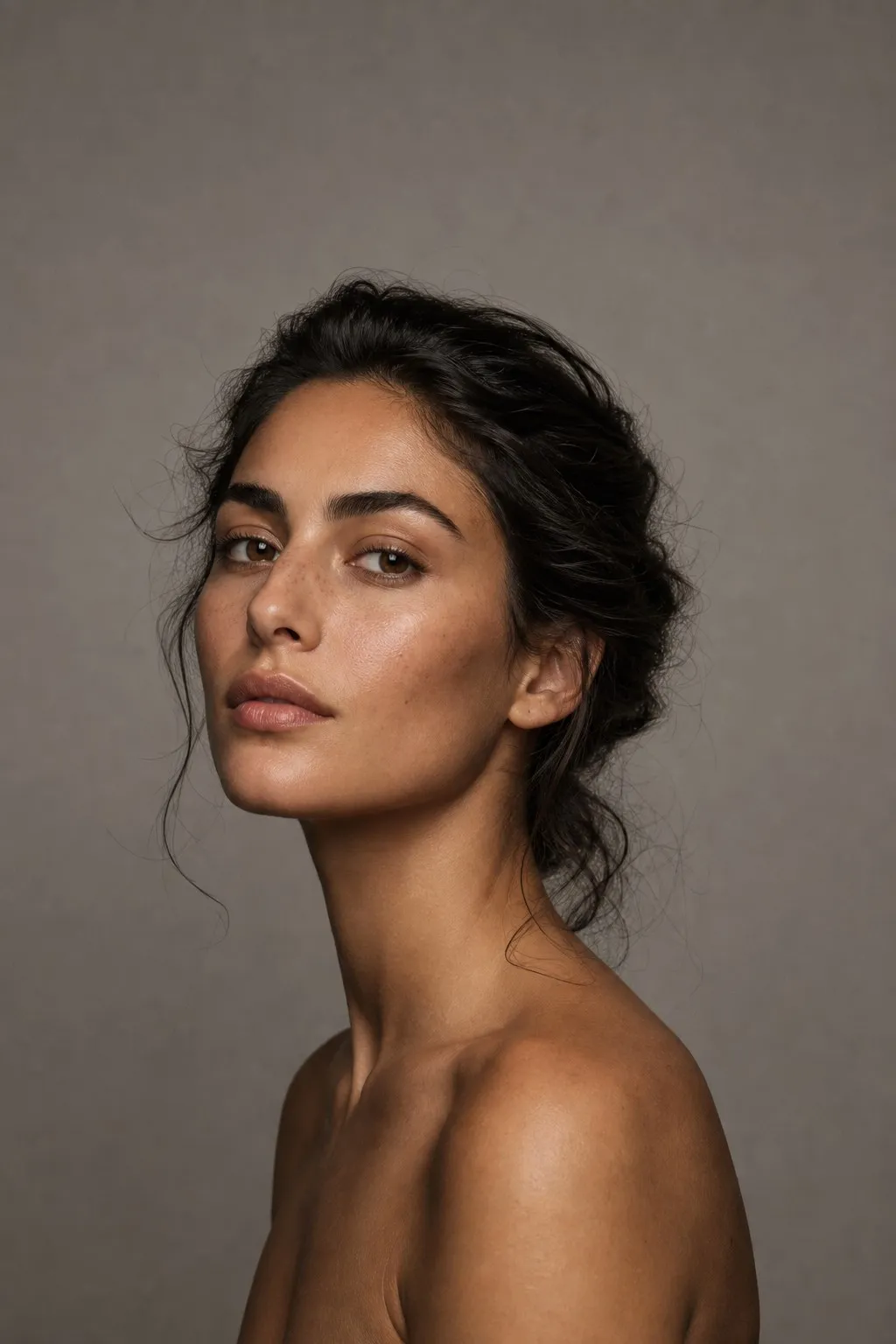
Olive describes the undertone, so it has nothing to do with how light or dark you are. The skin tone chart gives it a column of its own, from fair olive through light olive, medium olive and olive tan to deep olive brown. Olive skin occurs across many ancestries.
It is neither a simple warm nor a simple cool. The golden base pulls toward warm, and the gray in the cast pulls toward soft, so olive skin often reads as neutral in tests and as muted in color analysis. Undertones and color seasons are a styling framework, not a measurement of your skin. The tests here compare colors side by side, which anyone can repeat in daylight.
How to tell if you have olive skin
Four signs point to olive, and the more of them fit, the more likely it is:
- Next to pure white your skin looks slightly gray or green; next to off-white or oatmeal it looks even.
- Polished gold and polished silver both look almost right, and neither looks clearly right.
- Foundation sold as warm looks orange on you, and foundation sold as cool looks pink.
- Pastels make you look tired or gray, and neon brights look harsh.
If warm looks orange and cool looks gray, you are not doing the tests wrong. You are probably olive.
Two familiar signs deserve less weight. Veins on the inner wrist often look green on olive skin, because the yellow in the skin above them shifts how green they appear, so the vein test tends to read “warm” whatever your real lean is; on deep skin it is hard to read at all. Tanning easily is common in descriptions of olive skin, but how you react to the sun is what the Fitzpatrick skin types sort, and it tells you about depth, not undertone.
Here is the check read step by step for one example: light to medium skin, dark brown hair, soft hazel eyes, bare face, a window at midday.

- Pure white, then oatmeal, under the chin. In white, the jaw and the corners of the mouth look grayer and faintly green. In oatmeal the skin looks even. So she is not clearly cool, and the cast is there.
- Polished gold, then polished silver, at the jaw. Gold makes the skin look yellower and a little sallow; silver makes it look gray. Neither wins, which is the olive pattern.
- Brushed gold, then brushed silver. Brushed finishes show only the color, without the shine. Brushed gold looks a shade healthier, a first hint of a warm lean.
- Salmon, then dusty rose. Two pinks of the same depth and softness, one with yellow in it and one with blue. Salmon wins by a little, which confirms the lean.
- Her foundation history. Shades labeled warm looked orange on her; pink ones looked ashy. That fits.
Reading: olive with a slight warm lean. Notice that every step asked which side looked worse. On in-between skin, the wrong color shows as a faint gray or sallow cast, which is easier to spot than a small improvement.
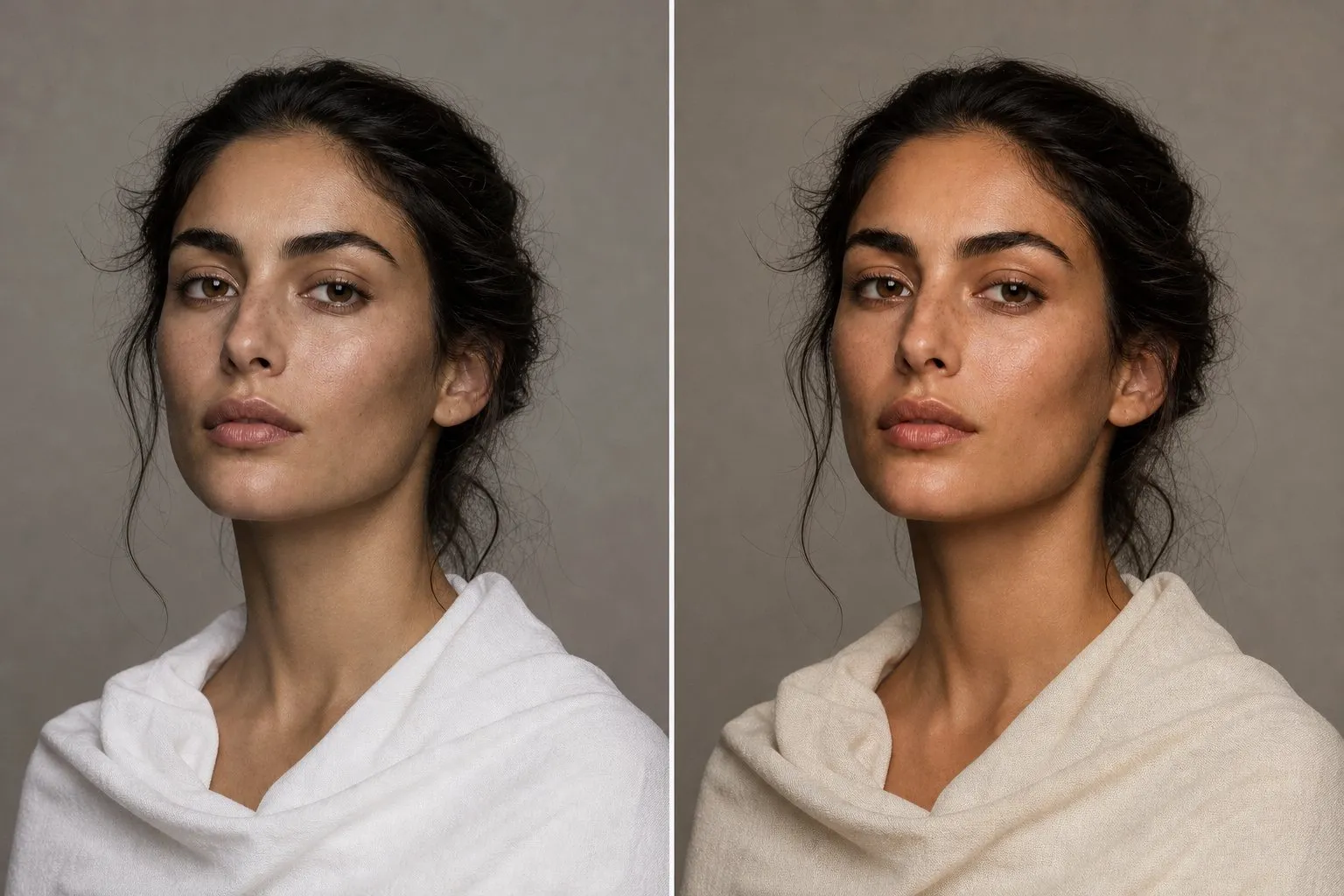
Olive or neutral? A neutral undertone has pink and golden tones in balance, so both metals look fine. Olive adds the cast, so each metal looks slightly off instead, and pure white turns the skin gray. Olive or warm? A yellow surface is not the same as warmth. Warm skin looks clearer in gold, cream and coral; olive skin turns sallow in golden yellows even though it looks yellow. Judge by how the skin reacts to the colors beside it, not by how yellow it looks. The full set of undertone tests is on the skin tone chart.
Olive at every depth
Olive is a column on the chart, not a row. Depth changes two things: how easy the cast is to see, and how light or dark the colors near your face should be. The rules about which colors flatter stay the same.
| Depth | How the olive shows | Whites near the face | Dark neutrals to start with |
|---|---|---|---|
| Fair olive | A faint gray or green cast, clearest next to pure white | Ivory, soft white | Pewter, slate, soft navy |
| Light olive | Golden beige that turns gray in pastels | Ivory, oatmeal | Warm taupe, slate, soft navy |
| Medium olive | The classic case: golden with a muted green-gray, sallow in mustard | Oatmeal, cream | Chocolate, charcoal, dark olive |
| Olive tan | Deep golden; easy to mistake for a plain warm undertone | Cream | Chocolate, espresso, dark olive |
| Deep olive brown | A green or ashy cast that can differ between forehead, cheeks and jaw | Cream, or pure white with very dark features | Espresso, charcoal, black with dark features |
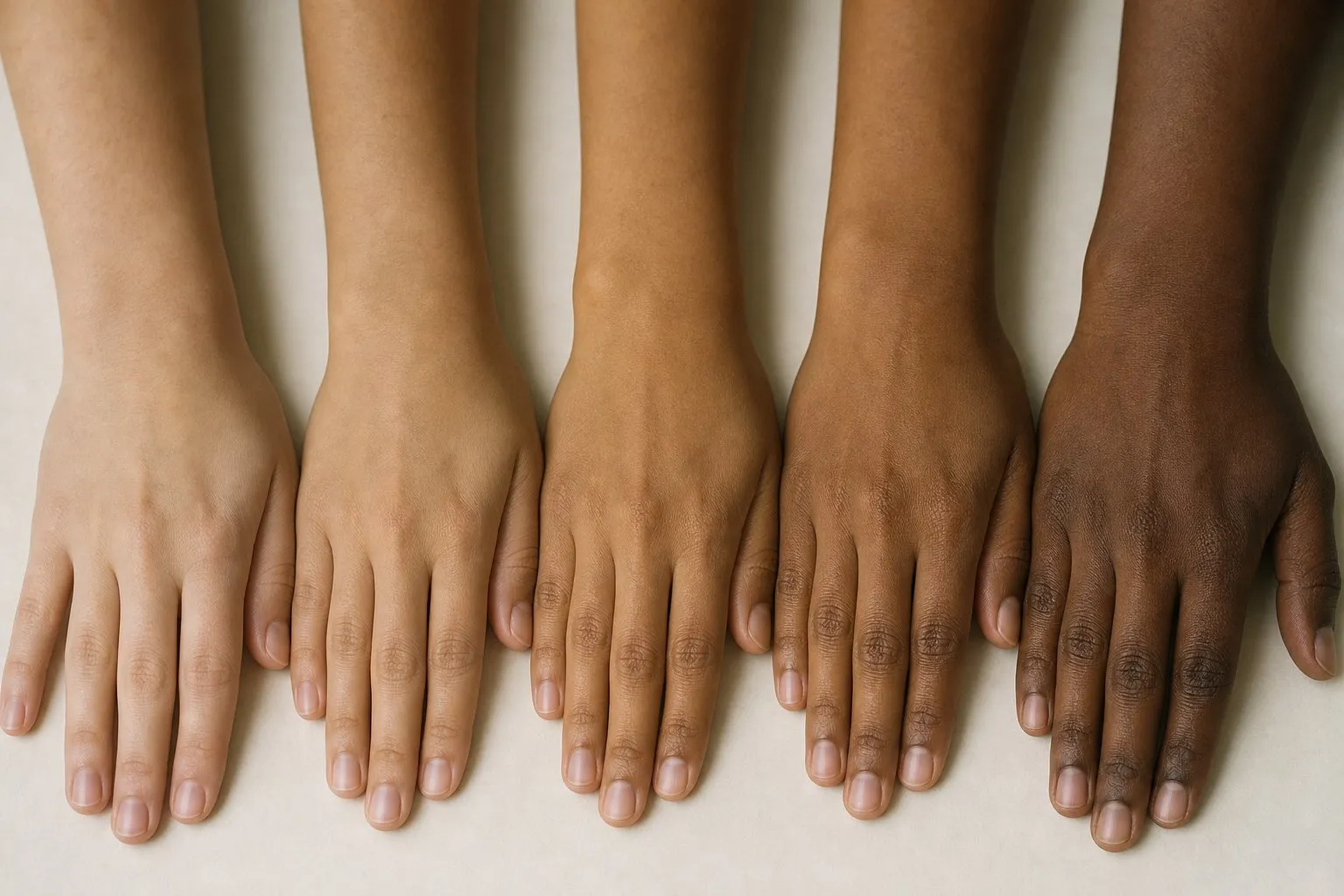
Fair olive is easy to miss. Pale skin that is not obviously golden tends to get filed under cool, and then pure white and icy pastels make it look gray. Fair olive skin looks better in ivory and off-white, and in colors that are light but slightly muted rather than icy.
At the deep end, the surface color can read red, golden, ashy or olive, and it often differs from forehead to jaw. The vein test fails here, but gold against silver and white against cream work at every depth. If you are unsure of your row, a black-and-white photo of your jaw and cheek in daylight removes the hue and leaves only lightness; the skin tone chart explains how to read it.
Colors that suit olive skin
A color works on olive skin in one of two ways. It repeats the skin’s muted quality, as olive, khaki, sage and soft teal do, so the cast reads as harmony instead of a flaw. Or it counters the cast. Red-violet sits opposite yellow-green on the artist’s color wheel, so plum, berry, raspberry and rose-brown put back the warmth olive cheeks lack without adding orange. Makeup artists use the same opposite pairing when a green concealer cancels redness.
Most of these colors are medium or low in chroma, the Munsell term for how far a color sits from neutral gray. Olive skin carries a little gray, and colors with a little gray in them match it.
| Colors | Why they work |
|---|---|
| Olive, khaki, sage | Repeat the green cast instead of fighting it |
| Teal, petrol blue, jade | Cool enough to balance the yellow, soft enough not to clash |
| Plum, aubergine, raspberry | Red-violet warmth for the cheeks, without orange |
| Brick, terracotta, rust | Warm but muted |
| Cream, oatmeal, taupe, mushroom | Neutrals that already hold some gray |
| Chocolate, charcoal | Deep neutrals that are softer than black |
- camel
- salmon
- terracotta
- sage
- olive
- muted teal
- mushroom
- warm taupe
Put the best of these nearest your face. A top, scarf or collar under your chin reflects a little of its color onto your jaw and neck, which is why the same color does more as a sweater than as trousers. A reliable start: an oatmeal knit, chocolate trousers and a muted teal scarf, or a plum top under a charcoal coat.
Colors to handle with care
Four groups cause most of the trouble on olive skin, and each has a near neighbor that works.
| Color | What it does to olive skin | Try instead |
|---|---|---|
| Baby pink, powder blue | Brings out the green-gray; the face looks tired | Dusty rose, rose-brown, teal |
| Mustard, bright golden yellow | Yellow beside yellow skin reads as sallow | Brick, terracotta, or yellow away from the face |
| Pure optical white | Stark; the skin looks gray beside it | Ivory, soft white, oatmeal |
| Neon and very saturated brights | The color arrives before you do | A deeper jewel tone or a muted version |
These are tendencies, and your season overrides them. The Deep Autumn palette includes a dark mustard and True Autumn includes mustard itself; olive skin with black hair, clear eyes and strong contrast can carry vivid color. If a color on this list looks good on you in a mirror test, keep it.
Black is the question olive readers ask most. It appears in only three of the twelve season palettes: Deep Winter, True Winter and Bright Winter. With dark hair, dark eyes and high contrast, black suits olive skin. With fair skin or soft features it tends to look heavy, and charcoal, espresso, chocolate or soft navy do the same job more quietly. Hold black, then chocolate, under your chin in daylight: if black sharpens your face and chocolate muddies it, you can wear black.
Olive skin and your color season
Olive is a cast, not a season. Seasonal analysis sorts coloring by temperature, value and chroma, and the strongest of the three names the season. The cast lowers chroma and the base leans warm, so olive skin most often lands where softness or depth leads: Soft Autumn, Soft Summer, Deep Autumn and sometimes Deep Winter. Among the Autumns it tends to land in Soft or Deep rather than True Autumn.
The Color Season Quiz works the same way. Choosing olive for your skin moves you a little toward warm and further toward soft, and green-looking veins count as warm. On its own, that nudges a result toward Soft Autumn; your other answers decide whether it gets there. If the quiz gives you Soft Autumn with a neutral undertone, test Soft Summer as well, because the line between the two is temperature, the axis where olive skin sits close to the middle.
Your hair, eyes and contrast decide which trait leads:
| Your coloring with olive skin | Trait that tends to lead | Seasons to test first | Deciding pair |
|---|---|---|---|
| Soft brown hair, gray-green or soft hazel eyes, low contrast | Soft | Soft Autumn, Soft Summer | Salmon vs dusty rose |
| Dark brown to black hair, dark eyes, rich colors suit you | Deep | Deep Autumn, Deep Winter | Chocolate vs black |
| Black hair, clear eyes, strong contrast, vivid colors suit you | Bright | Bright Winter, Bright Spring | Hot pink vs hot coral |
| Golden brown hair with copper glints, warm brown eyes | Warm | True Autumn, Soft Autumn | Pumpkin vs salmon |
Back to the example from the check above. Her warm lean is settled, so two pairs remain. Muted teal against vivid emerald: the teal looks natural and the emerald sits on top of her, so softness leads. Camel against chocolate: camel is a little better, so soft wins over deep. She starts with Soft Autumn and keeps Soft Summer as the second candidate, since salmon only beat rose by a little.
- powder
- rose
- mauve
- periwinkle
- dusty blue
- seafoam
- sage
- soft navy
- slate
- pewter
- ivory
- cream
- dark mustard
- brick
- aubergine
- forest
- dark olive
- dark teal
- chocolate
- white
- icy pink
- burgundy
- deep plum
- sapphire
- emerald
- charcoal
- black
With dark features, the deep pair comes first: Deep Autumn if brick and forest beat burgundy and emerald, Deep Winter if the jewel tones win. The full home draping protocol, with eight pairs and a score sheet, is in seasonal color analysis explained.
Makeup for olive skin
Foundation and color makeup answer different questions. Foundation has to match the surface of your skin and disappear. Blush, lipstick, eyeshadow and brow color are meant to show, so they work like a small drape, and your season is the better guide for them.
Foundation. On olive skin, shades sold as warm often look orange and shades sold as cool look pink. Some ranges name shades olive; start there. Otherwise look for yellow-based shades with neither orange nor pink in them. In daylight, swipe two or three candidates in stripes along your jaw, from cheek to neck, and wait a few minutes. The one that disappears is your shade, whatever its label says. Match to the jaw and neck, not the cheek, which is often redder than the rest of the face. Do not change your foundation because of your season.
Blush and eyes. The red-violet rule from the color section does most of the work: rose-brown, soft terracotta and muted plum on the cheeks, berry on deep skin. Baby pink looks chalky on olive skin, and bright orange turns it sallow. On the eyes, bronze, khaki, olive and soft plum follow the same logic, with espresso, dark olive or aubergine as liner. Matte and soft satin finishes keep the muted quality; icy, frosted pastels look chalky.
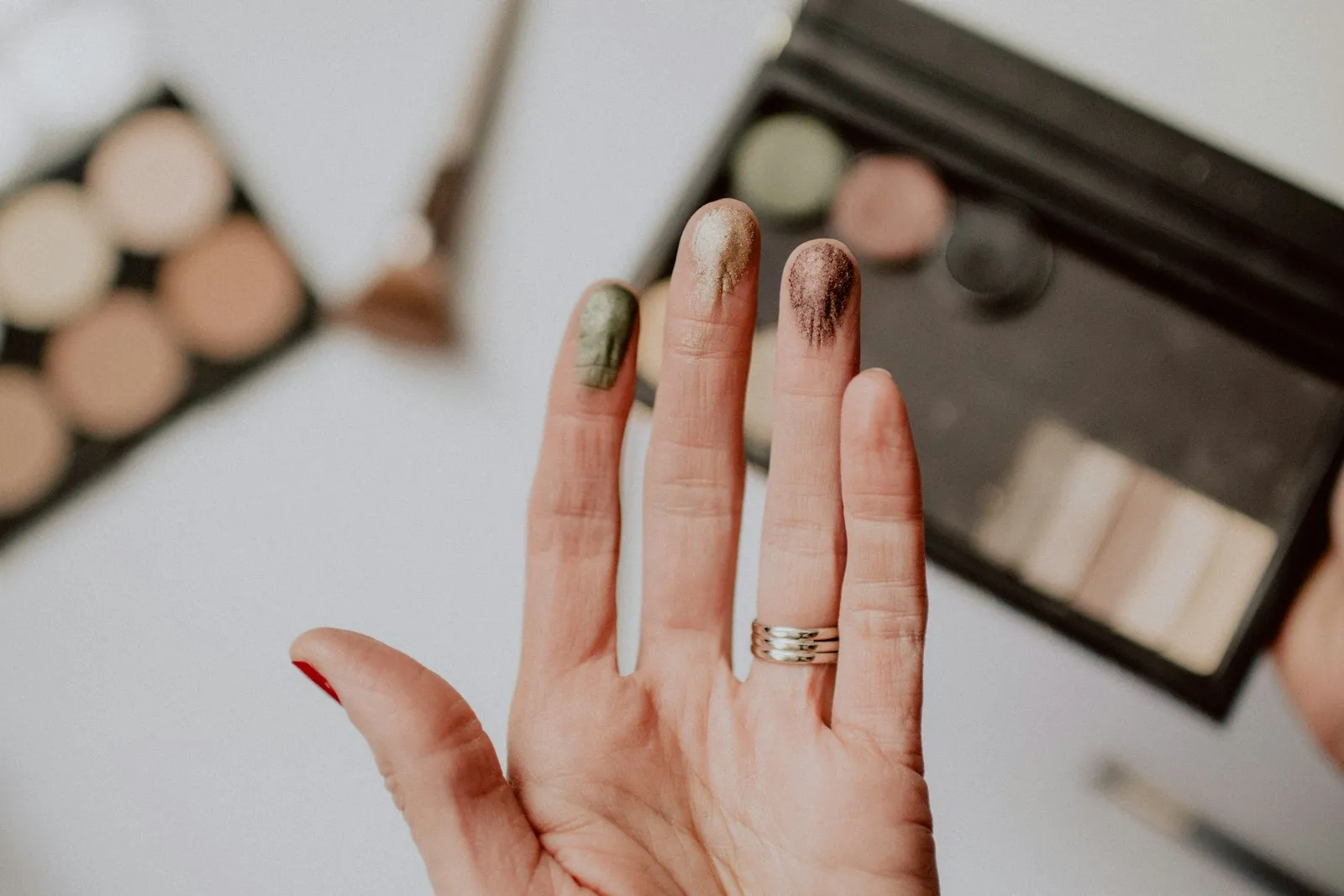
Lips. A good nude is your own lip color plus one step deeper, in the same undertone. On olive skin that means rose-brown, muted terracotta or brick-rose: the red in them counters the green, and the brown keeps them from looking bright. Yellow-beige nudes blend into the yellow base and bring out the green, and very pale nudes look gray. Go a little deeper than you think. Fair olive skin can wear a light rose-brown, medium skin a full rose-brown or terracotta, deep skin a cocoa, chestnut or deep berry-brown. Test on your lips, not your hand, and check at arm’s length that your mouth still reads as a mouth.
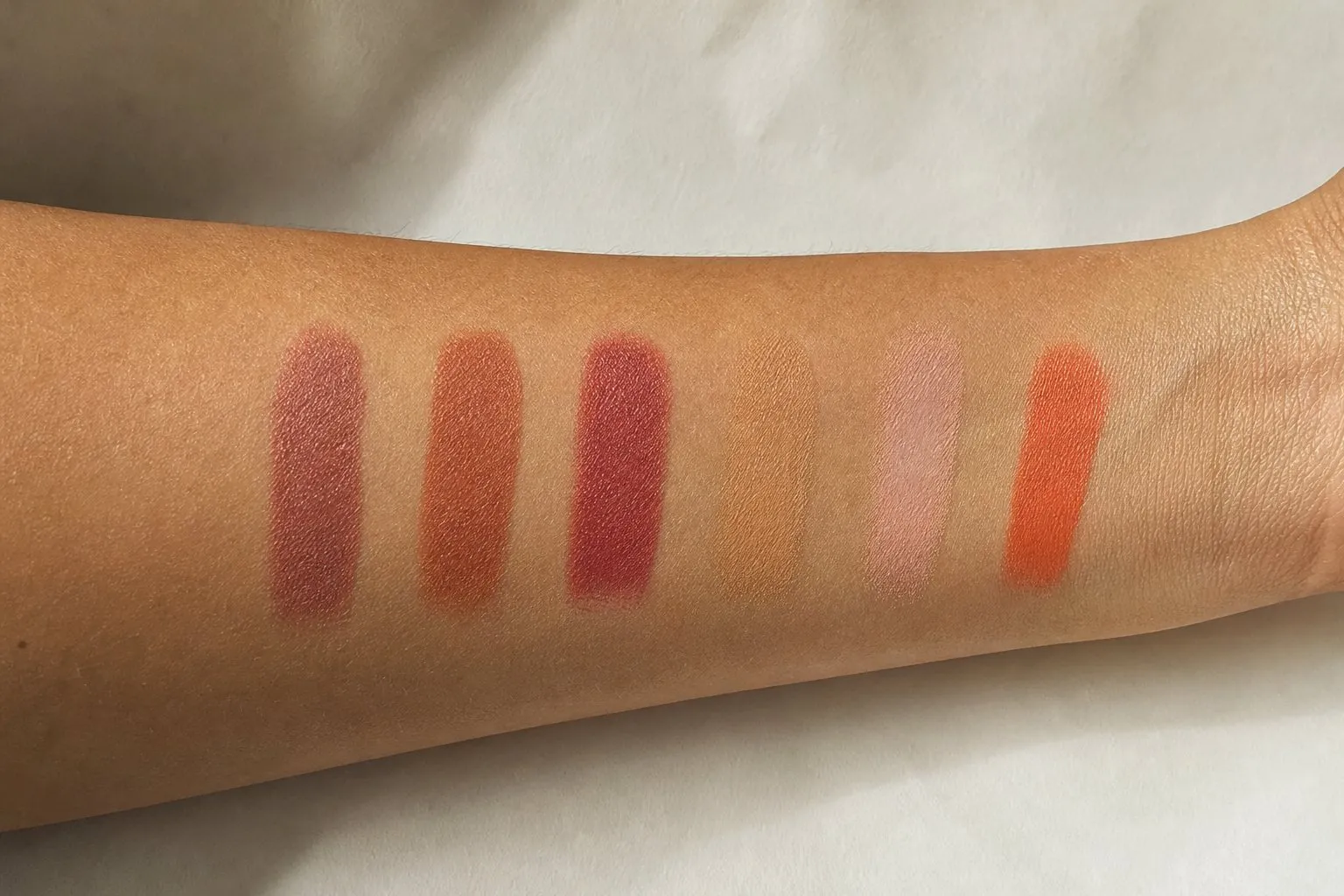
Nails follow the lips loosely: rose-brown, plum, brick and muted teal. They sit far from the face, so the rules relax there.
| Product | Try | Usually fails |
|---|---|---|
| Foundation | Shades labeled olive, or yellow-based without orange or pink | Orange-warm and pink-cool shades |
| Blush | Rose-brown, soft terracotta, muted plum; berry when skin is deep | Baby pink, bright orange |
| Eyeshadow and liner | Bronze, khaki, olive, plum; espresso or aubergine liner | Icy, frosted pastels |
| Nude lip | Rose-brown, muted terracotta, brick-rose | Yellow-beige, very pale beige |
| Statement lip | Brick, berry, raspberry | Bright orange coral, frosted pale pink |
Hair color for olive skin
Salon color has two dials. Level is depth, numbered by most brands from about 1 for black to 10 for the lightest blonde, though the numbering varies. Tone is direction: ash, golden, copper or neutral at that level. Undertone picks the tone, and your contrast picks the level.
Olive skin sits best with hair that does not push hard in either direction: soft brown, chocolate, muted caramel and soft bronze. Very ashy shades turn the cast gray, and brassy yellow-gold blonde makes the skin look sallow. Soft browns of medium depth are the safest start.
| If you want | Try | Handle with care |
|---|---|---|
| To stay brown | Soft brown, chocolate | Very ashy brown |
| To go lighter | Muted caramel, soft bronze, beige pieces | Brassy yellow-gold blonde, icy platinum |
| More warmth | A few honey pieces around the face | Bright copper all over |
| More coolness | A few ash pieces near the face | A full head of ash |
Lightening needs a plan on olive skin. When hair is lightened, its own warm pigment comes through first: red at darker levels, then orange, then yellow. Beige and ash shades need toning to stay where you want them, and they fade back toward warm over the weeks. On olive skin that fade reads brassy, so plan for the toner before you plan the color.
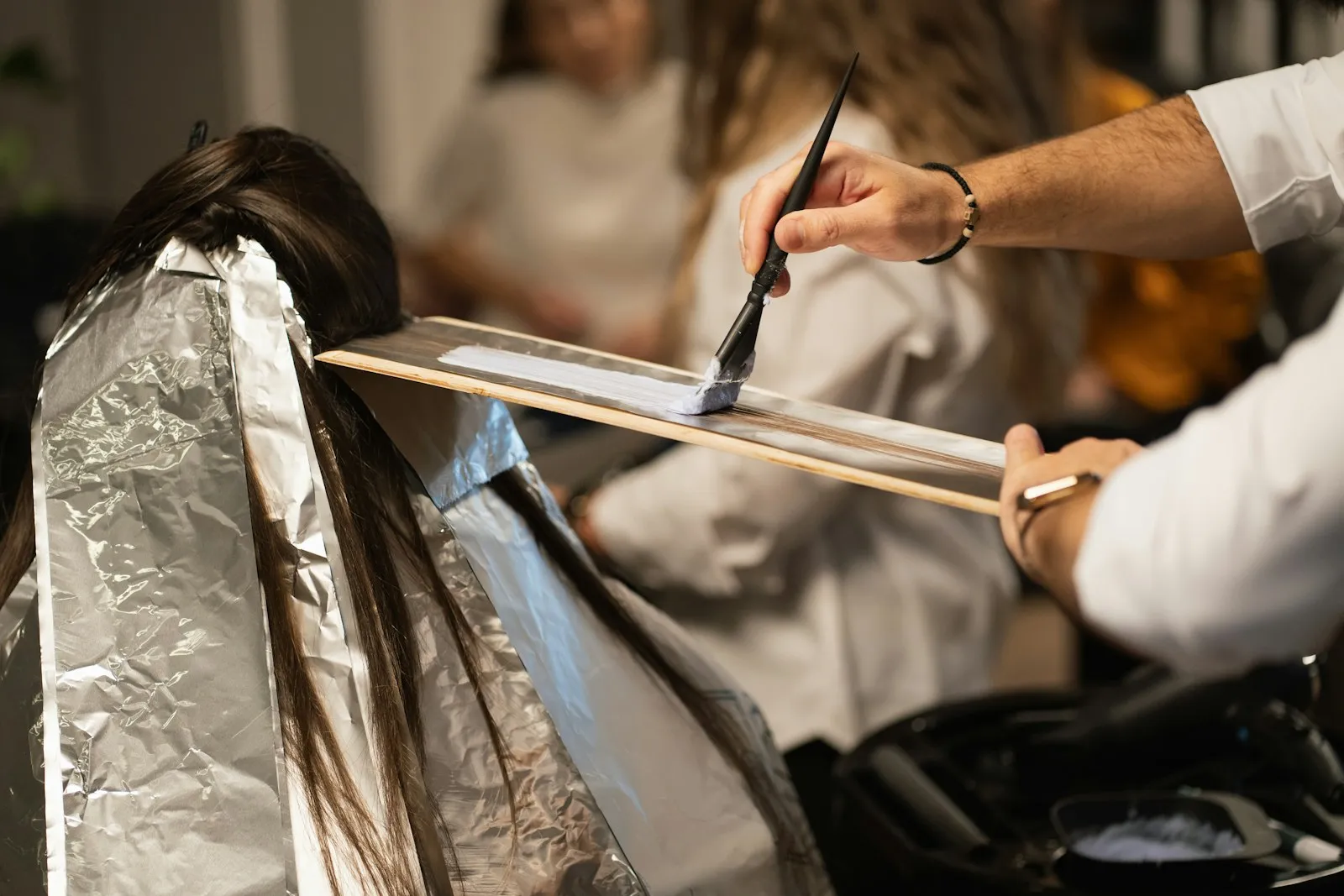
To check a direction before anyone mixes it, try the hood test. Wrap a scarf over your hair, first in a golden beige or camel, then in a cool taupe or gray-beige, and watch your skin in daylight. A scarf imitates a large area of hair color at the edge of your face in a way a small swatch cannot, though fabric has no shine and reads flatter than hair.
Gray changes the picture. Gray hair is cool and it lowers your contrast, and a full head of ash-silver can bring out the gray in olive skin the same way very ashy dye does. One route is to blend the gray with soft beige or caramel pieces. The other is to keep the silver and put warmth back near the face with a rose-brown lip and blush. As contrast drops, a softer neighbor of your old season often starts to work. Tell your colorist the tone you want and the one you don’t, for example “beige, not golden” or “warm, but no orange”.
Gold or silver for olive skin
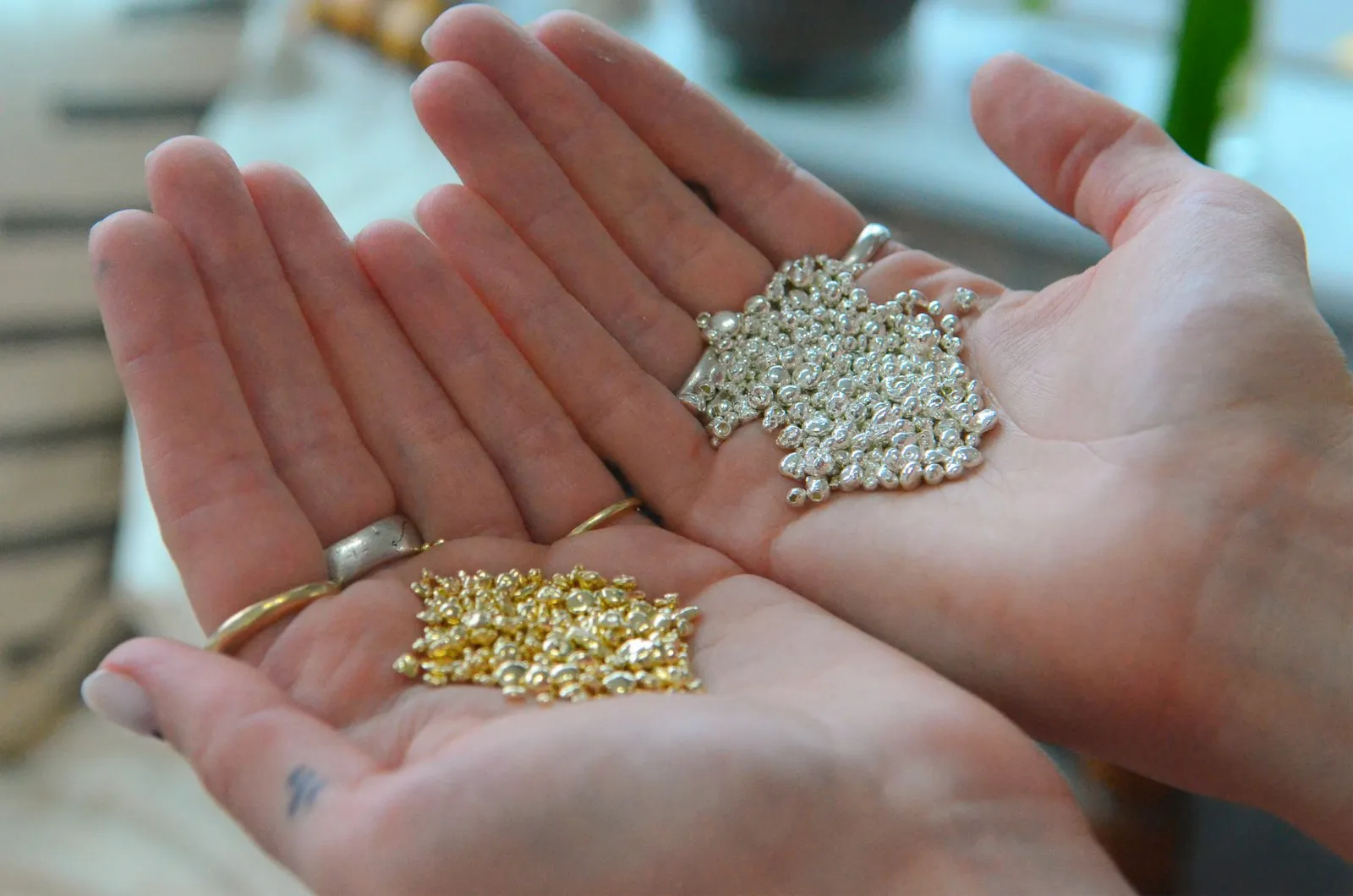
Usually gold, in a softer finish than polished: brushed or antique gold, bronze, or rose gold. Bright polished silver can make olive skin look gray, while brushed silver often works. The finish matters as much as the metal, because olive coloring is usually soft, and soft coloring looks best in brushed, matte or antique finishes. Undertone picks the metal; contrast picks the finish.
Test it the way the check above did. In daylight, with no makeup and your hair pulled back, hold polished gold and then polished silver against your jaw or neck, and look at the skin, not the jewelry. If neither wins clearly, repeat with brushed versions. The brushed pair usually settles it for olive skin.
| Finish | On olive skin |
|---|---|
| Polished yellow gold | Can look brassy and pull out the yellow; works with clear, warm coloring |
| Brushed or antique gold, bronze | The usual first choice: warm without the shine |
| Rose gold | Warmth with pink in it rather than yellow |
| Polished silver, platinum | Can make the skin look gray; works with dark, high-contrast cool coloring |
| Brushed or oxidized silver, pewter | Often works: cool but soft |
Silver wins when your season is a Winter. If your hair is near-black and your contrast high, you may be a Deep or True Winter, and then polished silver and platinum look sharper than any gold. Your season, not the word olive, has the final say. Mixed metals look deliberate when one piece links them, such as a two-tone watch, or when each metal appears at least twice.