OvalD/B 1.3–1.5
Longer than wide, with a forehead slightly wider than the jaw and a gentle taper. Most frames and cuts work, so the task is keeping balance rather than correcting anything. Read the guide to oval vs oblong.
Your face shape influences what flatters most: glasses, hair, brows, earrings and necklines. Measure once, use it everywhere.
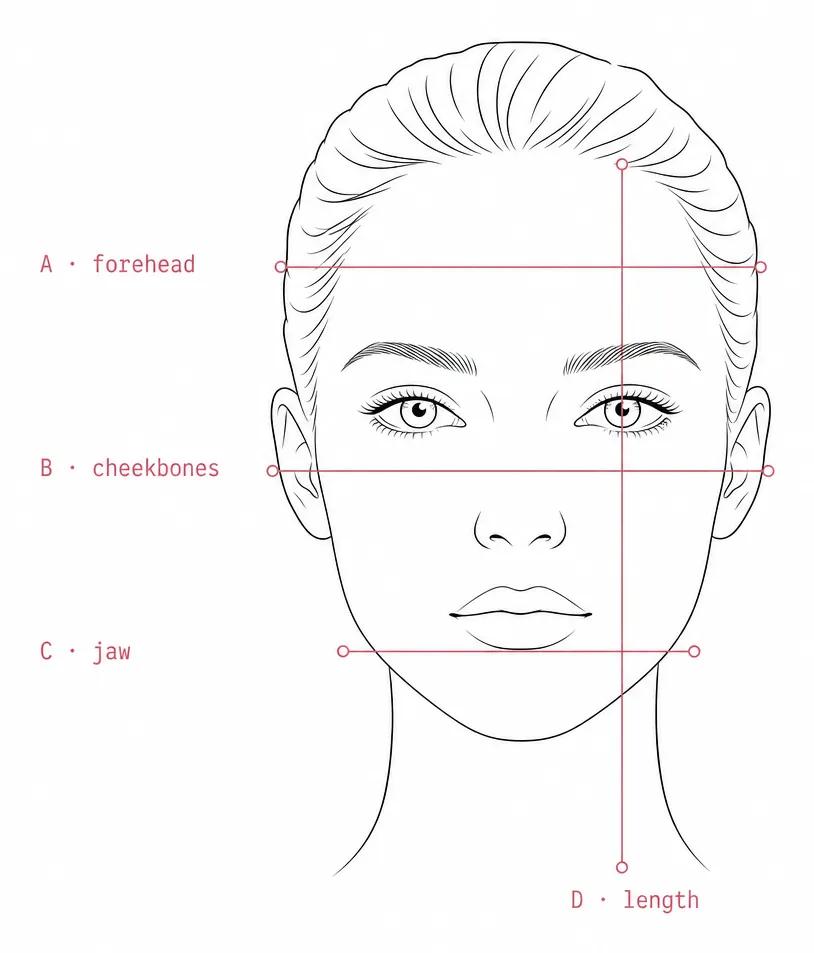
Measure the widest part of your forehead, usually halfway between your brows and your hairline.
Measure across the most prominent points of your cheekbones, just below the outer corners of your eyes.
Measure the widest part of your jawline, from the angle under one ear to the other.
Measure from the centre of your hairline to the bottom of your chin.
Two things decide almost every face shape: how long the face is compared with its width, and where the widest point sits. Most people sit between two shapes, so read both descriptions.
Longer than wide, with a forehead slightly wider than the jaw and a gentle taper. Most frames and cuts work, so the task is keeping balance rather than correcting anything. Read the guide to oval vs oblong.
Length close to width, cheekbones widest, soft jawline. Height at the crown, long layers and angular frames add length. See hairstyles for a round face.
Forehead, cheekbones and jaw are nearly the same width, with a defined jaw angle. Rounded frames, soft layers at the jaw and curved necklines soften the corners.
Clearly longer than wide, with widths that stay similar from top to bottom. Width at the temples, a strong top line in frames and volume at the sides rather than the crown shorten the read.
The forehead is the widest point and the face narrows to a fine chin. Frames with weight at the bottom and cuts with volume at chin level balance the top. See glasses for a heart-shaped face.
Cheekbones are clearly the widest point, with a narrower forehead and jaw. Add width at the brow and the jaw; avoid anything that widens the cheekbone line.
The jaw is wider than the forehead, so the face widens downward. Volume and detail above the eye line, and lighter shapes at the jaw, even it out.
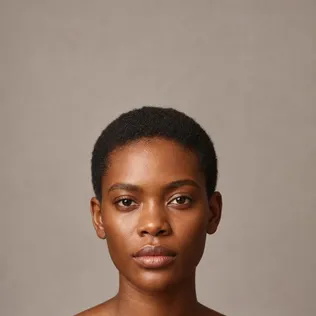
Four measurements decide your face shape. Here is how to take them with a ruler and a mirror, the mistakes that skew them, and how to read the result.
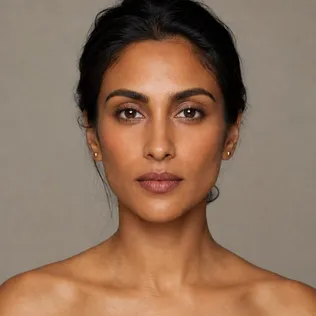
Oval and oblong faces are easy to mix up. One ratio, length divided by width, and one look at your jaw tell them apart, and change which styles suit you.

The best hairstyles for a round face add height at the crown and length below the chin. What to ask your stylist for, and the cuts that work against you.
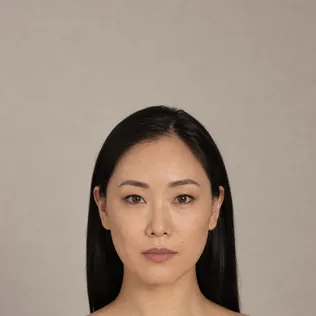
A heart-shaped face is widest at the forehead and narrows to the chin. These frame shapes, widths and colors balance it, and these ones make the top heavier.
Your bone structure does not, but weight, age and hairstyle change how the shape reads. Measure the bones, then style the read.
Most people are. The calculator shows the full ranking and the margin between the top two. Follow the advice for the leader and borrow from the runner-up where they agree.
A tape measure is more reliable. Photos distort with lens distance and head angle; a phone held close makes the face look narrower and the nose larger.