Eye color depends on how much melanin, the brown pigment that also colors skin, sits in the front layers of the iris, and on how the rest of the iris scatters light. Brown eyes hold the most pigment, blue and gray eyes the least, and hazel and green sit in between, which is why they shift most with light and clothes; the eye color chart below covers all six common colors. Any eye color stands out in one of two ways: next to a color from the opposite side of the color wheel, or next to a color that repeats it. Your color season picks the exact shade of each. Your eye color does not pick your season.
The eye color chart
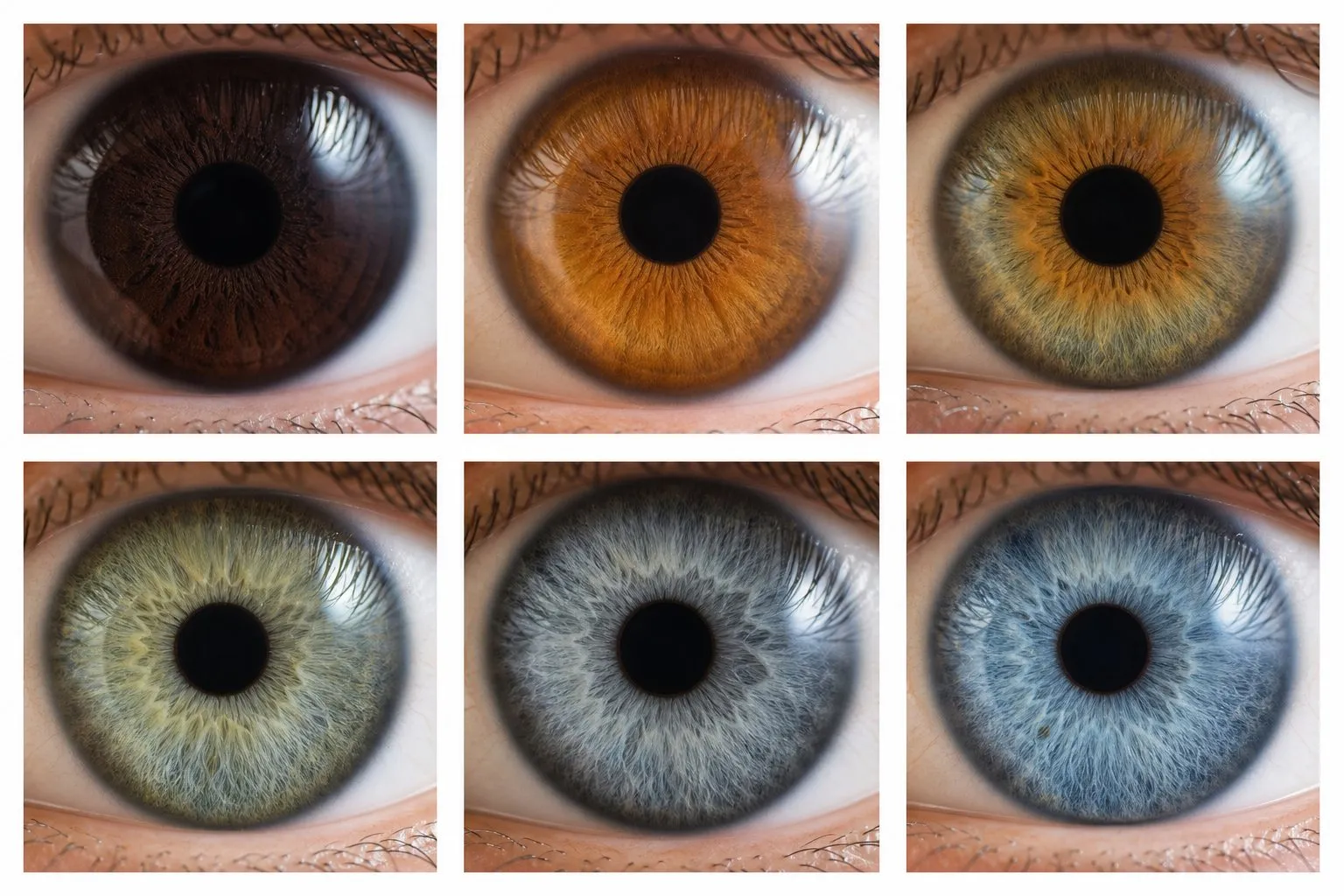
| Eye color | What you see | What makes it look that way | How much it shifts |
|---|---|---|---|
| Dark brown | Deep brown that can look almost black | A lot of melanin in the front layers of the iris | Little: the pigment absorbs most light |
| Light brown and amber | Golden or coppery brown; amber is an even golden tone with little pattern | Less melanin than dark brown; research has not pinned down what sets amber apart | Some: gold reads warmer or cooler with the colors nearby |
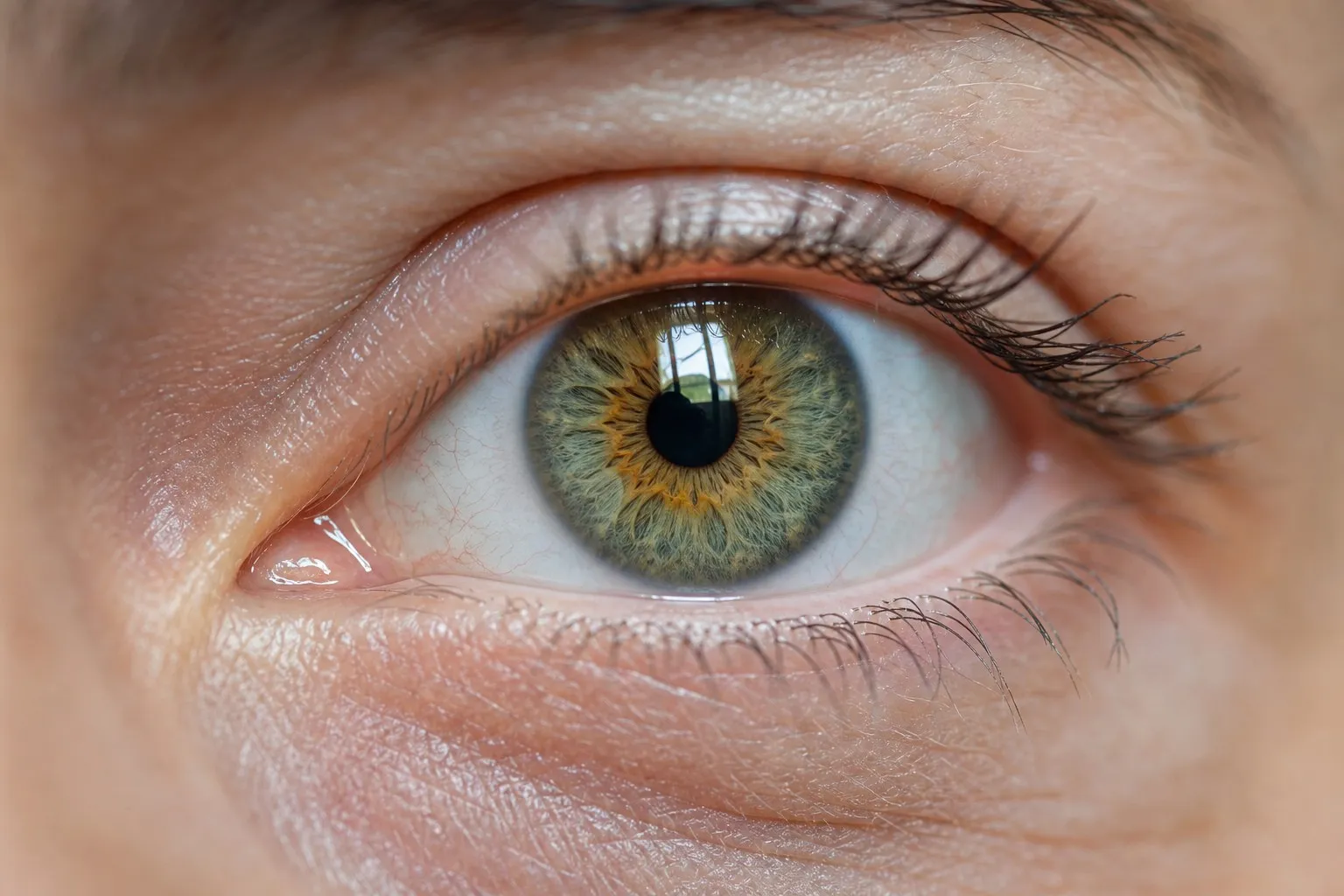
| Hazel | Brown or gold around the pupil, green or gray toward the edge | Light brown pigment plus scattered light, in different amounts in different parts of the iris | A lot |
| Green | Green across most of the iris, often with a darker rim | A small amount of light brown pigment combined with scattered light | A lot |
| Gray | Smoky gray or gray-blue | Very little melanin; the shade depends on how thick and dense the iris is and how much white collagen fiber it holds | Moderate |
| Blue | Clear to soft blue | No pigment in the front layer: its fibers scatter blue light back out, the way water and the sky look blue | Moderate |
The table follows two sources: the American Academy of Ophthalmology’s patient pages on eye color, and a review of iris color genetics by Richard Sturm and Mats Larsson (2009). Almost everyone, blue-eyed people included, has brown pigment in the back layer of the iris; what differs is the front. Blue eyes contain no blue pigment at all. Gray, green and hazel are shaped by the same small amounts of pigment plus the structure of the iris itself.
The six names are labels on a continuum, not separate types. Sturm and Larsson note that iris color runs from the lightest blue to the darkest brown and is usually sorted into just three groups: blue, green-hazel and brown. In their own photographs of twins, most irises graded green-hazel had a brown ring around the pupil, which suggests that what people read as hazel is often that ring against a lighter iris.
Brown is the most common eye color in the world, according to the Academy, and some people have two irises of different colors, called heterochromia, which can be present from birth or develop later. Eye color is shaped by many genes, so the old school chart with brown dominant and blue recessive cannot predict a child’s eyes: two blue-eyed parents can have a brown-eyed child.
Why eye color shifts with light and clothes
Real changes in eye color are rare. The American Academy of Ophthalmology describes the everyday shifts as an illusion created by the colors around you, lighting and clothes included, and by the pupils: when they widen, less of the iris shows. Hazel and green eyes shift most, because their color is a mix of pigment and scattered light. Blue eyes get their whole color from scattered light, so they change with the light too.
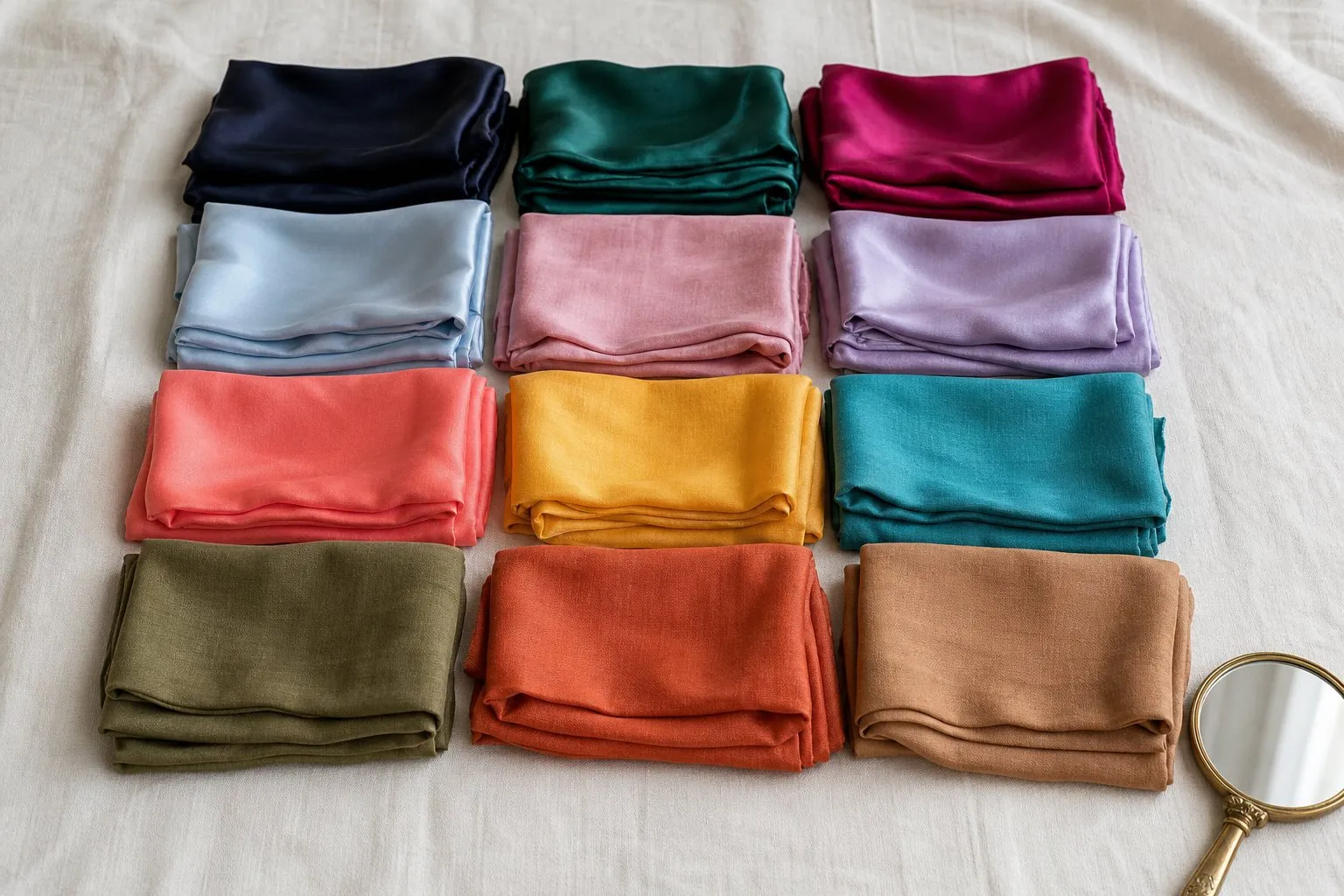
That is the mechanism this whole page relies on. A fabric under your chin changes the light bouncing onto your face and the colors your eyes are seen against, so the same iris can read greener, warmer or brighter from one top to the next.
Two practical rules follow. Compare only in the same light: daylight from a window, at the same time of day, at the same distance from the mirror or camera. And do not compare today’s photo with last month’s, because the light will have changed more than your eyes.
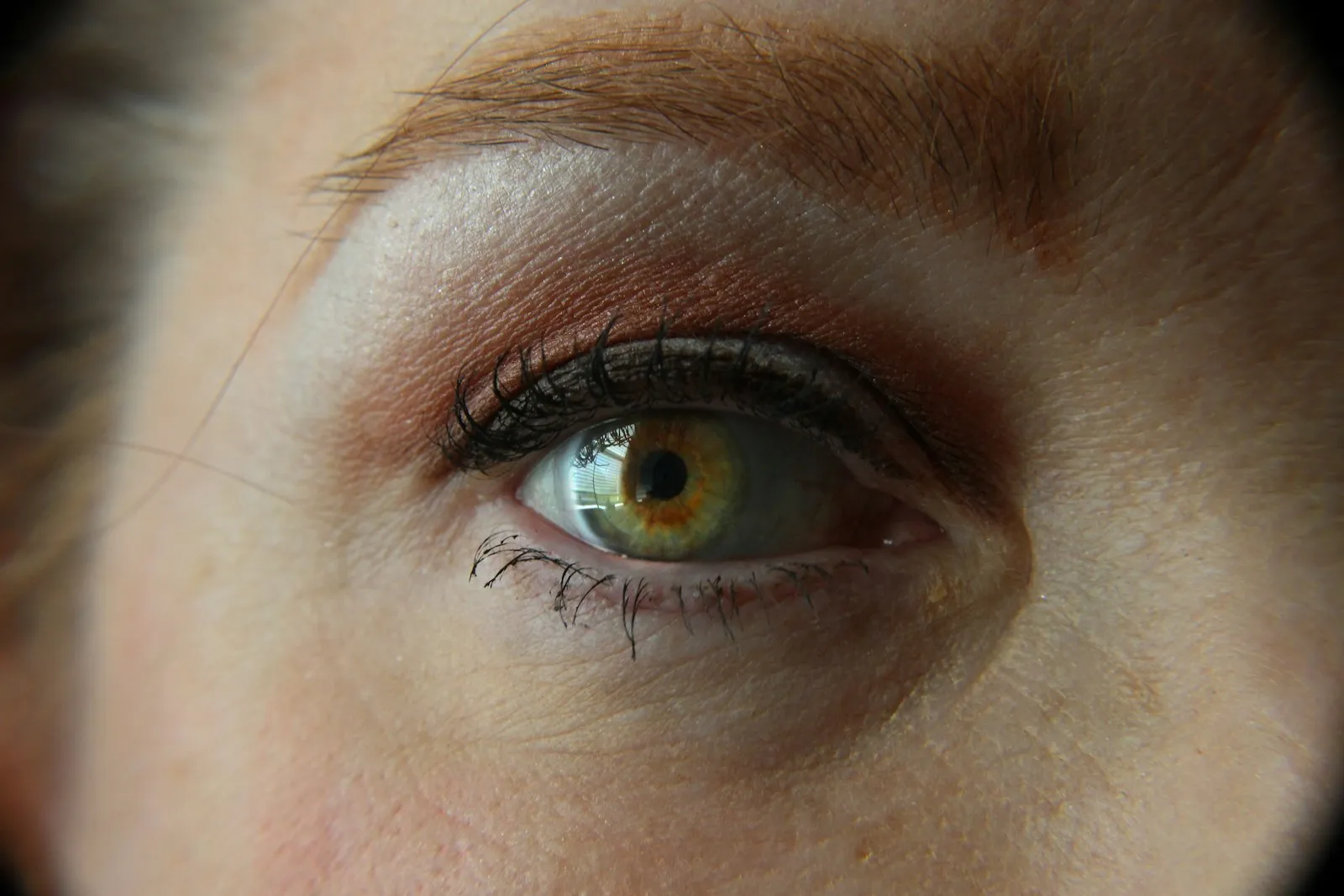
Babies are the exception: their eyes often start with little pigment and can darken during the first year as it develops. After that, most people keep the same eye color from the time they learn to walk into old age, says the Academy. A distinct change in either eye is a reason to see an ophthalmologist promptly, and some glaucoma drops can darken the iris permanently.
Contrast or echo
Every eye color can be made to stand out in two ways, plus a third, quieter lever.
Contrast. A color looks stronger next to its opposite. On the painter’s color wheel, blue sits opposite orange, red opposite green and violet opposite yellow. So coral sharpens blue eyes, terracotta and plum sharpen green ones, and blues sharpen brown eyes, because brown is a dark, softened orange.
Echo. Repeating a color near the face makes the eye notice it, the way a belt picks up the color of a shoe. A scarf in the exact blue of your irises draws attention to them. Echo works for everyone, but only if the match is close: icy blue for icy eyes, olive for olive-green hazel.
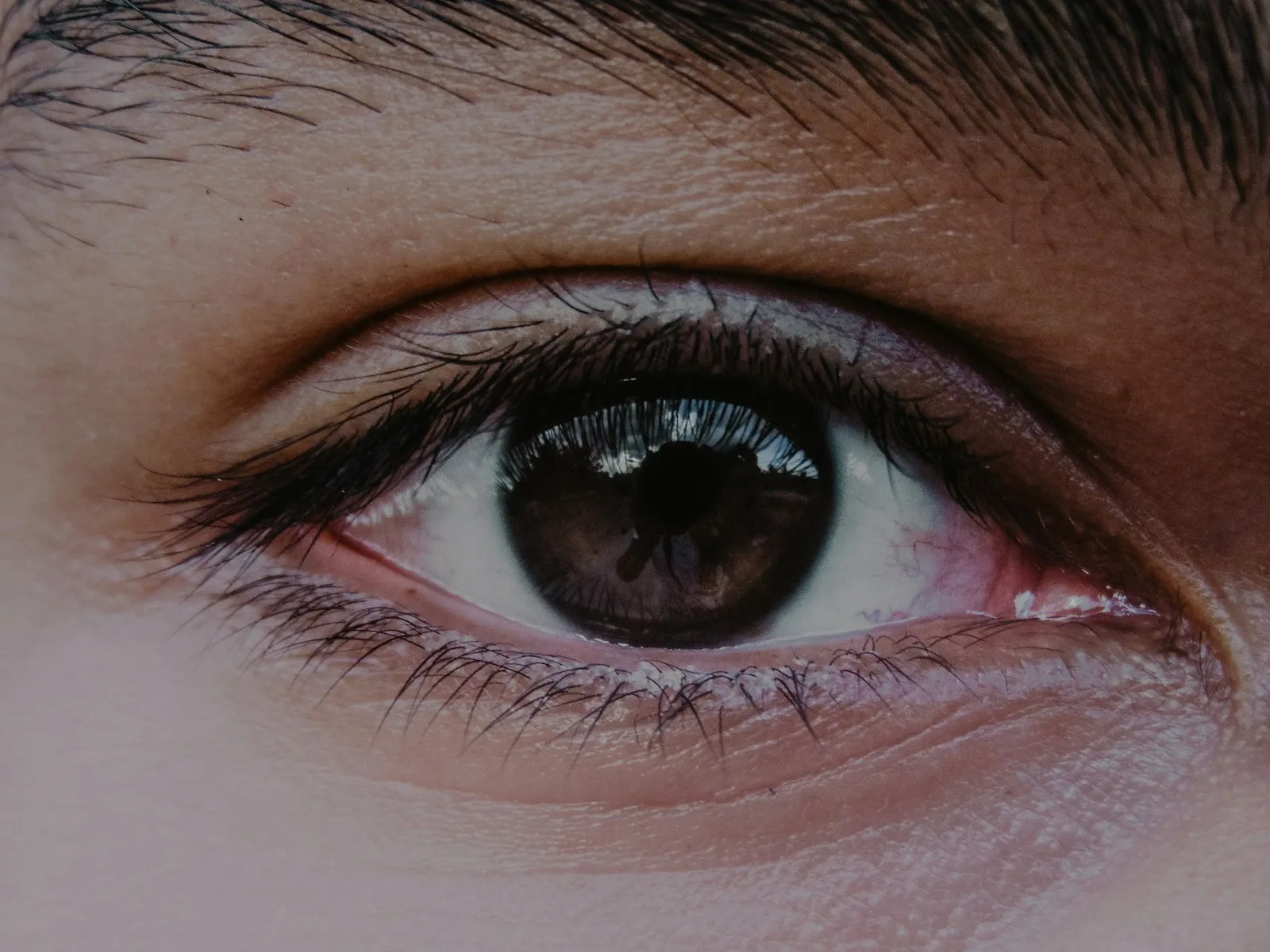
Depth. A dark color near a light eye makes the eye look lighter by comparison. Very dark eyes work the other way: their color barely shows, so what people see is the edge between a dark iris and its surroundings, and clear, deep or light colors nearby sharpen that edge.
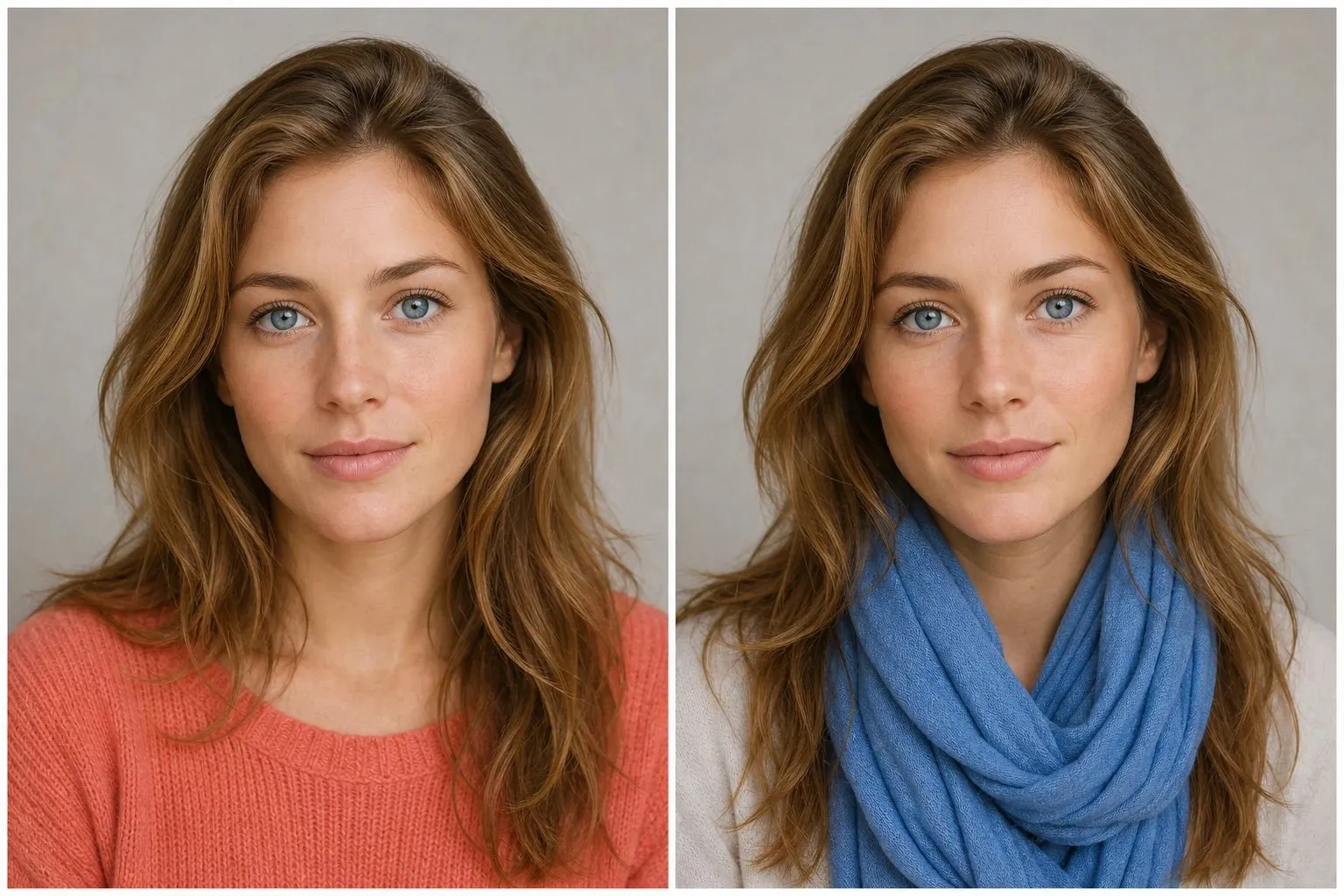
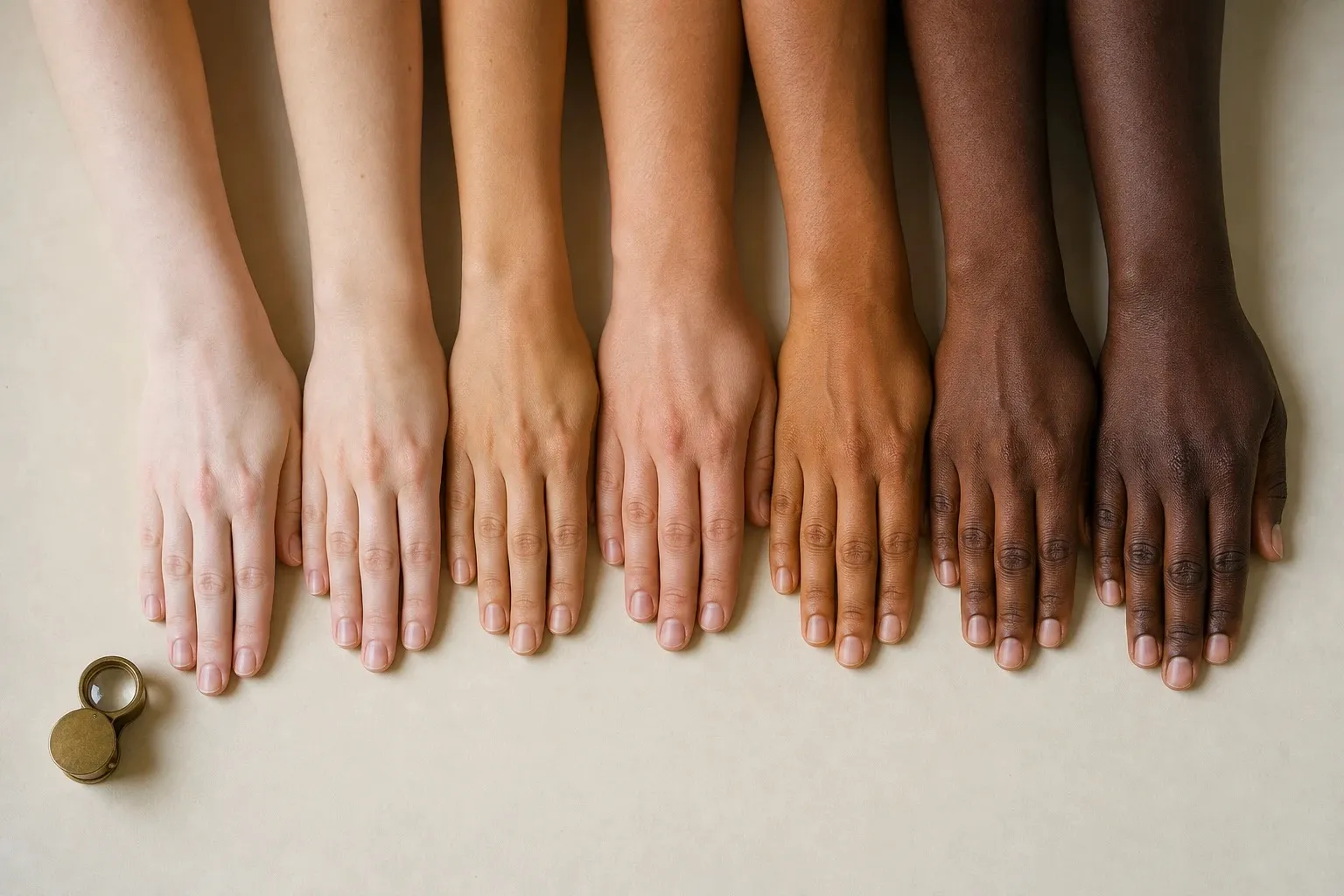
The contrast color has to suit your skin first. Coral is the textbook partner for blue eyes, but on cool skin it can look harsh, and then echo or depth does the job instead. That is where color seasons come in. Undertones and color seasons are a styling framework, not a measurement of your skin. The tests here compare colors side by side, which anyone can repeat in daylight.
The tables below take every color from that season’s palette in our quiz. They show a range of seasons; if yours is missing, apply the same routes to your own palette.
Hazel eyes
Hazel eyes lean either toward green or toward gold, and the lean decides which colors bring them out. Find yours with two fabrics, one mid-green (olive or moss) and one gold (mustard, camel or bronze), window light and your phone.
- Hold the green fabric under your chin and take a close photo of your eyes.
- Swap to the gold fabric, same light, same distance, and take a second photo.
- Compare the two side by side.
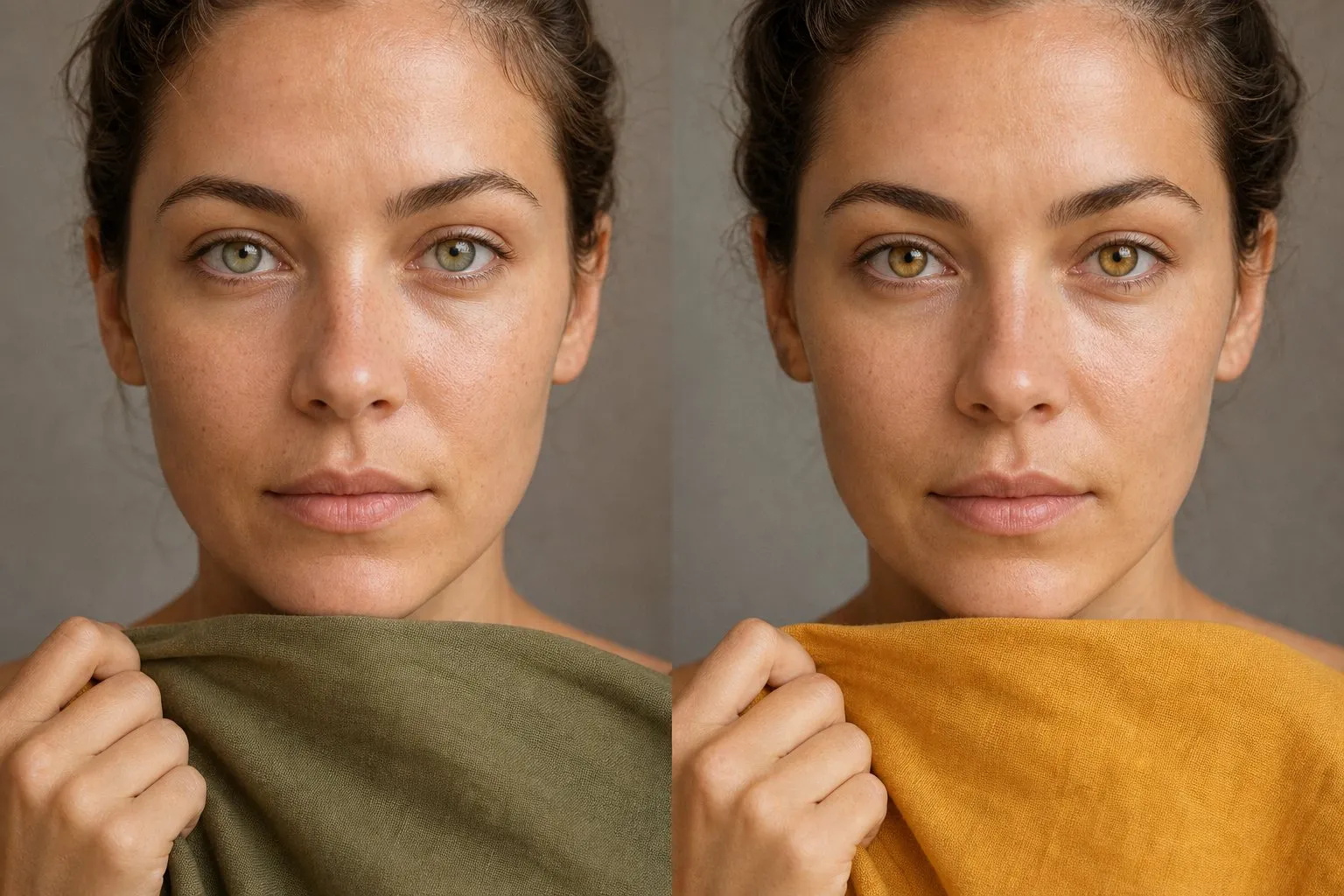
Many hazel eyes switch visibly: greener with the green fabric, warmer and browner with the gold. The fabric that gives the eye color you prefer is your direction. If both look equally good, you have a balanced hazel and can work from either side.
To bring out the green, use the red family, which sits opposite green. For hazel eyes the earthy members usually work best: terracotta, rust, brick, burgundy and plum. Purple helps as well, since it sits opposite the yellow in many hazel greens. For echo, pick a green as muted as your iris, usually olive, moss or a soft forest rather than a clear emerald.
To bring out the gold, use blue-violet, the opposite of the yellow-orange in gold and amber: periwinkle, violet, soft navy and teal. Deep teal is especially useful because it carries the blue that contrasts with gold and a hint of the green the eye already holds. For echo, bronze, camel and mustard pull the eye toward its golden side; on a hazel with a lot of brown, they can make it read simply as light brown.
A worked example: a gold-leaning hazel with a True Autumn palette. The contrast piece is a deep teal knit, the echo is a mustard scarf, and chocolate brings depth as trousers or a coat. Worn together, teal near the face does the work, mustard repeats the gold in a smaller dose, and the chocolate keeps both from looking loud.
| Season | To bring out the green | To bring out the gold |
|---|---|---|
| Soft Summer | Rose, mauve, sage | Periwinkle, dusty blue |
| Soft Autumn | Terracotta, salmon, olive | Muted teal, camel |
| True Autumn | Rust, pumpkin, forest | Deep teal, mustard |
| Deep Autumn | Brick, aubergine, forest | Dark teal, dark mustard |
| Light Spring | Warm pink, light coral, aqua | Clear sky, butter |
| True Spring | Coral, poppy, kelly green | Clear blue, golden yellow |
| Bright Spring | Hot coral, bright pink, emerald teal | Royal blue, sunflower |
Choose the direction first, green or gold. The season only picks the shade.
Brown eyes
Brown eyes use the same routes, with depth deciding the balance. Look closely in daylight and place yours in one of three groups.
Light brown and amber eyes carry a lot of gold and behave like gold-leaning hazel. Teal, periwinkle and soft navy contrast with them; camel, bronze and warm brown echo them. For amber eyes, a violet or periwinkle liner at the lash line is the strongest small dose of contrast.
Medium brown eyes take the widest range. Echo them with a brown from your palette’s neutrals and add contrast with whatever blue your season carries, from slate blue in True Summer to clear blue in True Spring.
Very dark brown eyes, close to black, gain most from depth. Deep jewel tones such as sapphire, emerald and burgundy, and in Winter palettes black and pure white, make a dark eye look darker and clearer.
| Season | Echo | Contrast | Depth |
|---|---|---|---|
| Soft Summer | Pewter | Dusty blue, periwinkle | Soft navy |
| Soft Autumn | Camel, mushroom | Muted teal | Warm taupe |
| True Autumn | Mustard, chocolate | Deep teal | Forest |
| Deep Autumn | Chocolate, dark mustard | Dark teal | Aubergine, forest |
| True Spring | Golden yellow | Clear blue, warm turquoise | Golden brown |
| Bright Spring | Espresso, sunflower | Royal blue, bright aqua | Emerald teal |
| Deep Winter | None in the palette | Sapphire | Burgundy, emerald, black |
| True Winter | None in the palette | Royal blue | Black, white |
| Bright Winter | None in the palette | Electric blue | Black, bright emerald |
The three Winter rows have no echo because the Winter palettes hold no brown. A brown-eyed Winter loses nothing by it: their strength is the depth column, where a dark eye meets strong contrast.
Green eyes
Green eyes are green across most of the iris, sometimes with a darker rim. If you see clear brown or gold patches around the pupil, treat your eyes as hazel and start with the test above, because they will respond to the gold side too.
Red sits opposite green, so any red-family color near the face intensifies green by contrast, and the family is wider than it sounds: dusty rose, terracotta, raspberry, brick and burgundy all belong to it. Purple does a related job. It sits opposite yellow, and many green eyes lean yellow-green, so violet and plum sharpen that component and any gold flecks.
Matching greens work by echo, and here the rule is strict: pick the green closest to your eyes, not the brightest you can find. A kelly green next to a gray-green eye makes the eye look dull by comparison.
| Season | Echo | Contrast | Darkest neutral |
|---|---|---|---|
| Soft Summer | Seafoam, sage | Rose, mauve | Soft navy |
| Soft Autumn | Sage, olive, muted teal | Terracotta, salmon | Warm taupe |
| True Autumn | Olive, forest | Rust | Chocolate |
| Deep Autumn | Forest, dark olive | Brick, aubergine | Chocolate |
| Light Spring | Aqua | Warm pink, light coral | Light camel |
| True Spring | Kelly green, warm turquoise | Coral, poppy | Golden brown |
| Bright Spring | Emerald teal | Bright pink, hot coral | Espresso |
| Bright Winter | Bright emerald | Hot pink, vivid purple | Black |
Within a row, the contrast column gives the stronger effect; the echo column is the calmer choice for every day.
Blue eyes
Name your blue as precisely as you can, close up in daylight. Three broad kinds point toward different colors, and gray eyes belong with the first:
- Gray-blue or soft blue, blended and slightly smoky, like most gray eyes.
- Clear, bright or icy blue, sharp against the white of the eye.
- Warm or turquoise-leaning blue, sometimes with a gold ring near the pupil.
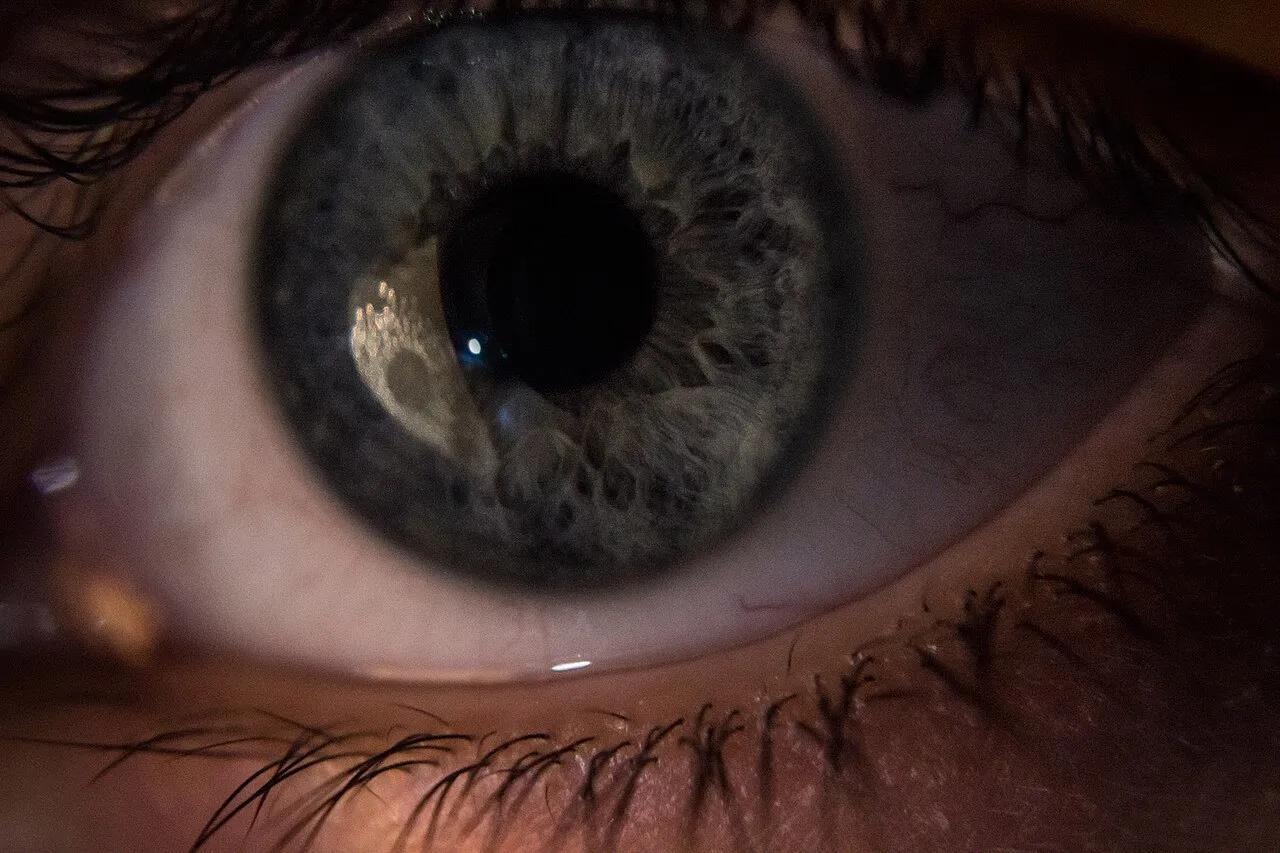
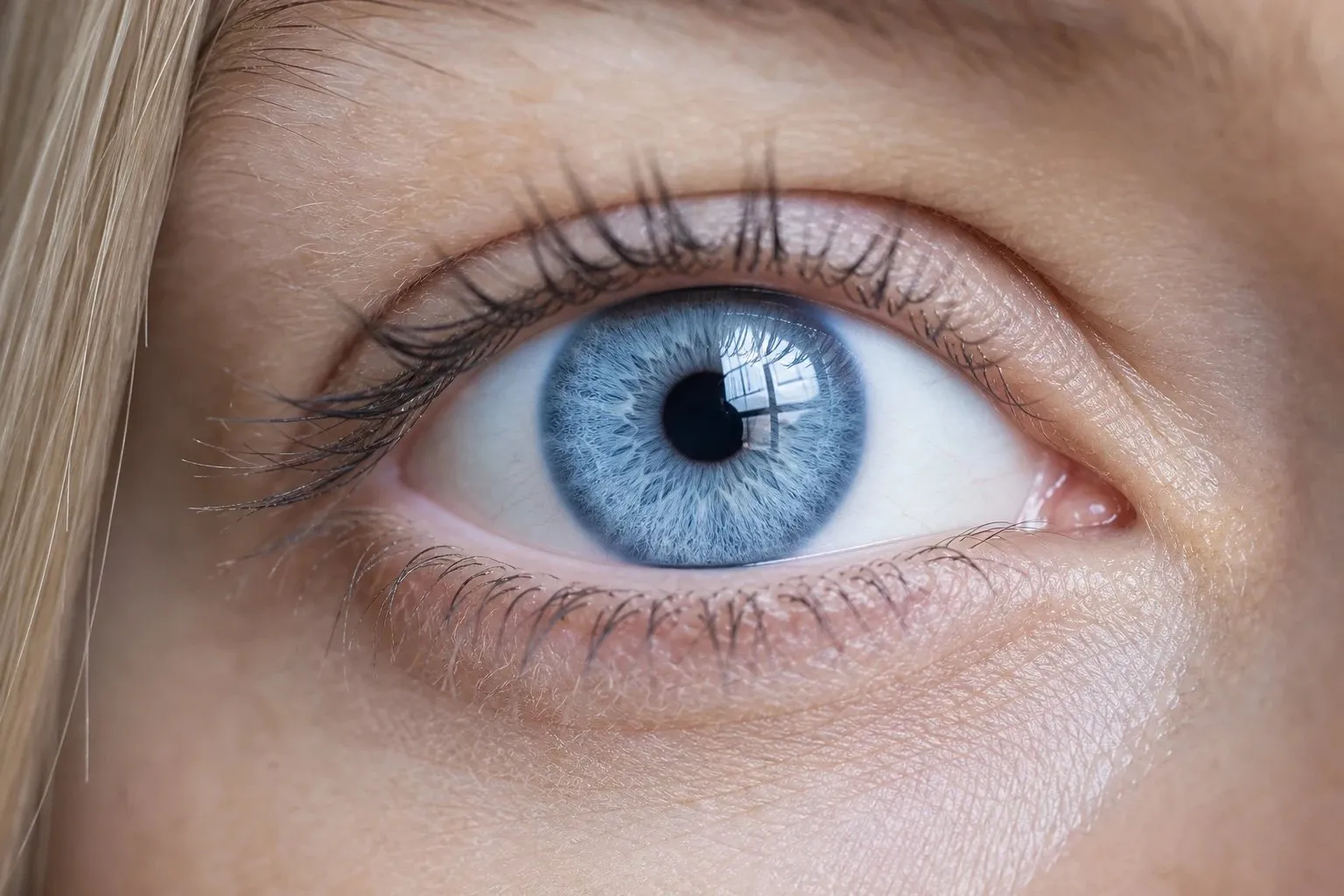
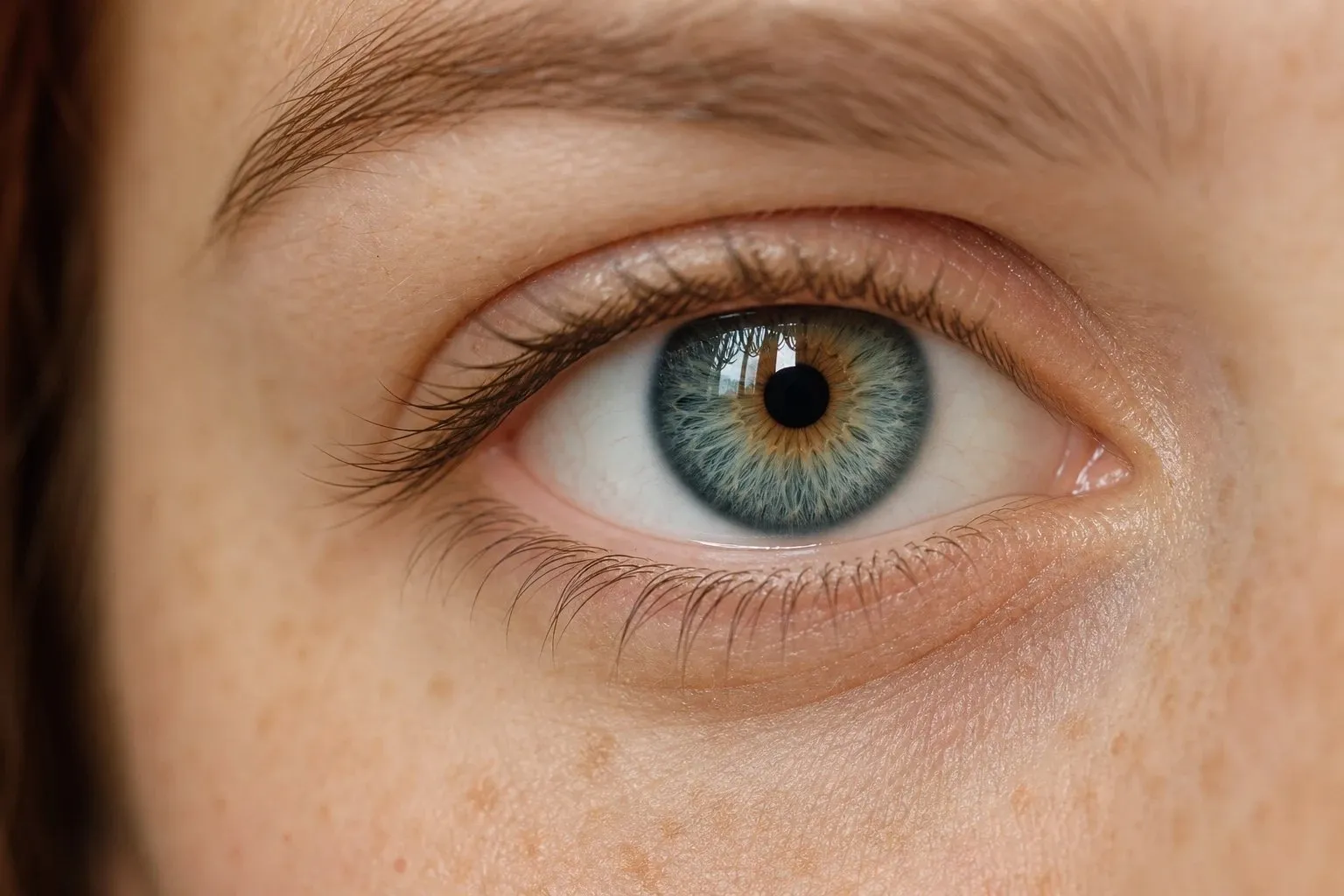
The orange family gives the strongest contrast, but only the warm palettes carry it. Summer and Winter palettes leave orange out, so they get their contrast from pinks and berries instead: not the exact opposite of blue, but warm enough next to a cool blue eye to sharpen it. Echo is the route that works on every skin, as long as the blue matches; a blue that is brighter or different from yours makes the eye look duller next to it.
| Season | Echo | Contrast | Darkest neutral |
|---|---|---|---|
| Light Summer | Powder blue, lavender | Light rose | Soft navy |
| True Summer | Cornflower, slate blue | Raspberry, rose | Navy |
| Soft Summer | Dusty blue, periwinkle | Mauve, rose | Soft navy |
| True Winter | Royal blue, icy lavender | Fuchsia | Black |
| Bright Winter | Electric blue | Hot pink, vivid purple | Black |
| Light Spring | Clear sky, aqua | Peach, light coral | Light camel |
| True Spring | Clear blue, warm turquoise | Coral, poppy | Golden brown |
| Bright Spring | Royal blue, bright aqua | Hot coral | Espresso |
Gray eyes follow the gray-blue logic: dusty blue or powder blue as echo, and a dark neutral such as soft navy or charcoal to make them look lighter and clearer.
Eyeshadow by eye color
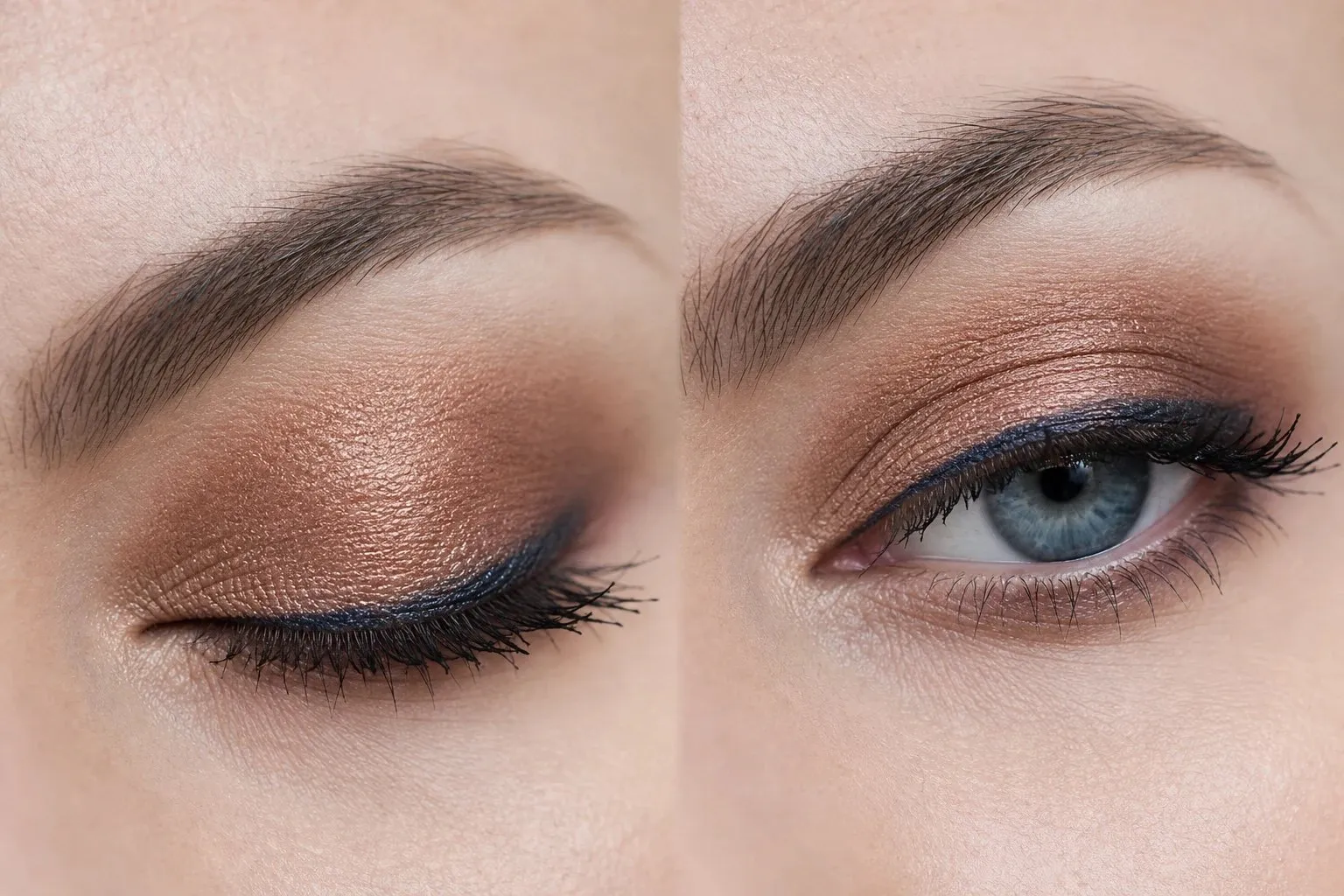
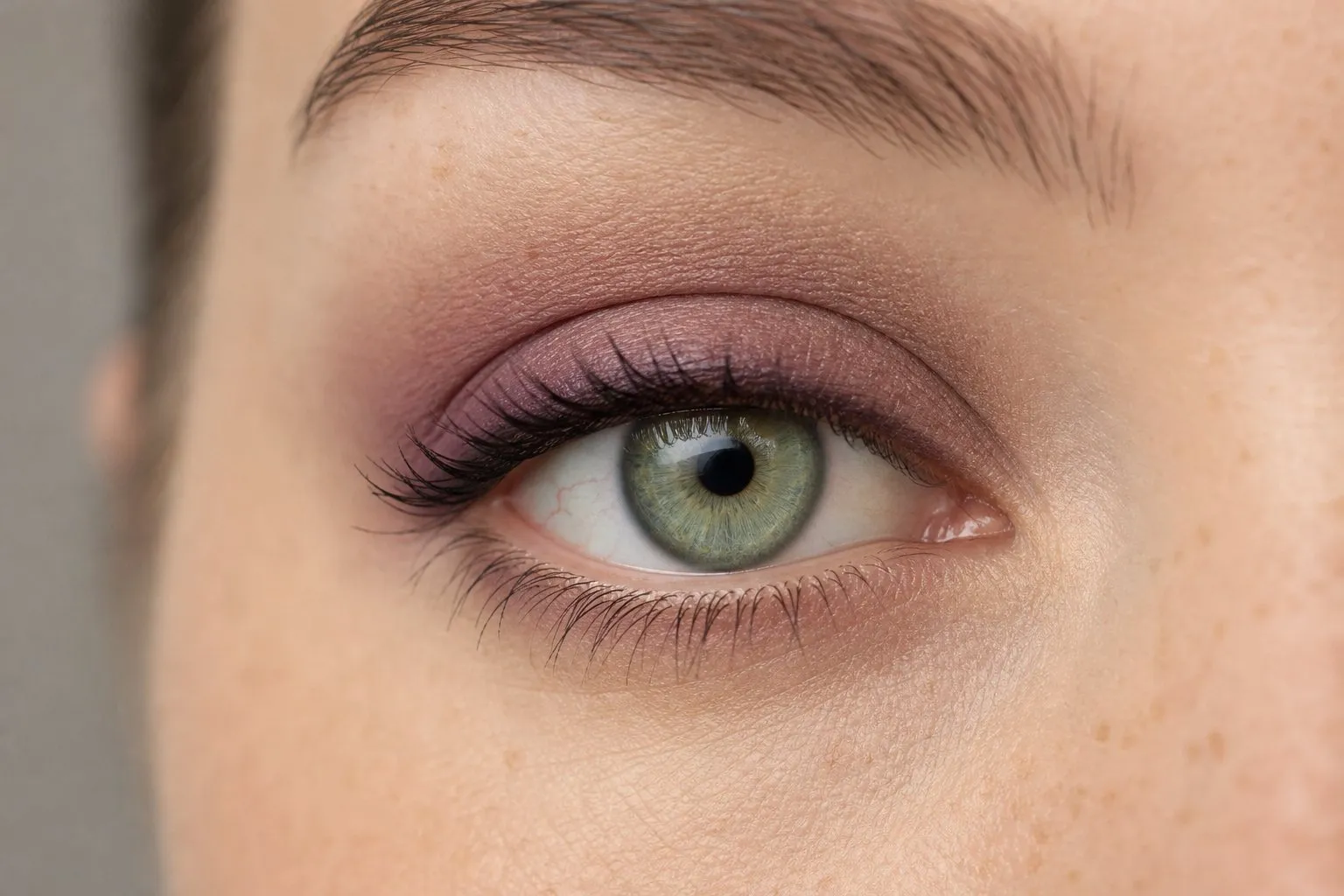
Eyeshadow uses the same two routes on a smaller scale, and the small scale helps: some people with cool coloring can wear a soft bronze on the lid even though a copper sweater looks harsh on them. Match the depth of the shades to your coloring, soft for soft palettes and deep for deep ones, and let your eye shape decide where the color goes.
| Eye color | Contrast shades | Echo shades | Liner |
|---|---|---|---|
| Dark brown | Deep plum, navy, teal | Espresso, deep bronze | Espresso or navy |
| Light brown and amber | Violet, periwinkle, teal | Bronze, copper, warm brown | Violet or soft navy at the lash line |
| Hazel, green side | Plum, aubergine, rust, terracotta | Olive, moss | Aubergine or deep brown |
| Hazel, gold side | Violet, periwinkle, deep teal | Bronze, camel | Deep teal or navy |
| Green | Plum, aubergine, burgundy, mauve, copper | A green close to the iris, as a thin line | Aubergine or brown |
| Gray | Soft bronze, taupe, plum | Pewter, charcoal | Charcoal or soft navy |
| Blue | Bronze, copper, peach; taupe or soft plum if warm shades look harsh | A blue close to the iris, as a thin line | Navy |
Echo is the riskier route on the lid. A shadow in nearly your eye color tends to compete with the iris across a whole lid, so keep it to a line or a smudge at the lashes.
The shades that work least well follow from the same logic. A brown shadow in exactly the brown of your iris, spread over the lid, flattens a brown eye instead of framing it; go a step lighter, deeper or warmer. Pale, chalky shades disappear next to very dark eyes. A green brighter than your own makes a green or hazel eye look dull, and a blue brighter than your own does the same to a blue eye. And a flat beige-brown across the lid can turn a gold-leaning hazel into plain light brown, which is fine if that is the look you want and a waste of the green if it is not.
Hair color and eye color
Hair sits next to the eyes all day, so it acts like a permanent fabric, and the same two routes apply: a shade that contrasts with your eye color makes it stand out, and one that echoes it blends hair and eyes together. Which route suits you is a skin question first.
The table of contrasting and echoing hair shades for each eye color is in the hair color chart, next to the tones that suit each undertone.

Eye color does not set your season
Color analysts read eye color as a clue, and our quiz does too, but only as one question of twelve. Its five answers each nudge one or two of the three axes, never by more than one step, which is as much as any single answer in the quiz can move an axis:
| Quiz answer | What it nudges |
|---|---|
| Clear bright blue, green or turquoise | Toward bright |
| Gray-blue, gray-green or soft hazel | Toward soft |
| Warm brown, amber or golden hazel | Toward warm |
| Very dark brown, almost black | Toward deep, and a little toward bright |
| Cool light blue or gray | Toward cool and light |
The other eleven answers, about veins, metals, skin, sun, hair, contrast and how colors behave under your face, outweigh it. That is deliberate, because every common eye color turns up in warm and cool seasons alike. A clear green can belong to a Bright Spring or a Bright Winter; a gray-green to a Soft Summer or a Soft Autumn; brown eyes to all four families; clear blue eyes to a warm Spring as well as a cool Summer. What separates each pair is the skin.
So read your undertone from your skin, settle your palette with seasonal color analysis or the quiz, and use your eye color last: to choose between two colors your palette already allows.