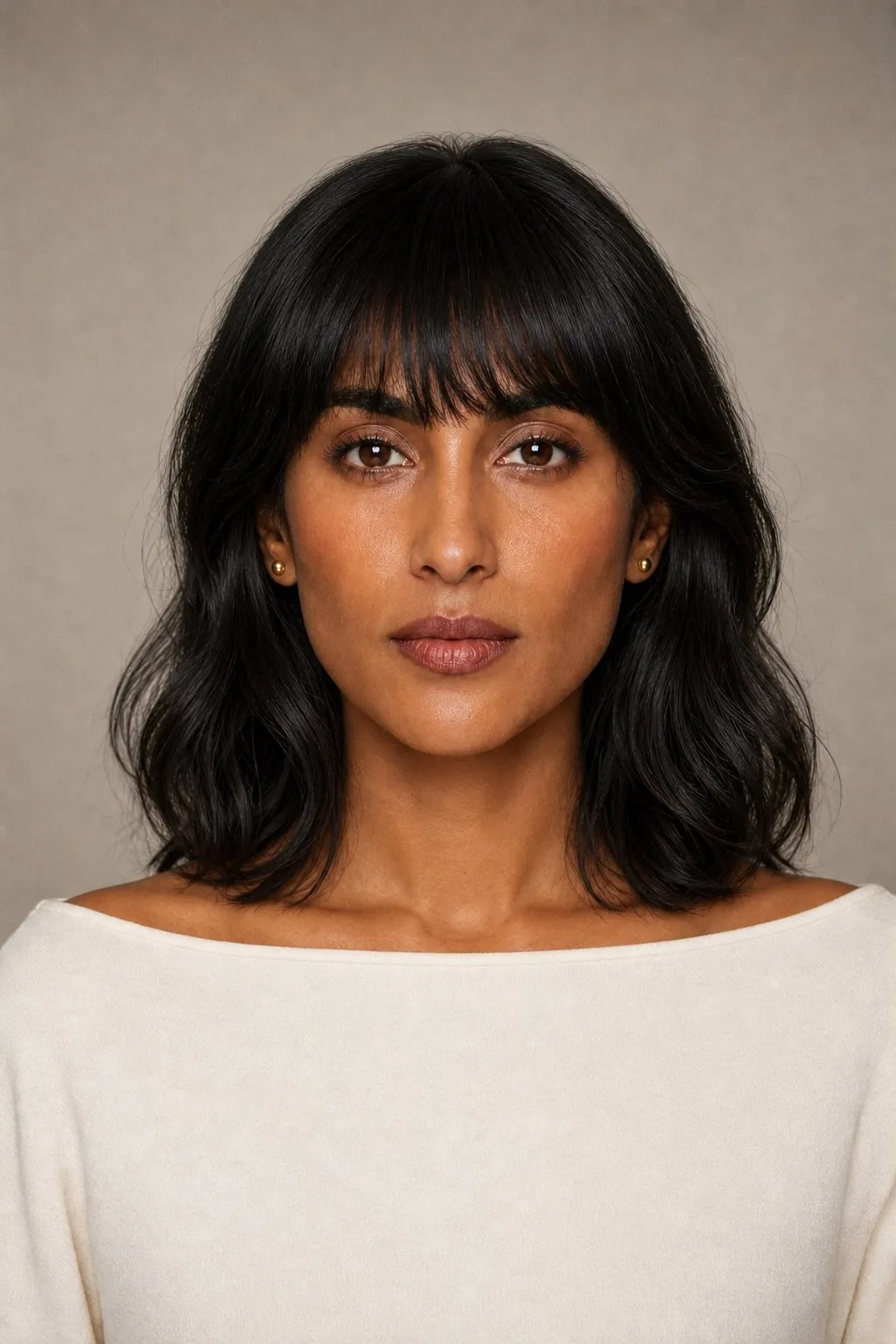
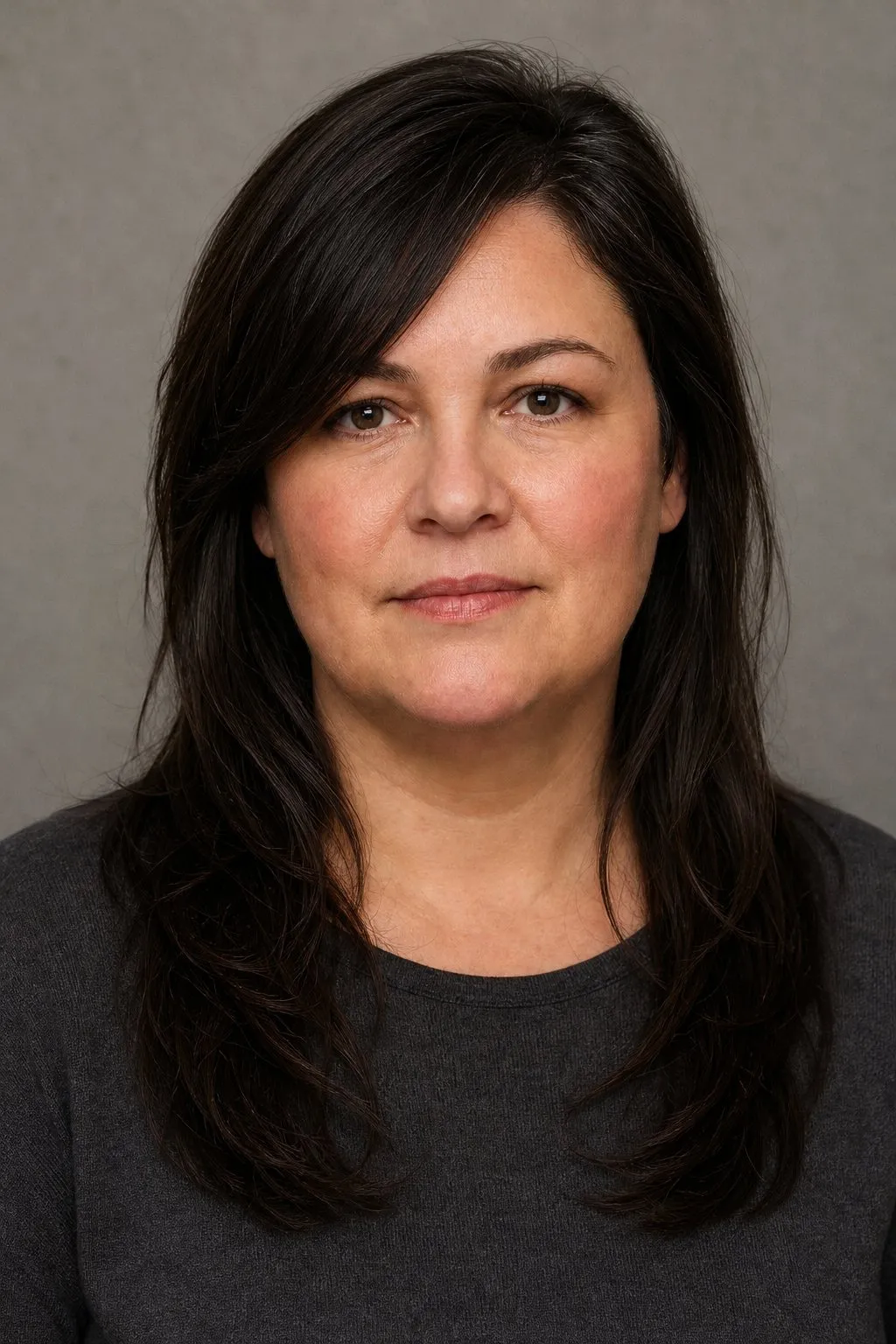
An oval face shape is longer than it’s wide, widest at the cheekbones, with a forehead close to that width and a jaw that tapers gently to the chin. In numbers, the face length is 1.30 to 1.50 times the cheekbone width. Because it sits in the middle of every measurement, most haircuts and frames suit it. So the real decisions are smaller ones: where a cut ends, how wide a frame is, and which edge of the oval range you sit near.
Face shapes are a styling framework, not an anatomical classification. The calculator compares three ratios with seven reference windows, and many faces sit between two shapes.
How to tell if you have an oval face
You need a mirror, a rigid ruler and two minutes. Pull your hair back, keep your expression relaxed and your head level, and take four straight measurements. Hold the ruler flat in front of your face and don’t wrap it around.
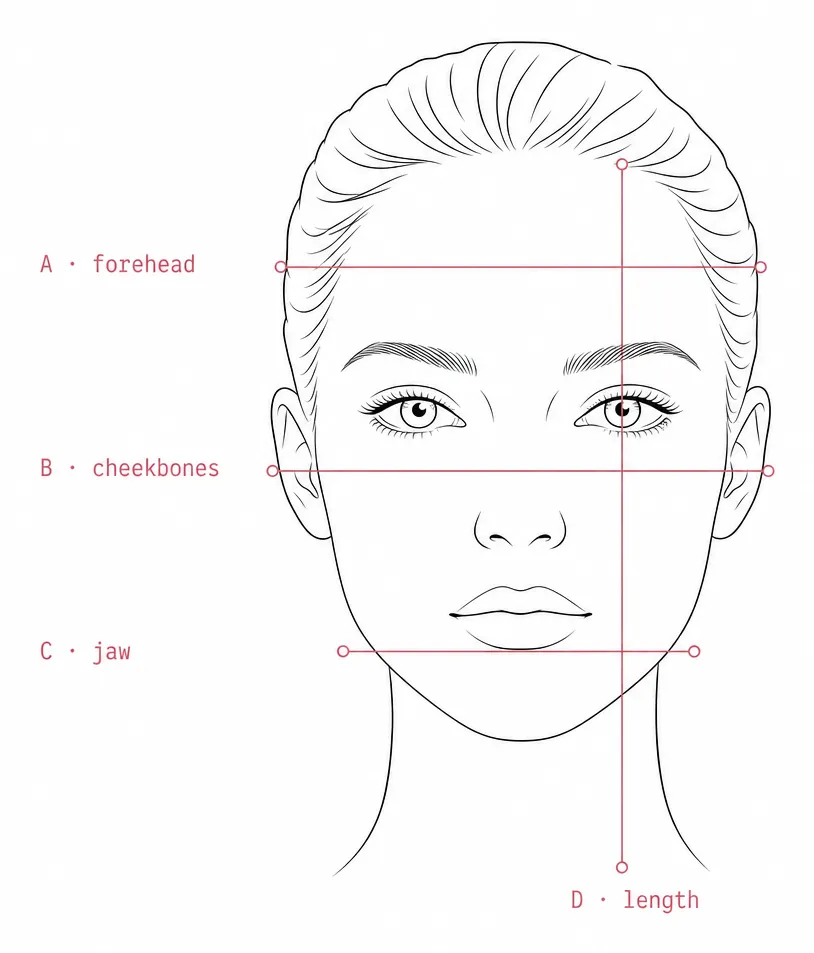
- A, forehead: at its widest, usually about halfway between brows and hairline.
- B, cheekbones: at the most prominent points, just below the outer corners of the eyes.
- C, jaw: from the angle below one ear to the angle below the other.
- D, length: from the center of the hairline to the bottom of the chin. If the hairline has receded, measure from where it used to be.
Then divide A, C and D by B. An oval face lands in three windows: length (D/B) from 1.30 to 1.50, forehead (A/B) from 0.88 to 1.00, jaw (C/B) from 0.75 to 0.88. In plain words, the forehead is a touch narrower than the cheekbones, the jaw is narrower by a clear margin, and the face is long without being long enough to look narrow. These shapes are only windows on three ratios, and nobody is born into one as a fixed category.
| Face shape | Forehead : B | Jaw : B | Length : B |
|---|---|---|---|
| Oval | 0.88 – 1.00 | 0.75 – 0.88 | 1.30 – 1.50 |
| Round | 0.86 – 0.98 | 0.80 – 0.92 | 1.10 – 1.30 |
| Square | 0.92 – 1.04 | 0.90 – 1.00 | 1.10 – 1.30 |
| Oblong | 0.90 – 1.02 | 0.85 – 1.00 | 1.50 – 1.75 |
| Heart | 1.00 – 1.12 | 0.65 – 0.80 | 1.25 – 1.50 |
| Diamond | 0.75 – 0.88 | 0.70 – 0.85 | 1.30 – 1.55 |
| Triangle | 0.78 – 0.90 | 0.95 – 1.08 | 1.20 – 1.45 |
Here’s a worked example: forehead 12.5 cm, cheekbones 13.5 cm, jaw 11.5 cm, length 18.5 cm. The ratios are 0.93, 0.85 and 1.37, all inside the oval windows, and the calculator scores this face 92 for oval, 69 for round and 63 for diamond. It scores every shape by how close each ratio sits to the center of that shape’s window, and it weighs length most, then the jaw, then the forehead. That’s why the length measurement deserves the most care. Tip your chin up while you measure and D gets shorter, tip it down and D gets longer.
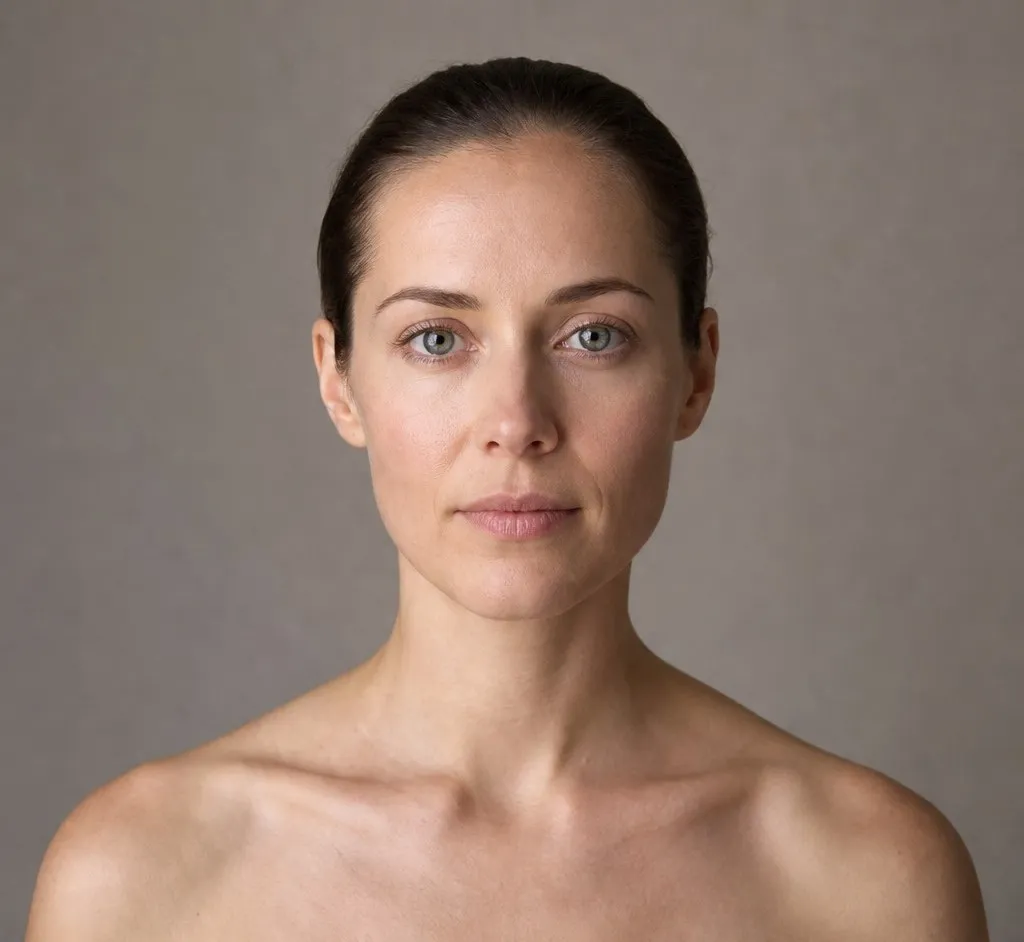
Oval, round or oblong?
Oval borders four shapes. Length separates it from round below and oblong above, and the forehead separates it from diamond and heart. Does your result feel uncertain? Then find out which edge you sit near. The calculator’s ranking tells you.
Length moves fastest. Here’s the worked example again, with the same forehead, cheekbones and jaw, as only the face length changes:
| Face length (D) | D/B | Top result | Runner-up |
|---|---|---|---|
| 17.0 cm | 1.26 | Round 93 | Oval 69 |
| 17.5 cm | 1.30 | Round 85 | Oval 77 |
| 18.0 cm | 1.33 | Oval 86 | Round 76 |
| 18.5 cm | 1.37 | Oval 92 | Round 69 |
| 19.0 cm | 1.41 | Oval 94 | Diamond 66 |
| 20.0 cm | 1.48 | Oval 83 | Oblong 64 |
| 20.5 cm | 1.52 | Oval 74 | Oblong 71 |
| 21.0 cm | 1.56 | Oblong 77 | Oval 66 |
Four centimeters of length carry this face from round, through the whole oval band, into oblong. Near the bottom edge the jaw decides. A clearly tapering jaw holds a short face in oval, and a fuller one tips it into round. Near the top edge the taper decides again, because an oblong face keeps its width all the way down while an oval one narrows.
The forehead opens the other two borders. Narrow it to 11.5 cm (A/B 0.85) and the same face scores 78 for diamond and 77 for oval, because a diamond face is the one where the cheekbones stand clearly wider than both forehead and jaw. Widen it to 14 cm (A/B 1.04) and the result is oval 75, heart 72, since a heart face is widest at the forehead.
When your top two scores are less than 10 points apart, the calculator calls it a close call and suggests borrowing from both shapes, and you can take that literally. Measure again on another day with your hair pinned back. If the result holds, follow the oval advice below and add the neighbor’s advice for the one line it cares about: length for round, width for oblong, the forehead for diamond and heart.
Why everything suits an oval face
Look at the table of windows above and you’ll see oval sitting in the middle of every column. Its length lies between round and oblong. Its forehead and jaw lie between the even widths of square and the sharp tapers of heart and diamond. That’s how the system is built, and it explains the famous claim.
Advice for the other six shapes is a set of moves toward that middle. A round face is told to add length, a long one to add width, a heart to add weight at the jaw, a square to soften its corners. Each piece of advice balances one ratio that sits far from the center. An oval face has nothing far from the center, so there’s nothing to balance, and almost any cut or frame looks reasonable on it.
The honest version of “everything suits an oval face” follows from the same logic. Every haircut, frame and neckline still draws lines, and lines still work. A horizontal makes the face read wider where it sits, a long vertical makes it read longer, and weight at the top makes it read top-heavy. On an oval face those lines don’t correct anything. They shift the outline toward a neighbor. A heavy fringe and a chin-length bob nudge it toward round, and long, flat hair nudges it toward oblong. None of that is a mistake, as long as you know it’s a choice you’re making.
Being the middle of the scale doesn’t make oval the goal, either. It’s the easiest shape to write advice for, which isn’t the same thing as a better face, and the measurements say nothing about attractiveness. With the outline settled, the decisions move to the details that the outline doesn’t cover: your hair texture, the height of your forehead, the length of your neck and which feature you want people to notice first.
Haircuts for an oval face
Most lengths work, so think of each haircut by where it ends. The hem of a cut is a horizontal line across the face or neck, and its position decides what the cut does.
| Where the cut ends | What it does on an oval face |
|---|---|
| Crop or pixie | Shows the whole outline; height on top adds length, so keep it modest on a long oval |
| Chin-length bob | A horizontal at the lower face; neutral in the middle of the band, widening on a short oval |
| Just below the jaw (lob) | The most neutral length for every oval |
| Shoulder to collarbone | Layers and waves add width, which a long oval can use |
| Long and layered | Works throughout; on a long oval, start the layers at the cheekbones |
| Long, one length, straight | Two vertical lines that lengthen; fine on a short oval, pushes a long one toward oblong |
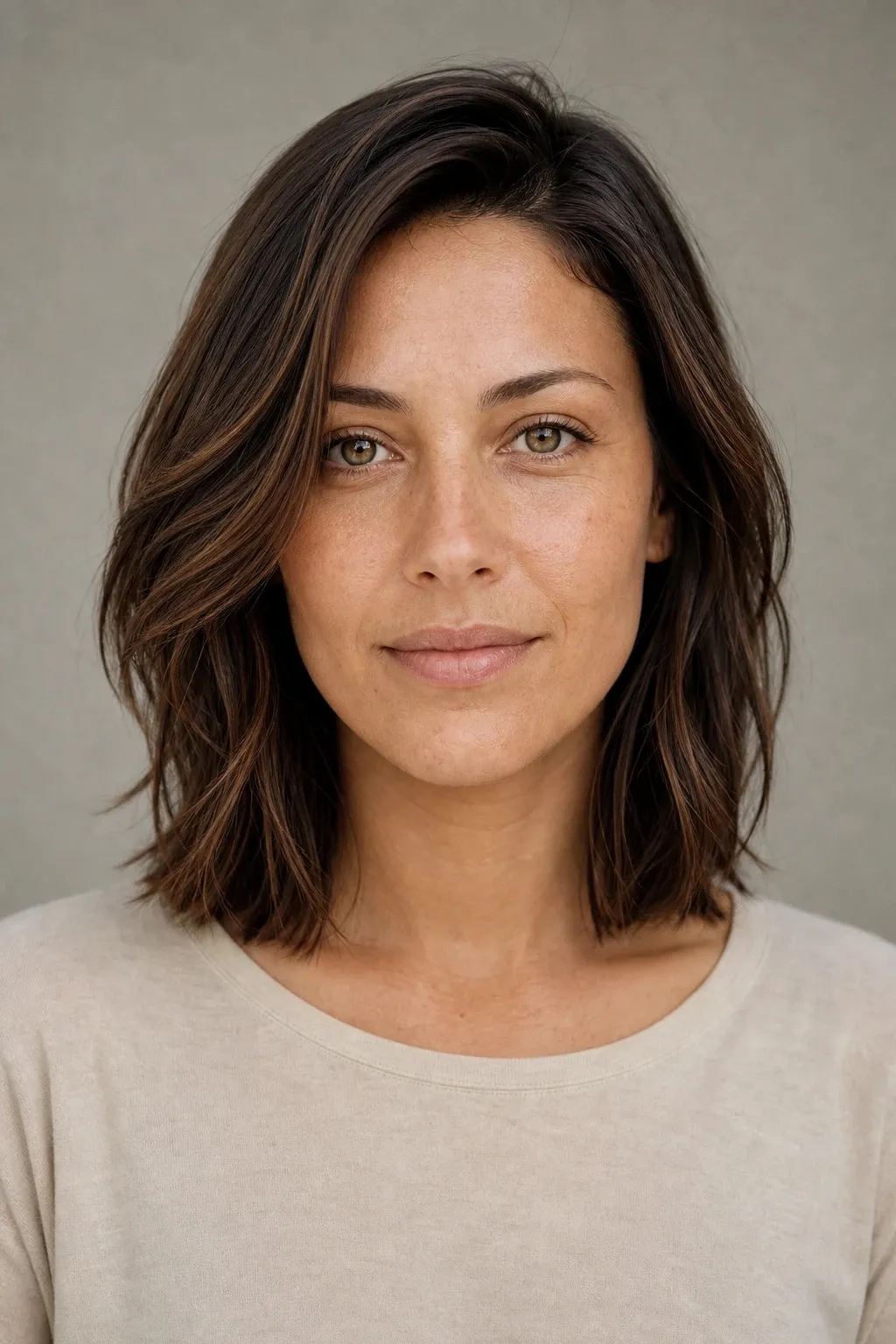
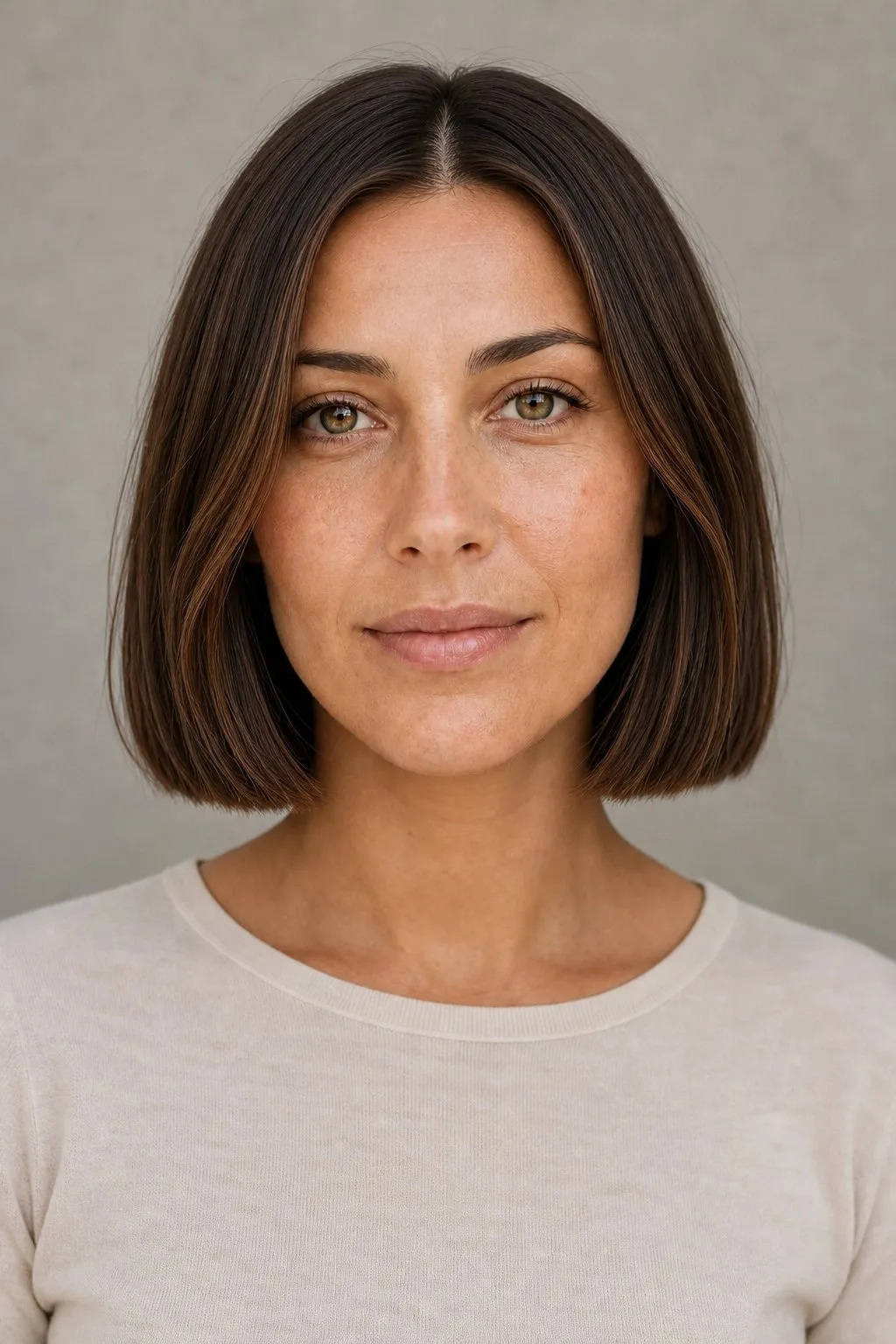
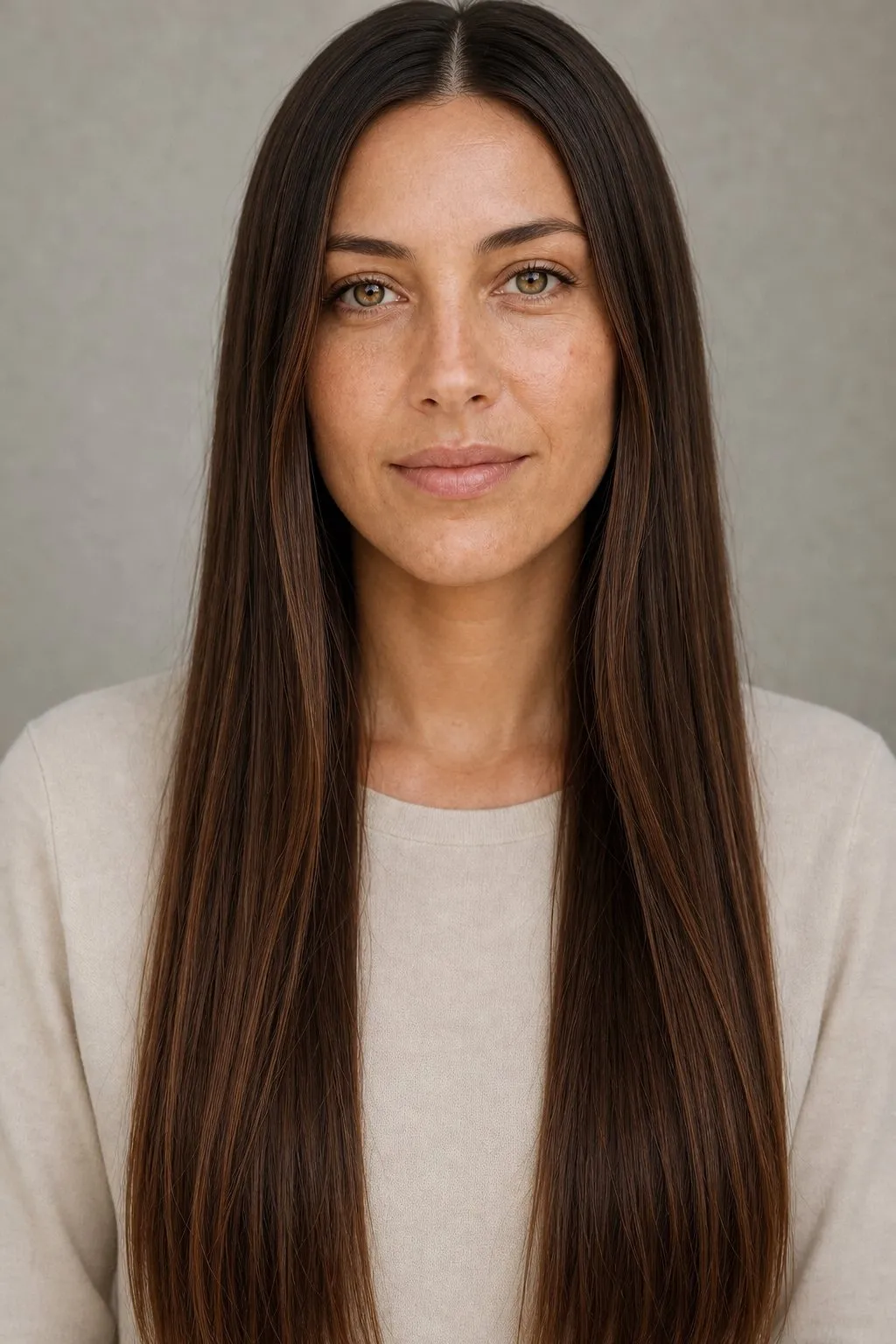
Where you sit inside the oval band changes the advice more than anything else here. Around 1.40 you can ignore both edges. Near 1.30 you border round. A little height at the crown and ends below the chin suit you, while a heavy, blunt hem at the cheekbones pulls the face toward round. Near 1.50 you border oblong. Width at the sides and bangs suit you, while height on top and long, flat lengths from a center part add length you don’t need.
Layers follow the same idea. Face-framing layers whose shortest piece starts at cheekbone level draw the eye to the widest point and then down along the jaw, which keeps the outline as it is. Layers that start high, around the temples, add width up top. Layers that begin only at shoulder level leave straight lengths beside the face. For the bob, the rule is broad. The hem can sit anywhere from the earlobes to the collarbones, as long as it avoids a heavy line at the cheekbones. Not sure where “at the jaw” falls on you? Look straight into a mirror and pinch a strand at the corner of the jaw. That point is the level your stylist can measure from.
Bangs, part and texture
Bangs work on an oval face in every form, full and blunt, wispy, curtain, side-swept or micro. Your face shape doesn’t choose among them. Your forehead does. Measure from your hairline to the point between your brows, and from there to the base of your nose. If the upper section is clearly longer, you’ve got room for full, dense bangs or curtain bangs that start high. If it’s clearly shorter, keep them light, meaning wispy, side-swept or long curtain bangs, because dense bangs on a short forehead sit right on the brows. Micro bangs need some forehead height to look intentional.
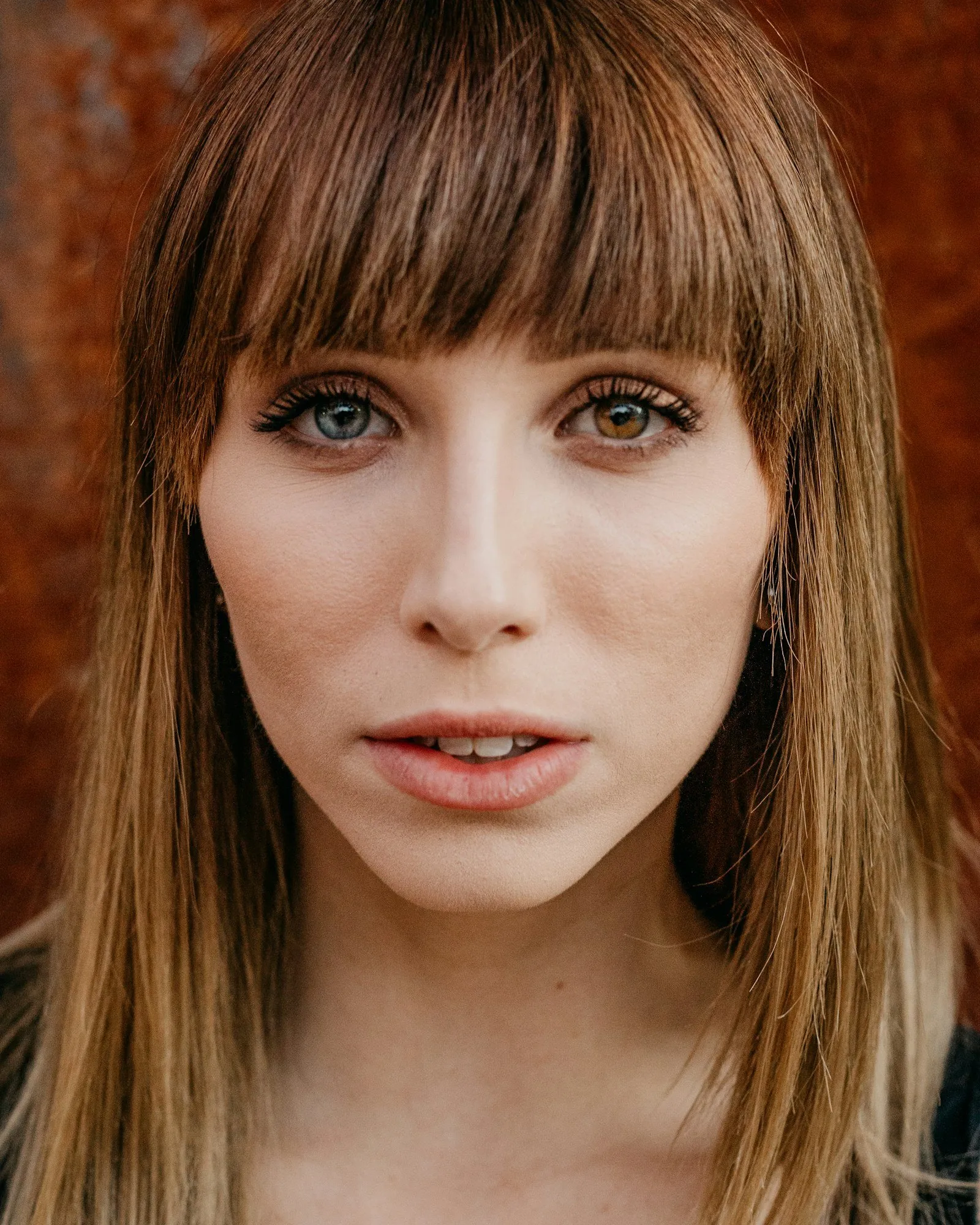
The part works in the same quiet way. A center part is symmetric and keeps the face as balanced as it already is. A side part sends a diagonal across the forehead and gives one side more hair, which softens the outline and shows off one cheekbone. Both suit an oval face, so let a photo decide. Take a straight-on picture of each at arm’s length, with the rear camera, and compare them at small size.
Texture changes a cut more than face shape does here:
- Straight hair shows every line of the cut, and fine, flat hair makes the same cut look smaller and closer to the head.
- Curly hair adds width, because a bending strand takes up more room sideways, and on a one-length cut the volume collects at the ends.
- Curls shrink as they dry, so a chin-length cut on tight curls can end at cheekbone level with its fullest part at the widest point of the face. Judge a curly cut dry.
Short hair works for the same reason everything else does. A crop shows the outline, and an oval outline doesn’t need hiding. Choose the crop by texture rather than shape. Then check your neck. A cut that ends at the chin shows the whole neck, which suits a long one. With a short neck, hair that ends right at its base hides most of it, while a crop, an updo or a cut past the collarbones shows more.
Glasses and sunglasses
With almost every frame shape available, the decision moves to size. Take your cheekbone measurement, B, and look for a frame front of about the same total width. A frame clearly narrower than your cheekbones leaves a band of cheek on each side and makes the face around it look wider. A frame much wider than your face makes the face look narrower and the glasses look borrowed. Once the width is right, your eyes should sit roughly in the center of each lens.
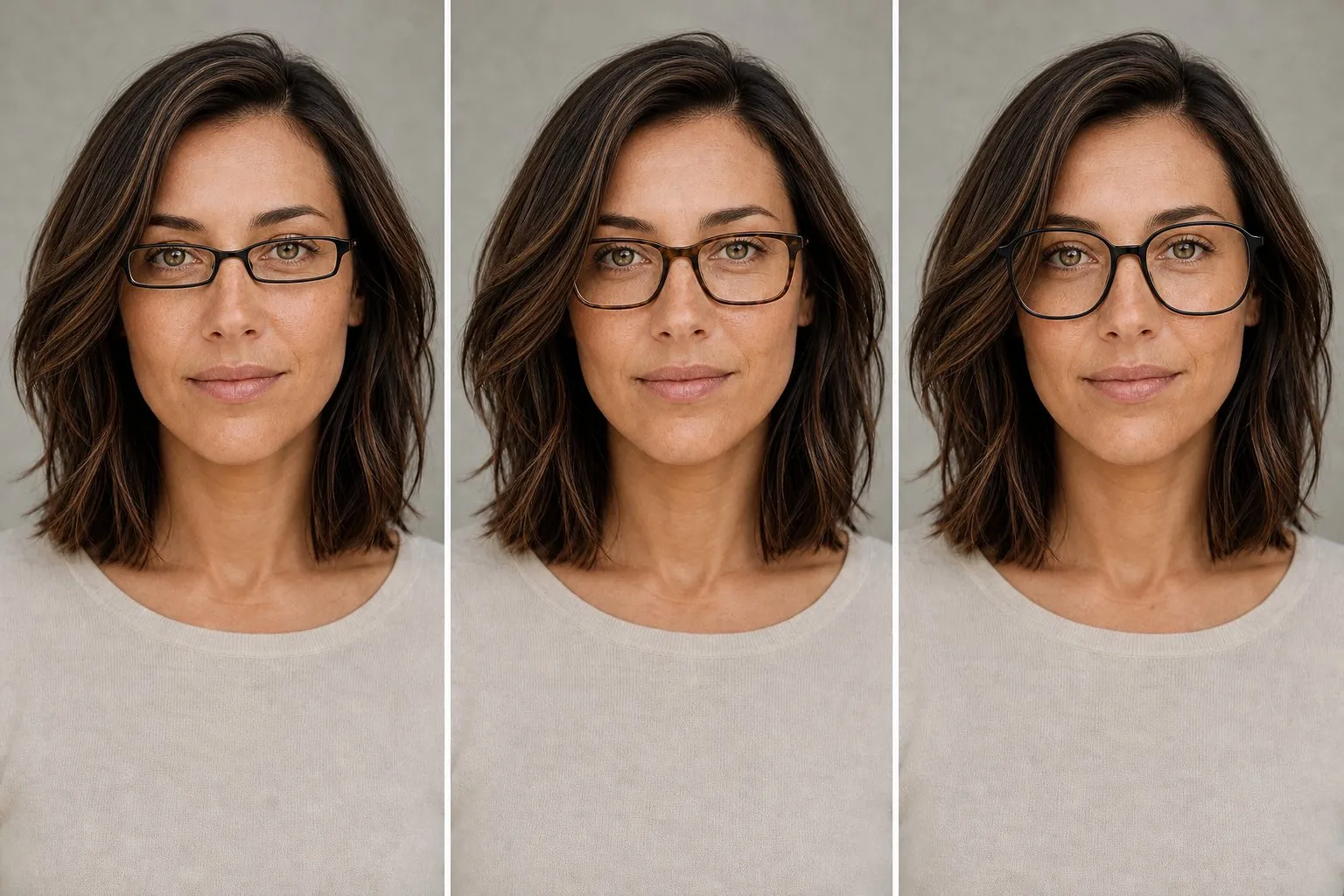
Lens height is the second check. Very tall, narrow lenses add a vertical line and push an oval face toward long. Small, shallow frames on a longer oval leave a lot of face above and below them, which also reads long. Within those two checks, round, rectangular, cat-eye and aviator shapes all sit comfortably, so choose by your features and taste. If you’d like to turn B into the three numbers printed on a frame, that’s covered in what suits your face shape.
Glasses meet the hair at two places. If you wear bangs, keep their edge clearly above the top rim, or choose bangs that cross the frame at an angle. A fringe lying on the rim stacks two horizontal lines into one heavy band. At the sides, the arms run back through the hair, so volume right at ear level gets pressed flat by the end of the day.
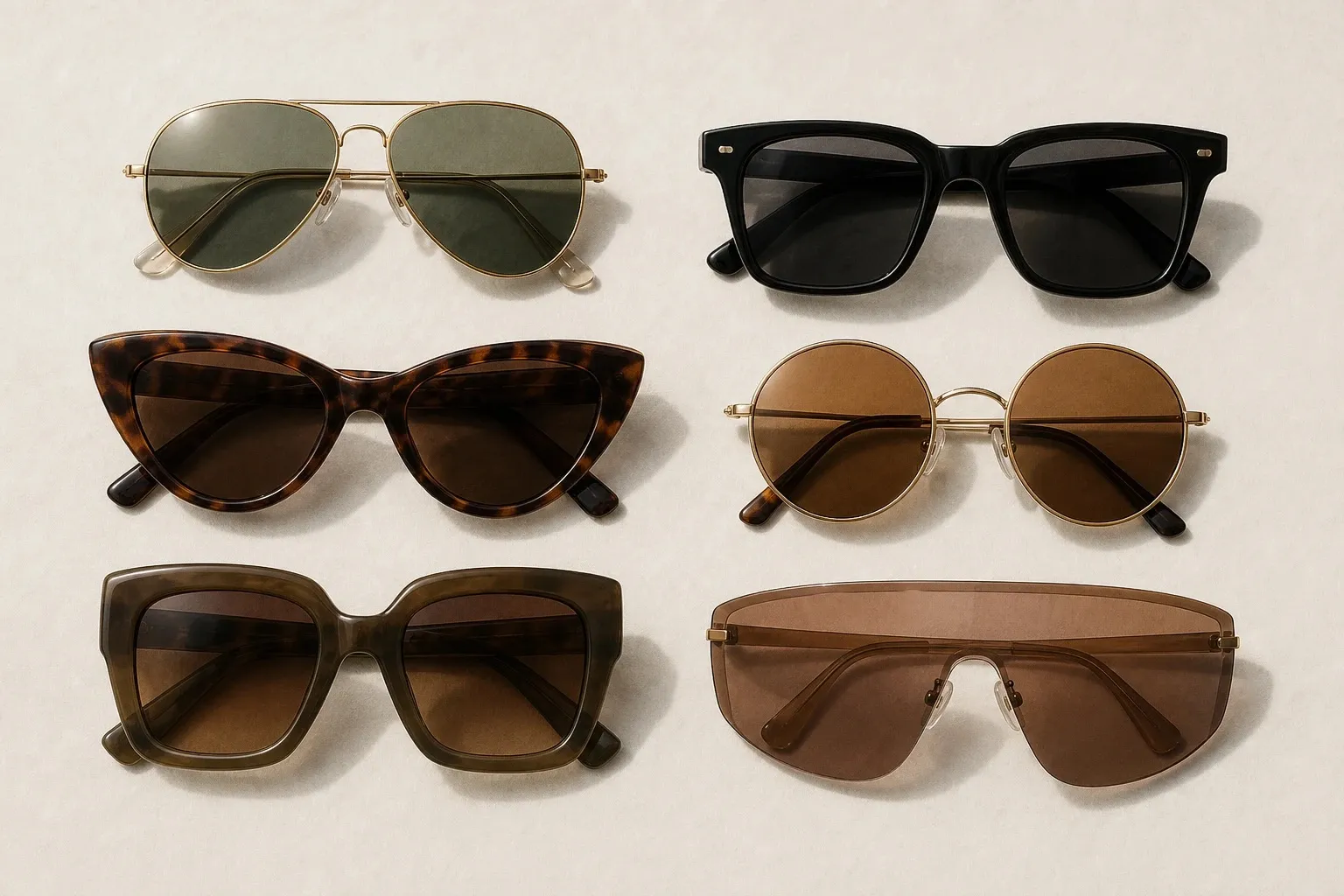
Sunglasses follow the same size rule. Aviators, trapezoid frames, cat-eyes, round lenses, oversized frames and shields all suit an oval face when the width matches the cheekbones. Near the edges of the band, borrow from the neighbor. A short oval looks best in frames with some angle and lift, and a long oval in deeper lenses that cover more of the face.
Brows, contour and blush
Brows sit across the top third of the face, so their shape quietly changes its proportions. A soft, gentle arch keeps the balance an oval face already has. A very high, sharp arch adds length, and a flat, straight brow adds width, so those are the two moves for the edges. Go for a little more arch if you measure near 1.30 and a little straighter if you measure near 1.50.
Makeup borrows the way daylight models a face, where darker, matte areas fall back and lighter ones come forward. An oval face has no width to hide and no narrow zone to fill, so it needs very little of either.
- Contour: a soft line in the hollow under the cheekbone, or nothing at all.
- Light: the center of the forehead.
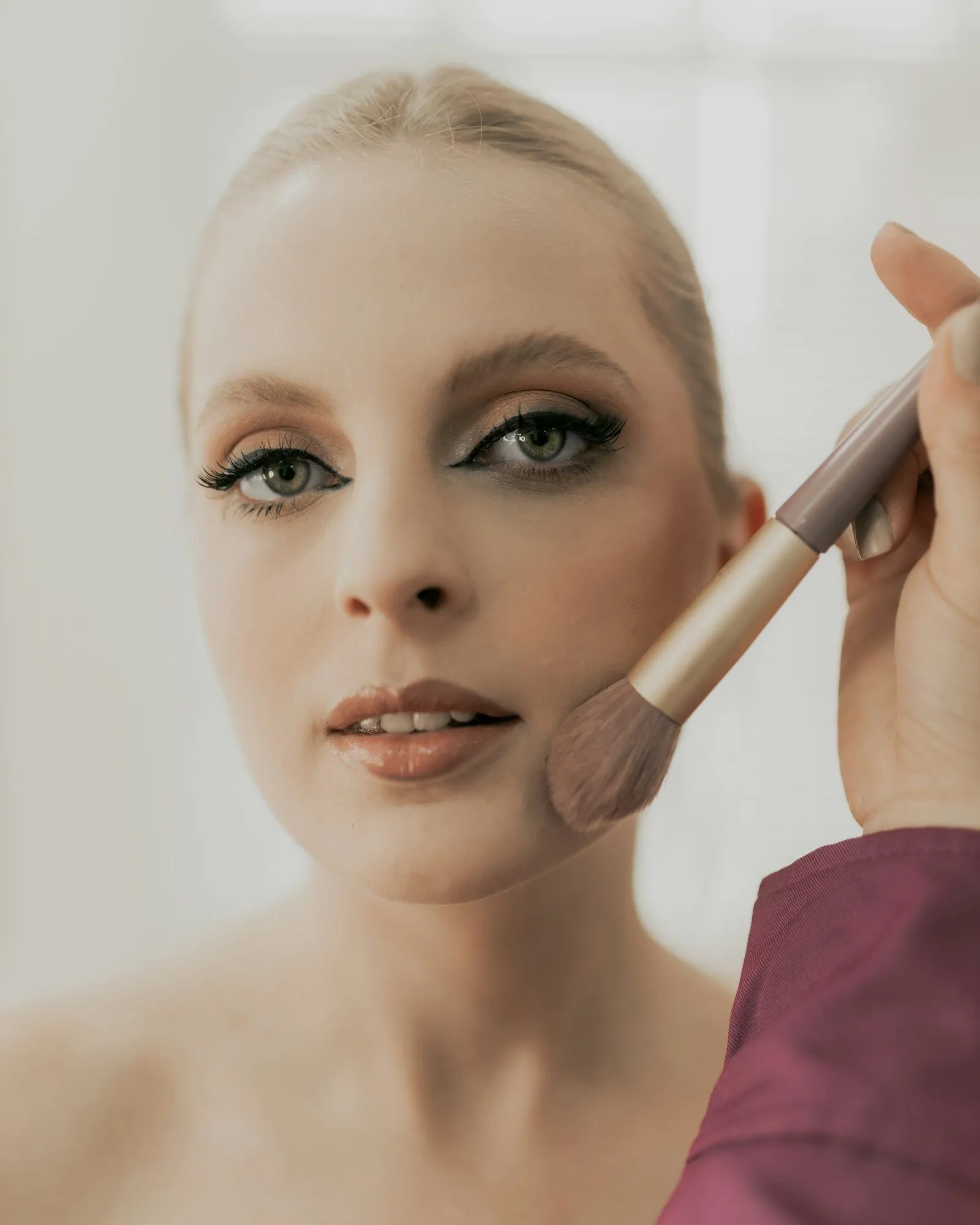
- Blush: on the cheekbone, blended up and back toward the temple.
Blush direction is the lever to use if you’re near an edge, because the eye follows the long axis of any mark. A horizontal sweep straight back toward the ear makes a face read shorter and wider, which a long oval can use. A sweep angled toward the temple makes it read longer, which suits a short one. Makeup only moves where the light seems to fall, so check the result by a window, from arm’s length, and blend until you can see the shape but not the edge.
Earrings, necklines, hats and scarves
Accessories near the face work by two rules. An earring, a brim or a knot adds width at the height where it’s widest, and the eye stops where it ends. On an oval face neither rule has anything to correct, so scale, the outfit and your neck matter more than the outline.
| Accessory | On an oval face | Near an edge of the band |
|---|---|---|
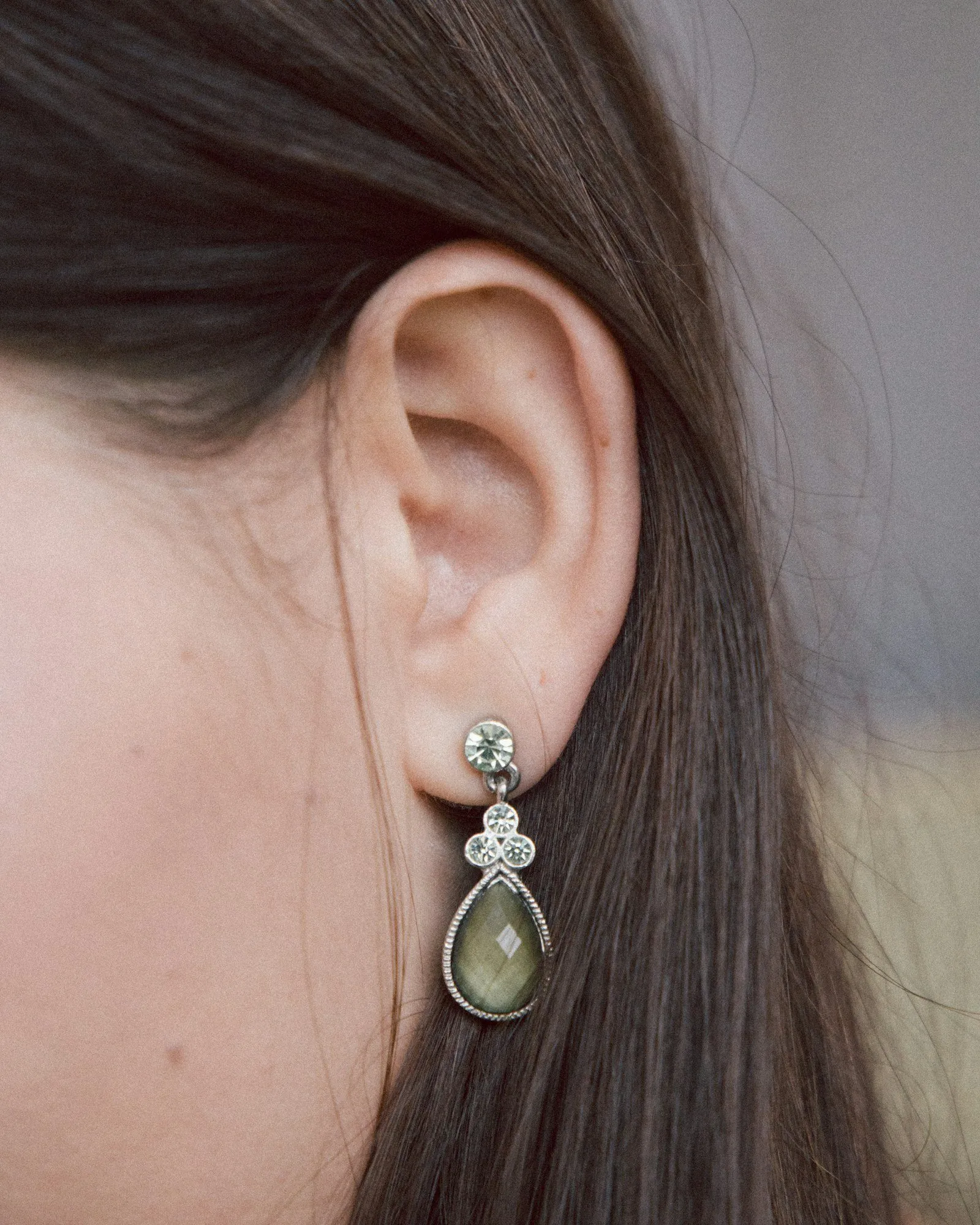
| Earrings | Almost any shape; choose by scale and neckline | Near 1.50, skip long thin drops that add length; near 1.30, skip wide shapes at cheek level |
| Necklines | Almost any; let neck length and bust decide | Near 1.30, a V-neck adds length; near 1.50, a boat or square neck adds width |
| Hats | Any style, with a brim no narrower than the cheekbones | Near 1.50, a lower crown; near 1.30, a crown with some height |
| Scarves | Any tie; let the neck and the outfit decide | Near 1.50, wrap it close at the throat; near 1.30, let the ends hang long |
Scale is the decision the outline leaves to you. Fine features carry delicate earrings and small prints, and larger features carry bolder pieces. The neck can outvote the outline, too. A short neck looks longer in open necklines and long, loose scarf ends, while a long one is filled out by high necks, cowls and wraps at the throat. When face, neck and bust disagree on a neckline, fit the body first, then the neck, then the face, because the face effect is the smallest of the three. You’ll find every shape’s charts side by side in what suits your face shape.
Does an oval face change with age?
It changes less than it seems. The facial skeleton keeps changing in adulthood, but in specific places. A review by Mendelson and Wong (2012) describes bone loss in the midface and around the eye sockets, and imaging data in which the angle of the jaw opened and the lower jaw lost some height and length while the width between the jaw angles did not change significantly. The soft tissue over the bone settles at the same time, and that’s what you notice in the mirror.
For an oval face, the usual drift is toward a fuller lower face. The jaw starts to look wider relative to the cheekbones, so the outline can read closer to round, square or triangle even when a tape across the jaw angles barely moves. If the cheeks flatten, the cheekbone width can read a little narrower, which makes the face look slightly longer as well.
So re-measure every few years and after any large change in weight, and compare the ratios rather than the raw centimeters. Watch the margin between your top two shapes as well as the name, because a shrinking margin is the early sign of a drift. The most useful adjustment is usually the hem. A cut that ends exactly at the jawline draws a line across the area that softens most, while one that ends at the cheekbones or falls past the jaw to the collarbones moves that line away. And which face shape “ages best”? No one has measured that, so the honest answer is to style the outline you see now, with the measured shape as your starting point.