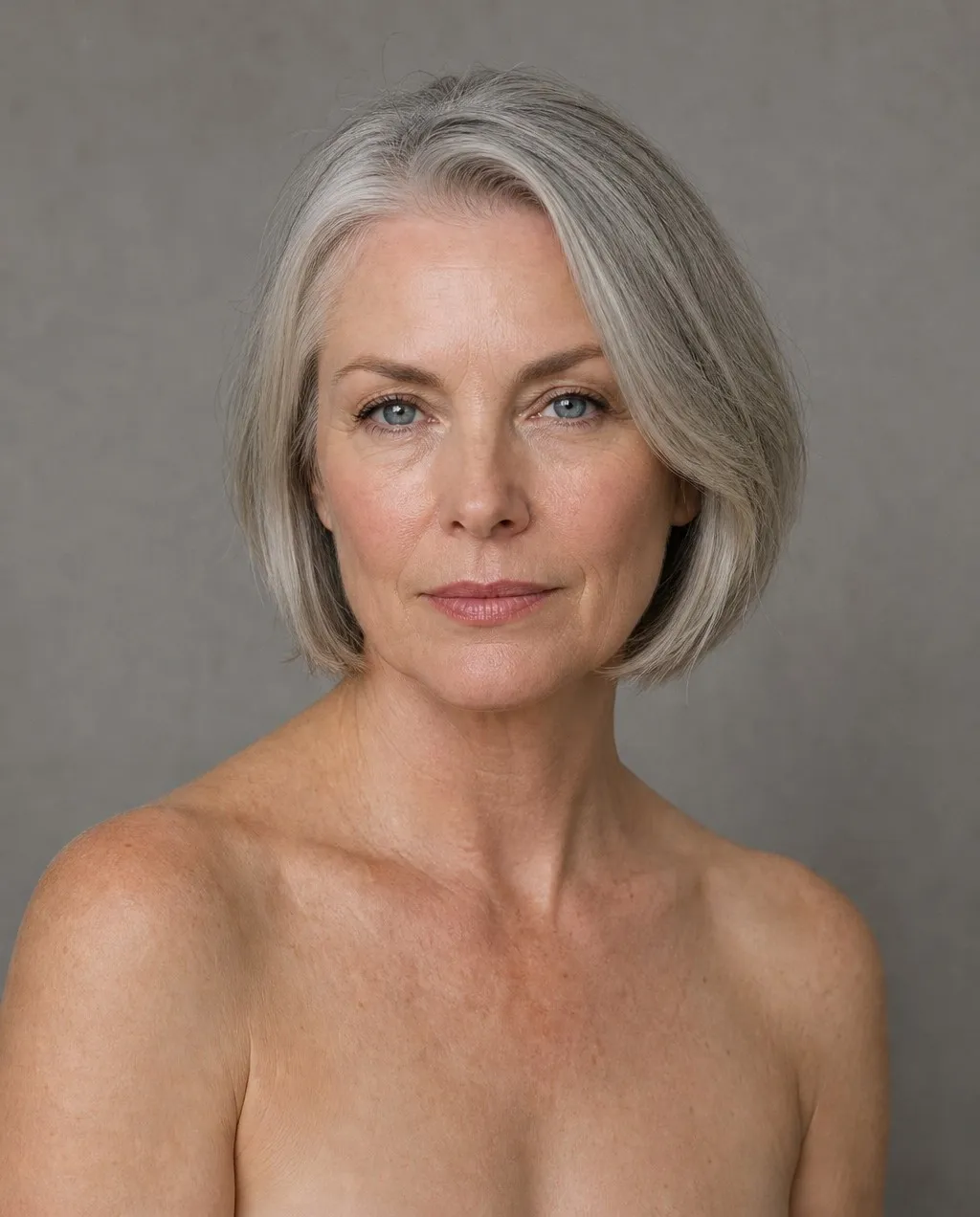
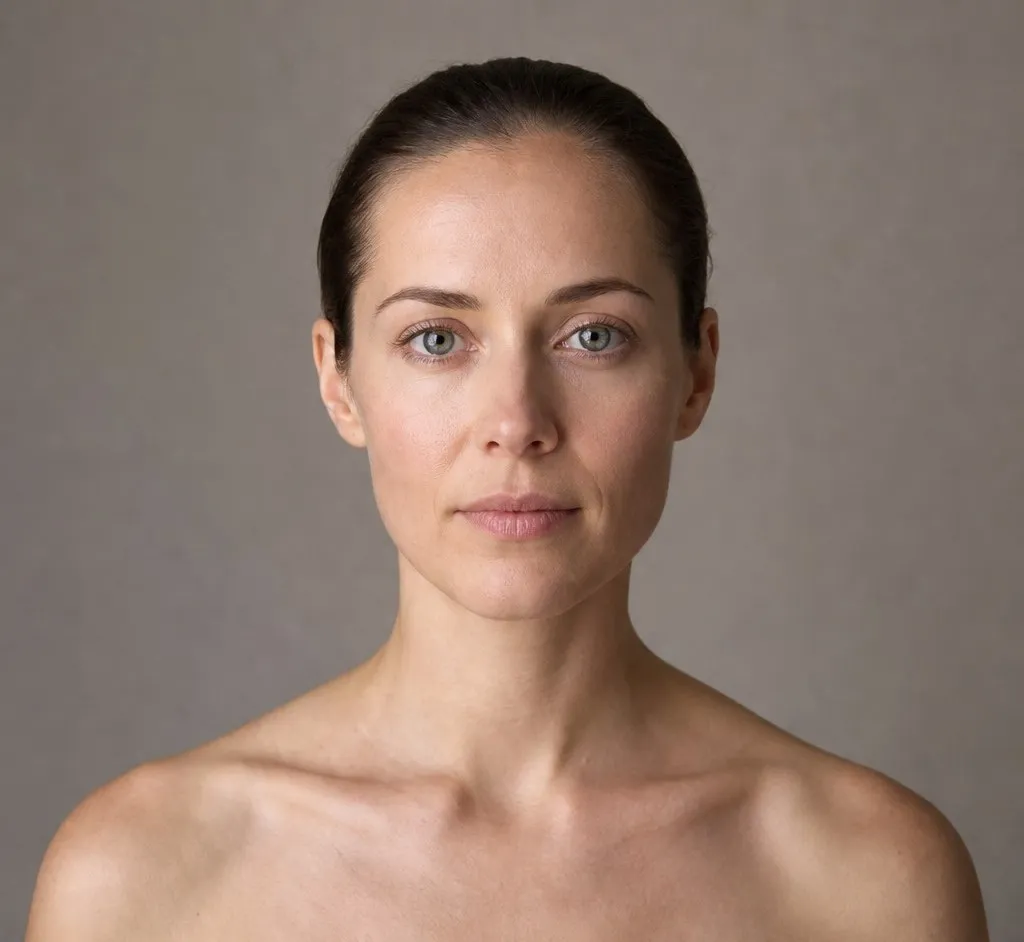
A heart-shaped face is widest at the forehead, a little narrower at the cheekbones and clearly narrowest at the jaw, so the outline tapers to a fine chin. In numbers, the forehead comes to 1.00 to 1.12 times the cheekbone width and the jaw to 0.65 to 0.80 of it, and the face is 1.25 to 1.50 times as long as it’s wide. What suits it follows from that taper. You want a little fullness where the face narrows, around the jaw and chin, and very little weight at the forehead and temples, where it’s already wide.
Face shapes are a styling framework, not an anatomical classification. The calculator compares three ratios with seven reference windows, and many faces sit between two shapes.
How to tell if your face is heart-shaped
You’ll need a ruler, a mirror and every strand of hair pinned back. That includes the baby hairs at the temples, because they hide exactly the edge that matters here. Measure straight across, never around. Take the forehead (A) at its widest, usually halfway between brows and hairline, then the cheekbones (B) at their most prominent points below the outer corners of the eyes, the jaw (C) between the angles below the ears, and the length (D) from the center of the hairline to the bottom of the chin. Divide A, C and D by B.
Two of those ratios identify a heart. The forehead must reach the cheekbone width or pass it, and the jaw must sit well inside it. Length matters less, because heart faces run from fairly short to fairly long. Mostly it decides which shape comes second.
| Face shape | Forehead : B | Jaw : B | Length : B |
|---|---|---|---|
| Oval | 0.88 – 1.00 | 0.75 – 0.88 | 1.30 – 1.50 |
| Round | 0.86 – 0.98 | 0.80 – 0.92 | 1.10 – 1.30 |
| Square | 0.92 – 1.04 | 0.90 – 1.00 | 1.10 – 1.30 |
| Oblong | 0.90 – 1.02 | 0.85 – 1.00 | 1.50 – 1.75 |
| Heart | 1.00 – 1.12 | 0.65 – 0.80 | 1.25 – 1.50 |
| Diamond | 0.75 – 0.88 | 0.70 – 0.85 | 1.30 – 1.55 |
| Triangle | 0.78 – 0.90 | 0.95 – 1.08 | 1.20 – 1.45 |
Here’s a worked example: forehead 13.9 cm, cheekbones 13.4 cm, jaw 9.6 cm, length 18.6 cm. The ratios are A/B 1.04, C/B 0.72 and D/B 1.39. The Face Shape Calculator puts heart first with 98 points, diamond second with 64 and oval third with 58. A margin of 34 points is a clear result. Inches give the same answer, since only the ratios count.
Three things often get taken as proof, and none of them is part of the measurement. A widow’s peak is the shape of the hairline at the center of the forehead, and it says nothing about its width. When you measure length, skip the tip of the peak and start where the hairline runs on either side of it. Prominent cheekbones aren’t required either, because width and prominence are different things. And “inverted triangle” is simply the name some charts give the same outline, wide at the top and narrow at the chin.
Heart, diamond or oval?
Heart has two close neighbors, and a different line decides each border. Against diamond, the forehead decides. Against oval, the jaw does.
Keep the example’s jaw (0.72) and length (1.39) and narrow only the forehead. At 0.92 of the cheekbones, the calculator gives heart 76, oval 75 and diamond 72, which is a three-way tie. At 0.84, diamond leads 88 to 75. So a fine chin alone doesn’t make a heart. The forehead has to hold its width all the way to the cheekbones.
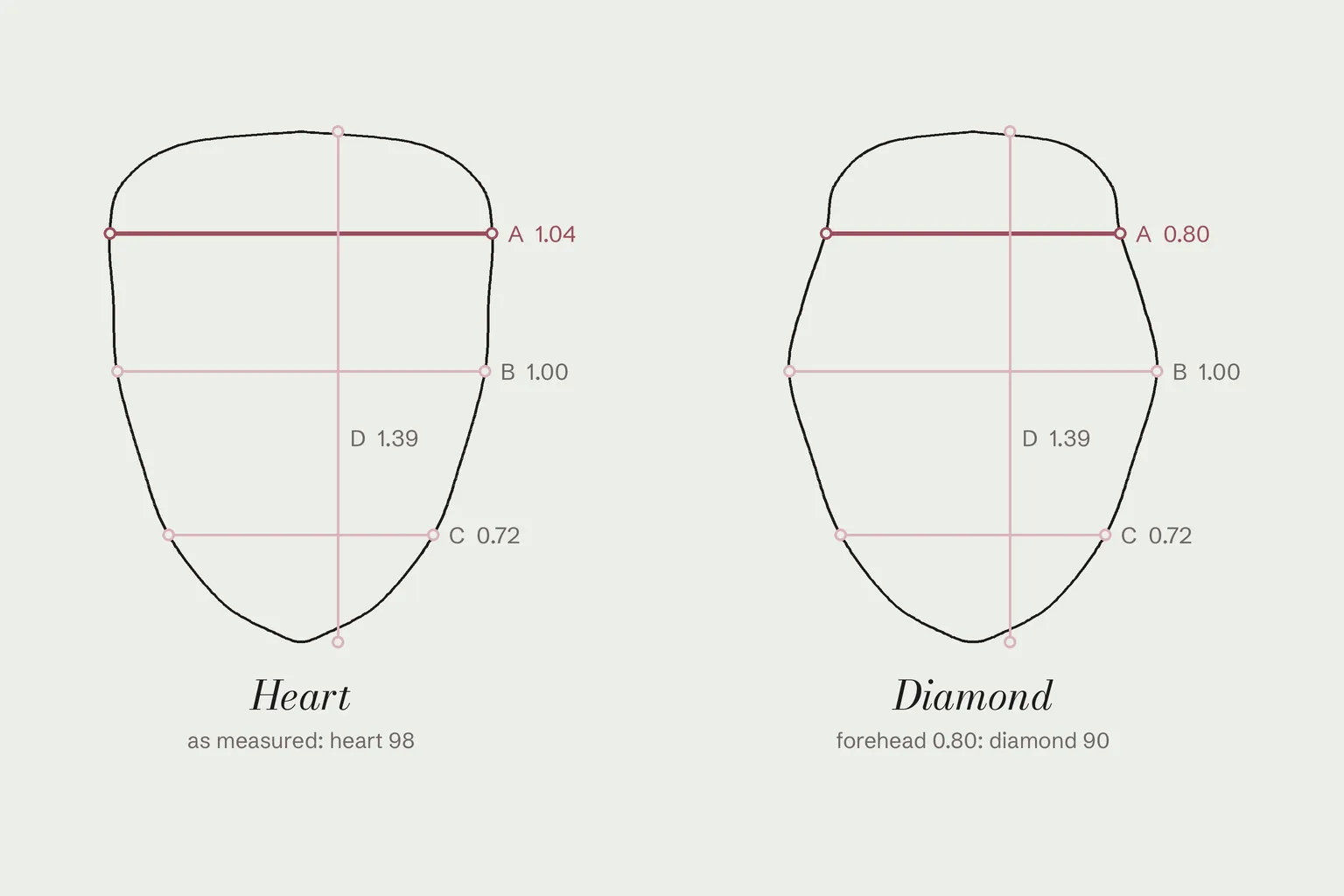
Now hold the forehead at 1.00 and widen the jaw instead. At 0.76 heart still leads oval, 86 to 79. At 0.80 oval takes over, 89 to 76. A face with a broad forehead and a fuller chin is usually an oval with a wide brow rather than a heart. The advice for the two overlaps anyway, because both carry fullness at the jaw well. What if your top two results sit only a few points apart? Read the oval face shape or diamond face shape page as well and keep what both agree on.
Triangle is the heart turned upside down, widest at the jaw, so the two rarely get confused, and the advice for one is simply the other’s in reverse.
One principle: fill the jaw, quiet the top
Hair, frames, earrings and necklines all add visual weight where they’re fullest, and a horizontal line makes a face read wider at the height where it sits. A heart face carries its width at the top. So nearly every suggestion below does one of two things. It adds a little weight at the jaw and chin, or it keeps weight away from the forehead and temples.
You don’t have to balance anything, though. It’s a choice. Echoing the taper is a look of its own, and hair pulled straight back, a sharp cat-eye and a deep V make the face read angular and dramatic. Balancing it brings the outline closer to an even oval. Decide which you want before you choose a cut, because the two lead to opposite advice.
Width at the jaw, not at the temples.
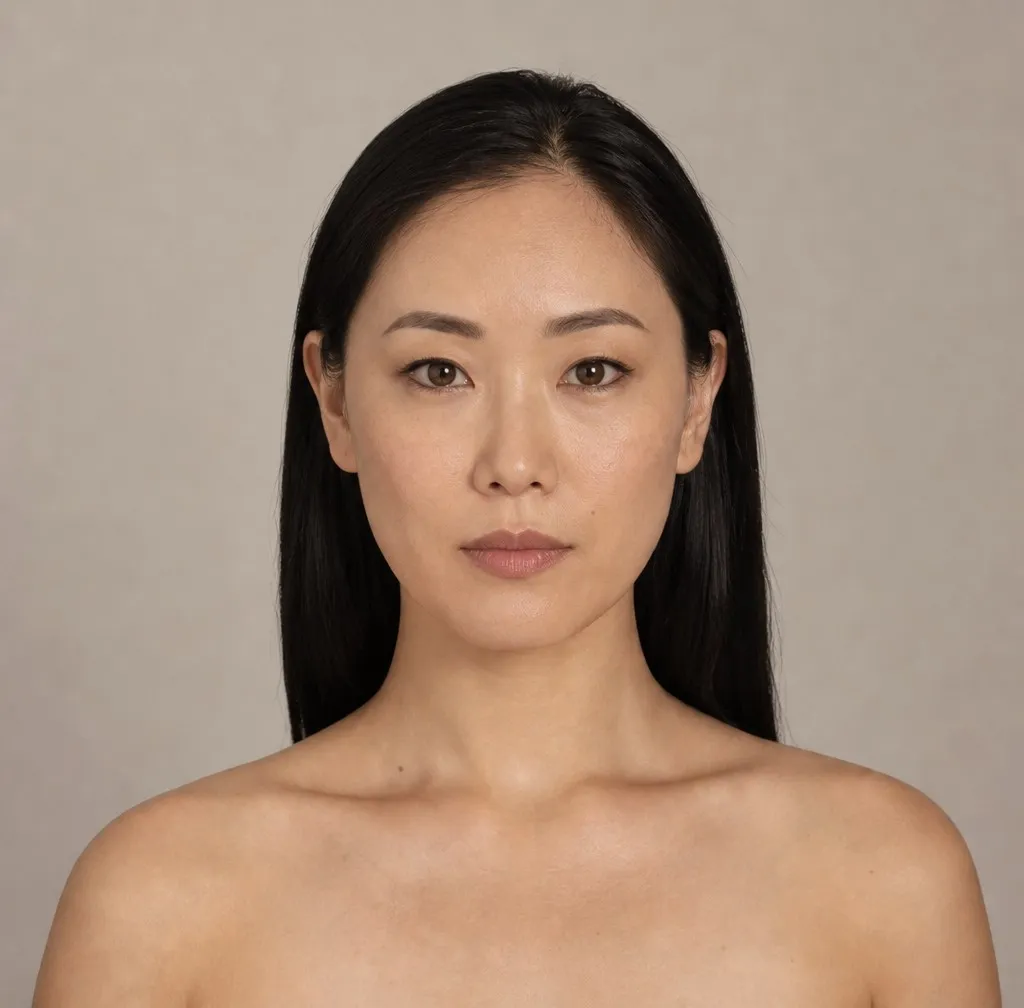
Hairstyles for a heart-shaped face
Two decisions do most of the work: where the cut ends, and where its volume sits. Hair is part of the outline, so fullness at jaw and chin level fills in the narrowest part of the face, while lift at the crown and temples adds to the widest.
| Where the cut ends | How it reads on a heart face |
|---|---|
| Above the jaw (pixie, ear length) | Works with a side-swept fringe and a soft nape |
| At the chin, with fullness at the ends | One of the best lengths: width right beside the narrowest point |
| Just below the jaw (lob) | The easiest length: movement at the ends lands at jaw level |
| Shoulder length | Works with waves or layers from the jaw down |
| Past the shoulders, layered from the chin | Works, with no lift at the crown |
| Past the shoulders, one length, flat | The hardest: straight lengths hang close beside a narrow chin |
A heart face is one of the few where a hem at the chin helps rather than hurts, because the jaw has width to spare. The classic bob, ending between the ears and the jaw, suits it for the same reason, as long as the ends keep some fullness and don’t curve tightly under.
Layers belong at chin level and below. Face-framing pieces whose shortest point sits at the chin, turned slightly outward, put the movement exactly where the face narrows. Long hair follows the same plan, so keep it smooth on top and let the layers and any wave begin around the jaw. Short layers at the crown, or layers that start at the temples and get blow-dried up and out, build volume at the widest part. At the salon, ask for the shortest face-framing piece at chin level and no higher, so it doesn’t end up at the cheekbones.
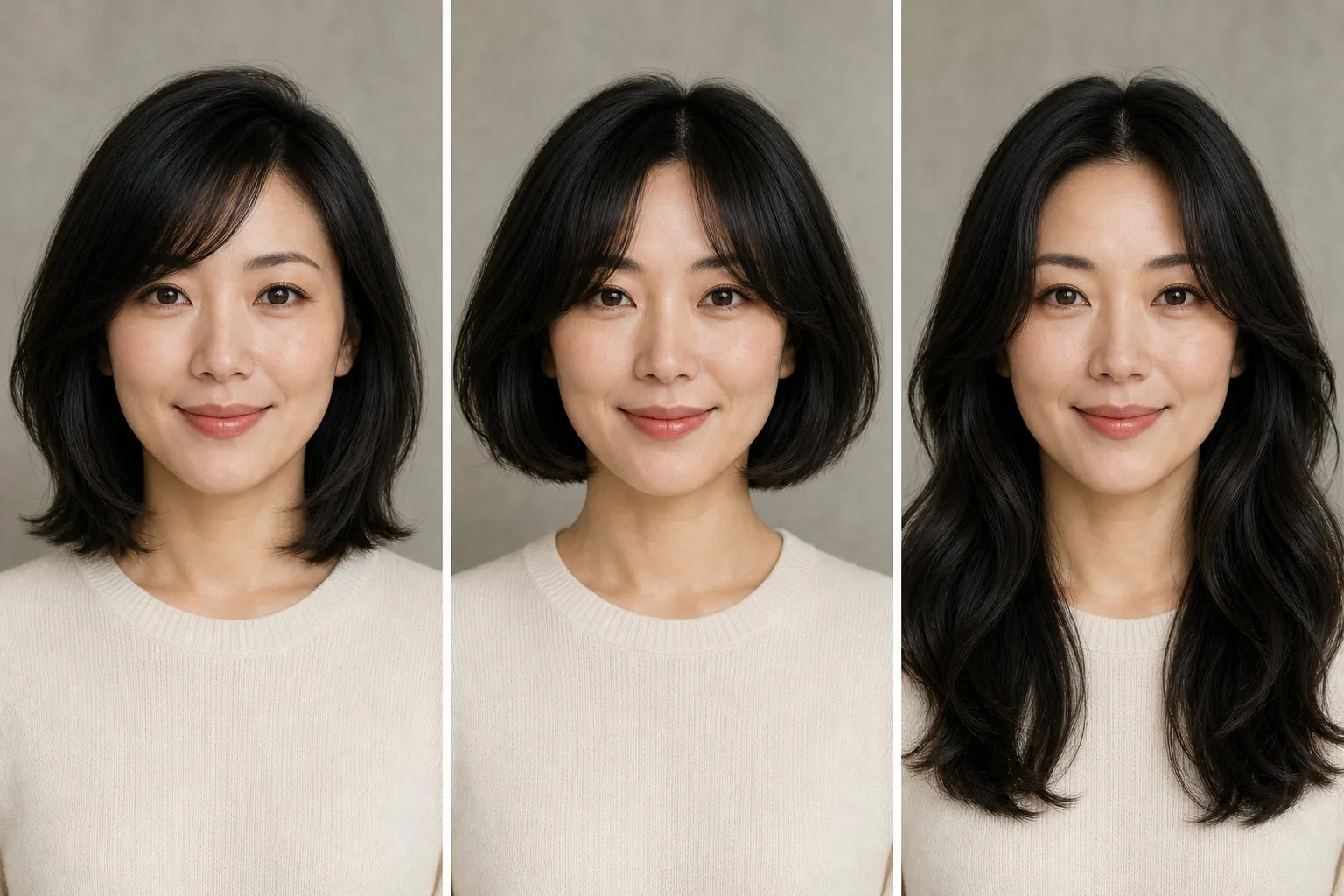
How the hair sits matters as much as how long it is. Pulled flat and tucked behind both ears, it shows the full taper. Let it fall forward past the jaw with a little bend at the ends, and it softens that taper.
Bangs and the part
Bangs help a heart face more than most shapes, because they cover part of the widest area.
- Side-swept bangs draw one long diagonal across the forehead and cover one of its corners.
- Curtain bangs sweep over both forehead corners, which is where the width shows most.
- Wispy bangs soften the hairline without a solid edge.
- Blunt bangs cut straight across draw a horizontal over the widest part of the face, and micro bangs draw the same line higher, with most of the forehead still on show. Both work against the shape.
Forehead height sets how long and how dense the bangs can be. A tall forehead carries fuller bangs. A short one wants light, wispy or long side-swept ones that don’t rest on the brows.

Part your hair to the side if you can. An off-center part sends the longer side across one forehead corner and breaks the width with a diagonal. A center part works too when the cut has fullness at the jaw. With flat sides, though, it shows both temples evenly, and the taper beneath them.
If you wear glasses, keep a strip of forehead between the bangs and the top rim, or let side-swept bangs cross the frame at an angle. A heavy browline frame under blunt bangs stacks two thick lines across the broadest part of the face.
Short hair, curls and updos
A pixie suits a heart face when it has a side-swept fringe, a fairly flat crown and soft pieces at the nape and in front of the ears. The short cuts that struggle are the ones with lift at the crown and close, flat sides, which widen the top and narrow the bottom further. The 2.25-inch rule, which measures the drop from earlobe to chin, tells you how much jaw a very short cut will show. It’s only a rule of thumb, and what suits your face shape explains how to take it.
Waves and curls are an asset when they’re fullest at the jaw and below. Curly hair cut to one length tends to sit closer at the top and spread at the ends under its own weight, which is the outline a heart face wants. Root lift at the crown is the part to skip.
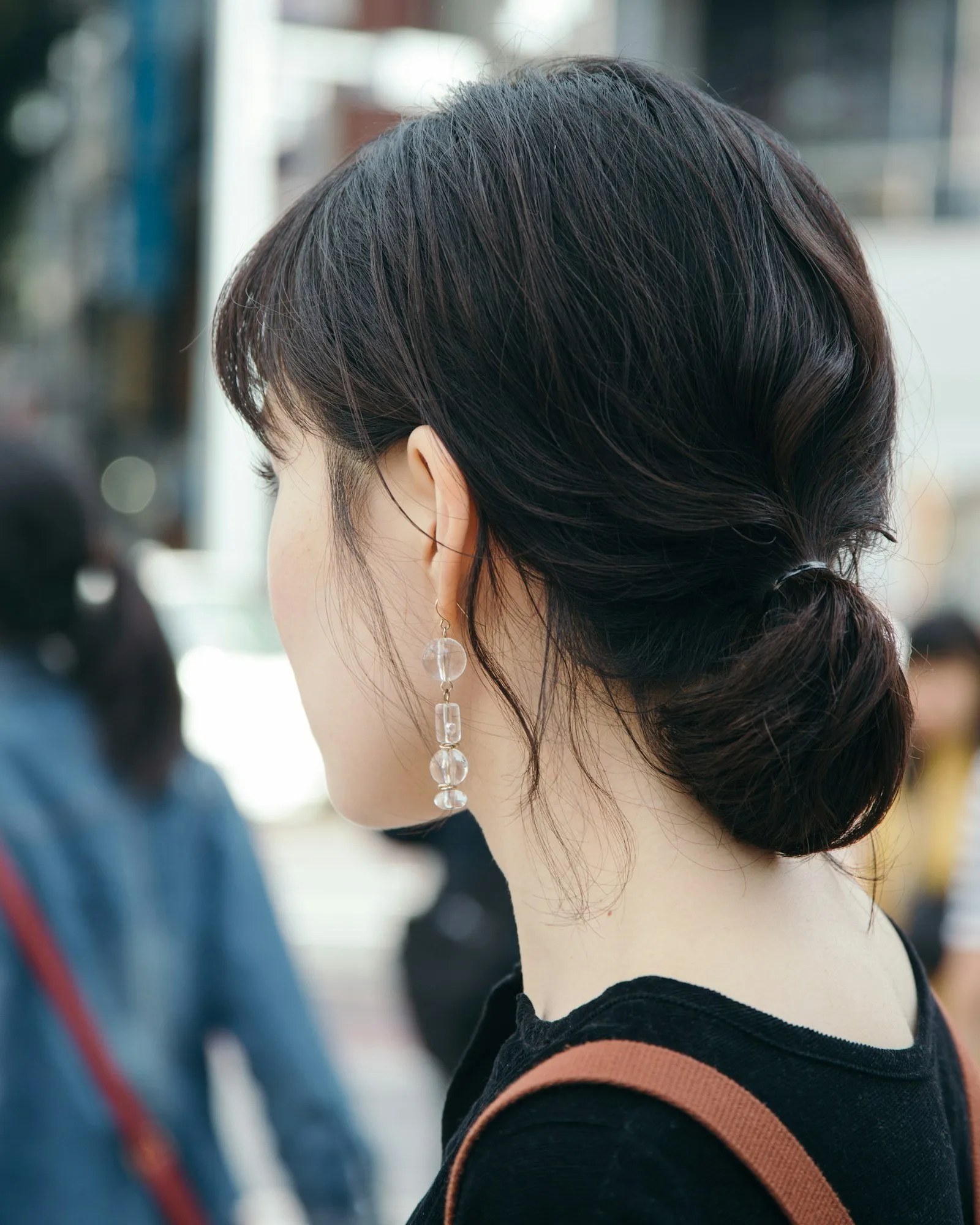
A sleek bun or ponytail shows the whole taper. If you’d like a softer updo, leave a few strands free at the jaw, or pull the hair back loosely at the temples so it isn’t tight.
Glasses for a heart-shaped face
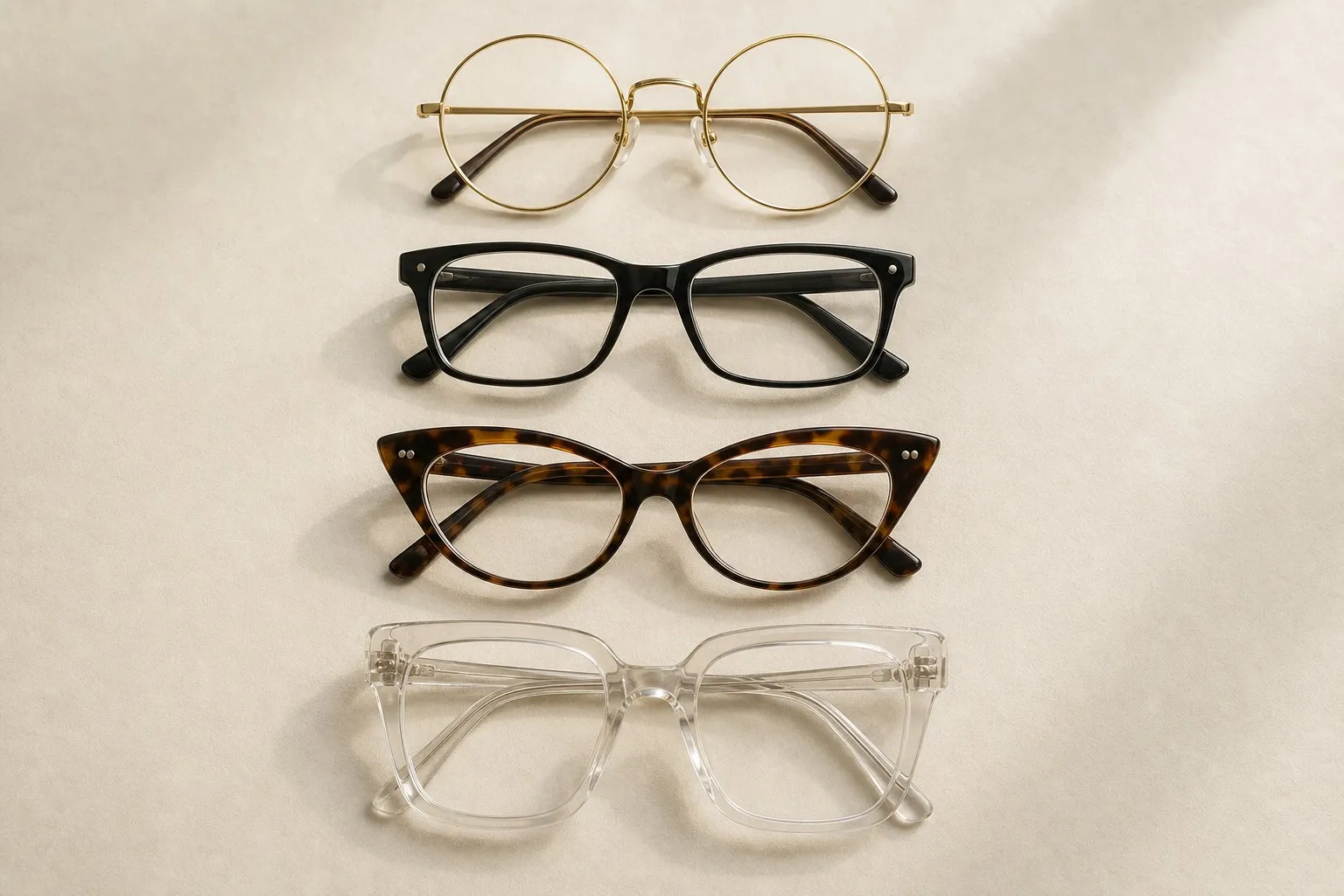
Frames follow the same principle. Keep the top light and let the bottom of the frame do the work. Three checks cover most choices.
- Width. The front of the frame should be about as wide as your forehead (A) or a little narrower, never wider. A frame that extends past the temples broadens the top further.
- Top rim. Rimless frames, thin metal and clear or pale acetate keep weight off the brow line. Heavy, decorated or brightly colored top rims do the opposite.
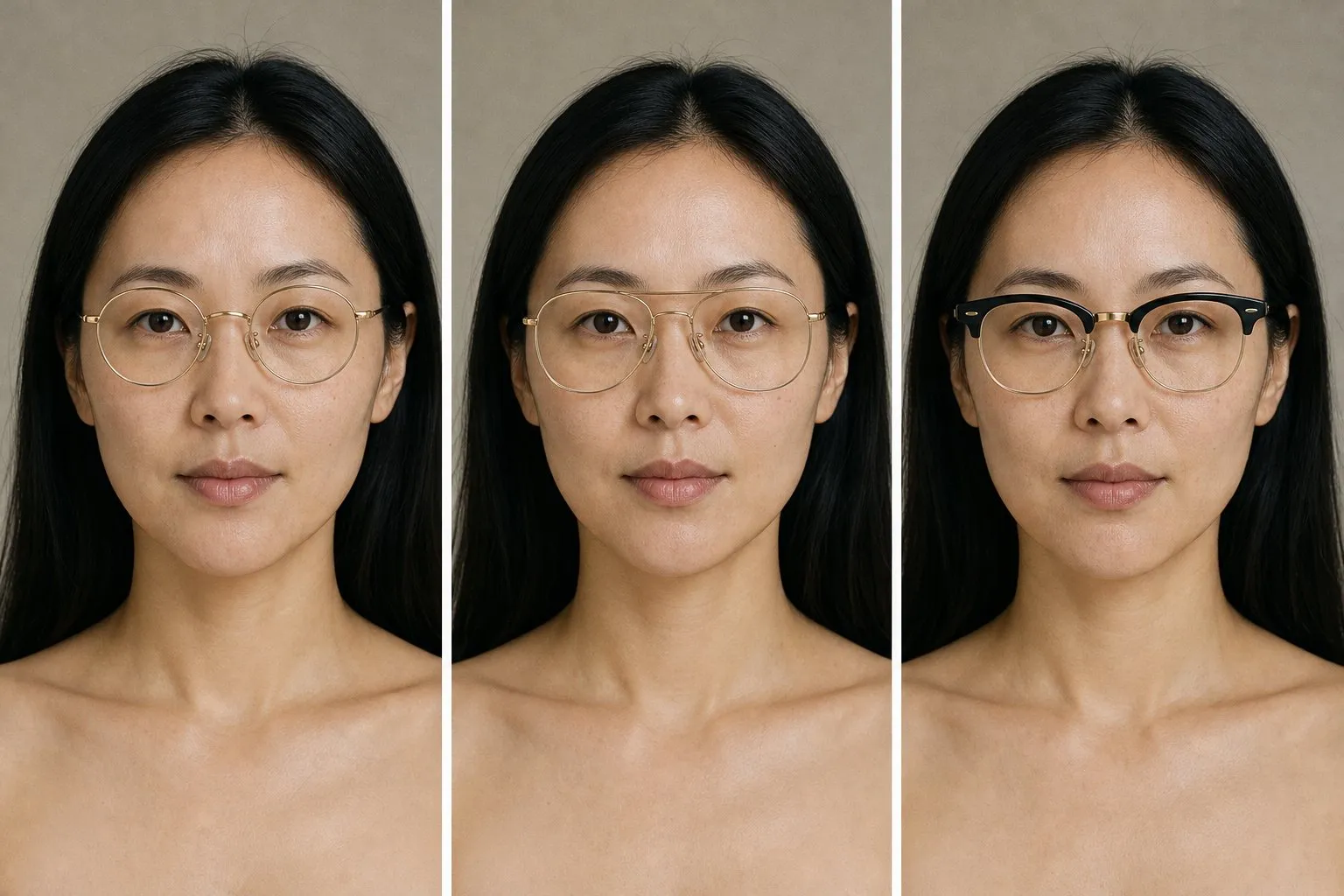
- Shape. Lenses a little deeper at the bottom, as in aviators, pull the eye down toward the chin. Round and oval lenses soften the broad brow line and echo a pointed chin less than sharp angles do.
| Frame | Verdict | Why |
|---|---|---|
| Aviator | Very good | Wider at the bottom, light at the top |
| Round, thin metal | Very good | Soft line, little visual weight |
| Oval acetate | Good | Gentle curves, balanced weight |
| Rimless, or semi-rimless with a thin top bar | Good | Adds almost nothing at the top |
| Soft cat-eye in a light color | Possible | Keep the upsweep subtle |
| Browline or heavy top rim | Avoid | Weight where the face is widest |
| Oversized square | Avoid | Extends the forehead line |
The cat-eye is the frame people ask about most. A soft, low one with a thin rim in a light color can work. A sharp, dark, strongly upswept one adds width exactly where the face is broadest. Frame color is a separate question, because it follows your coloring and has nothing to do with your face shape, and seasonal color analysis covers it.
Sunglasses
Sunglasses work by the same rule, with bigger lenses and so a stronger effect. Aviators, heavier at the bottom, and thin round frames suit a heart face best. A soft cat-eye is possible in a light, thin version. Trapezoid frames (the thick acetate shape that’s wider at the top), shields and oversized styles all put their weight along the brow line, and on this face that’s the widest line there is. Love a big frame? Choose one whose lower half is at least as deep as its top.
Brows, contour and blush
Brows sit across the broad upper third of a heart face, so their shape changes how wide it reads. A soft, fairly low, rounded arch suits it. A high, sharp peak adds emphasis at the widest part. Mapping your own start, peak and tail with a pencil takes two minutes, and the eye shape chart walks you through it.
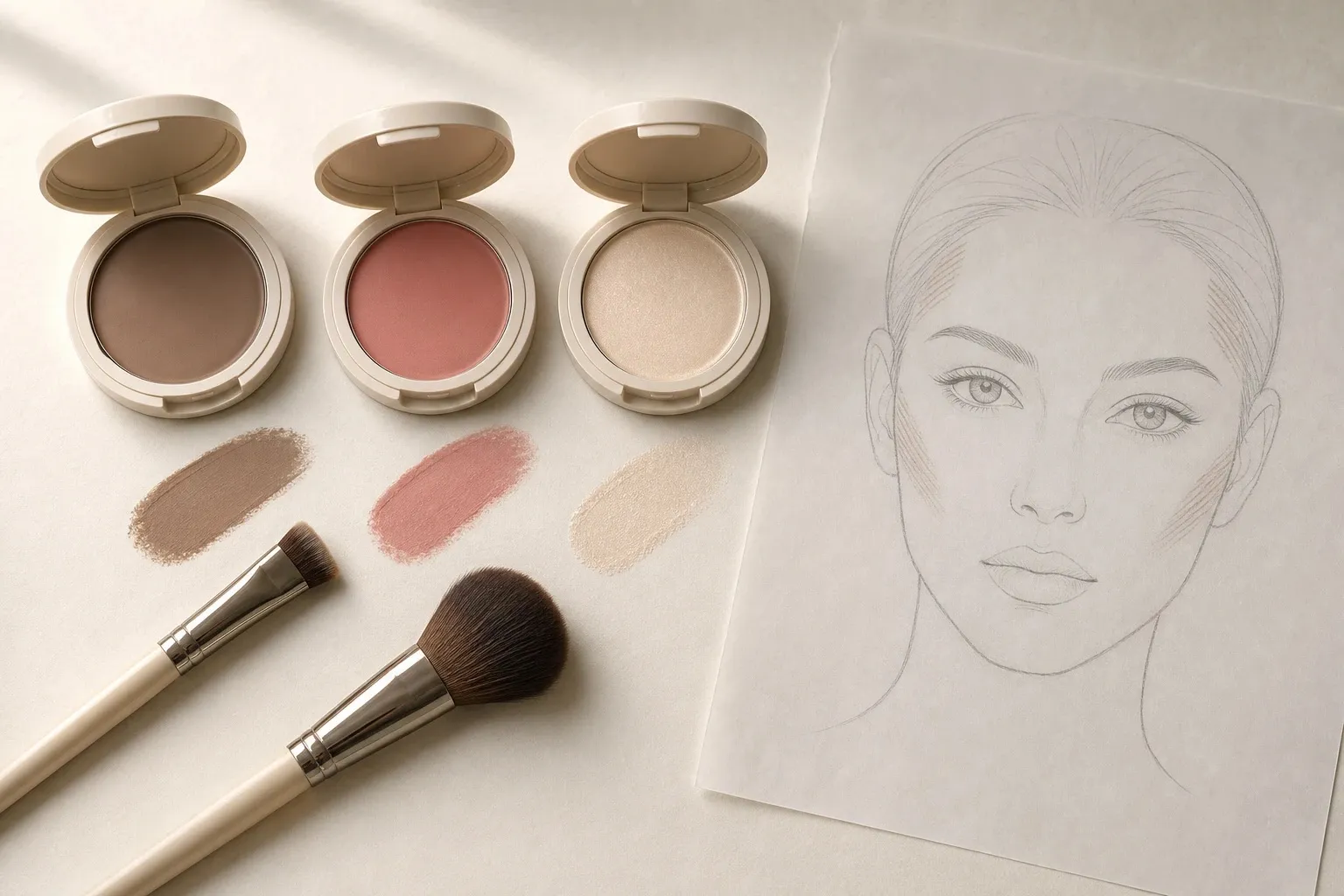
Contour runs on one optical rule. A matte shade a step or two deeper than your skin reads as shadow and recedes, while a lighter shade reads as a plane catching light and comes forward. On a heart face, shade the temples and the outer corners of the forehead and keep the jaw and chin light. Put blush on the cheekbone a little lower than usual and toward the ear, which moves color toward the narrow half of the face. Start the blush no closer to the nose than a line down from the outer edge of the iris, then blend until you can’t see an edge in daylight.
Earrings, necklines, hats and scarves
Anything that frames the lower face can add the width a heart face lacks there, and anything you wear high can add to the width it already has.
| Item | Choose | Go easy on |
|---|---|---|
| Earrings | Teardrops, chandeliers and triangles that are wider at the bottom and end near the jaw; large hoops | Wide, heavy studs high on the ear |
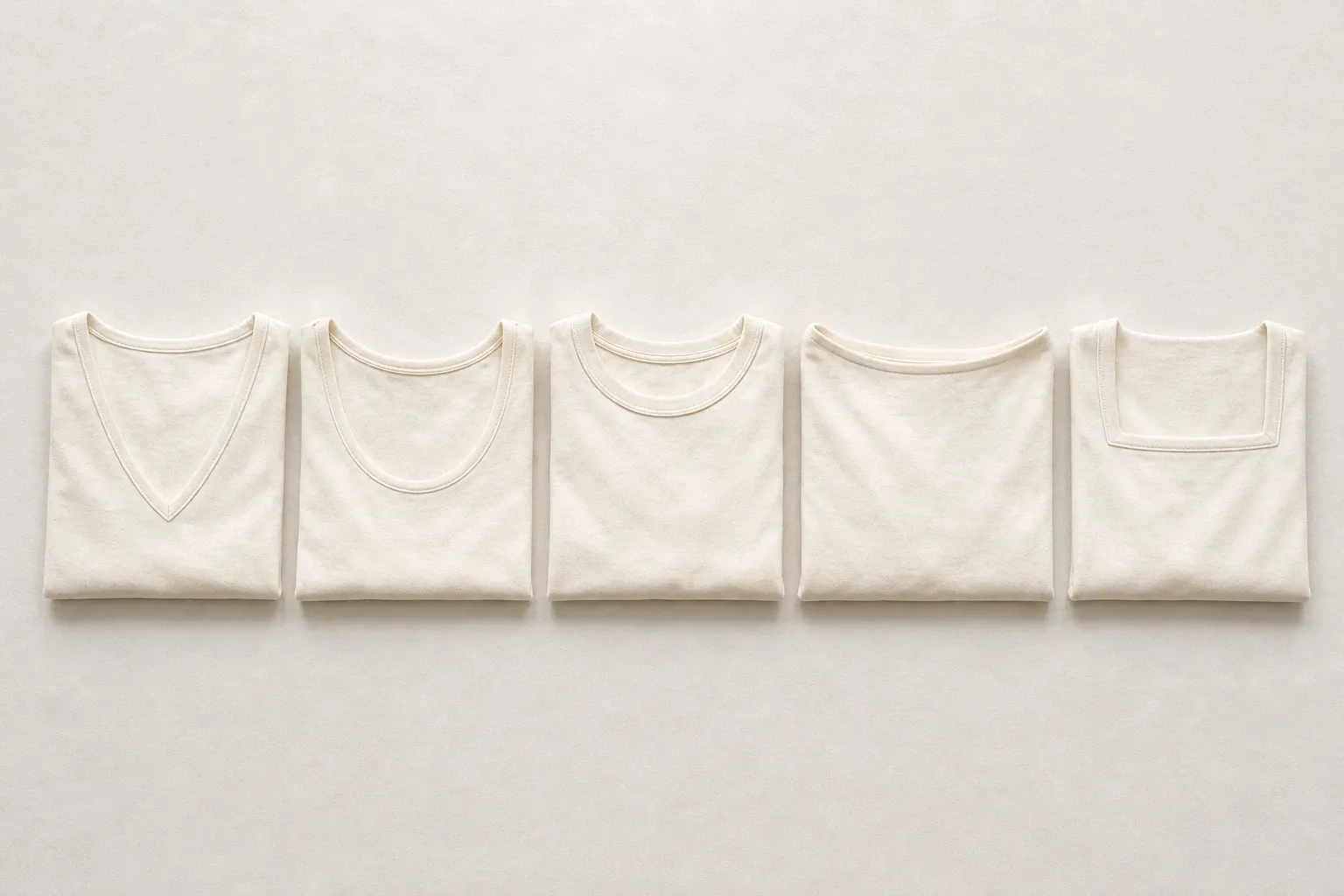
| Necklines | Boat necks, which add width low; scoops and sweethearts, which echo the soft chin; turtlenecks | A deep, narrow V if you want balance, since it repeats the point of the chin |
| Hats | A medium brim close to your face width; a fedora; a cap or bucket hat pulled a little down over the forehead corners; a beret worn tilted | Very wide brims, which extend the widest part |
| Scarves | Soft volume at the neck and chin: a loose cowl or a loop | Long, skinny ends that add nothing below the chin |
Large hoops are widest at their middle, which usually lands between the cheek and the jaw, so they suit a heart face better than most other shapes. Neck length can overrule the face table. On a short neck, open necklines and scarves draped with the ends hanging down keep the neck visible, whatever the face suggests.
Does a heart-shaped face change with age?
Partly. Bone changes slowly, and a ruler held across the forehead, the cheekbones and the jaw angles may barely move over the years. The soft tissue over the bone moves more. Facial fat sits in separate compartments rather than one even layer, and the jowl compartment is the lowest of them, as Rohrich and Pessa showed in a 2007 anatomy study. When jowls form, they fill the outline exactly where a heart face is narrowest. So the face can read closer to oval, or squarer, in the mirror while it still measures much the same.
Two habits keep the numbers honest. Measure the length from where your hairline used to be. If the hair at the temples has thinned, measure the forehead along the bone where it’s widest and ignore where the hair begins, because a receding temple makes a forehead look narrower without changing its width. Then compare ratios rather than raw numbers every few years.
If your jaw line has softened, move the fullness that once sat at the chin a little lower, to the collarbones, or blur the line with soft layers that start near the cheekbones. A blunt hem ending exactly on a softened jaw draws a line across it. If your chin has stayed narrow, the chin-length advice above still holds.