Undertone is the hue under the surface of your skin. Cool undertones have pink, red or blue in them; warm undertones have peach, golden or yellow; neutral sits in between. Your skin tone, how light or deep you are, can change with a tan. Your undertone does not.
Do every test in daylight, near a window, without makeup and with your hair pulled back.
Test 1: the metals
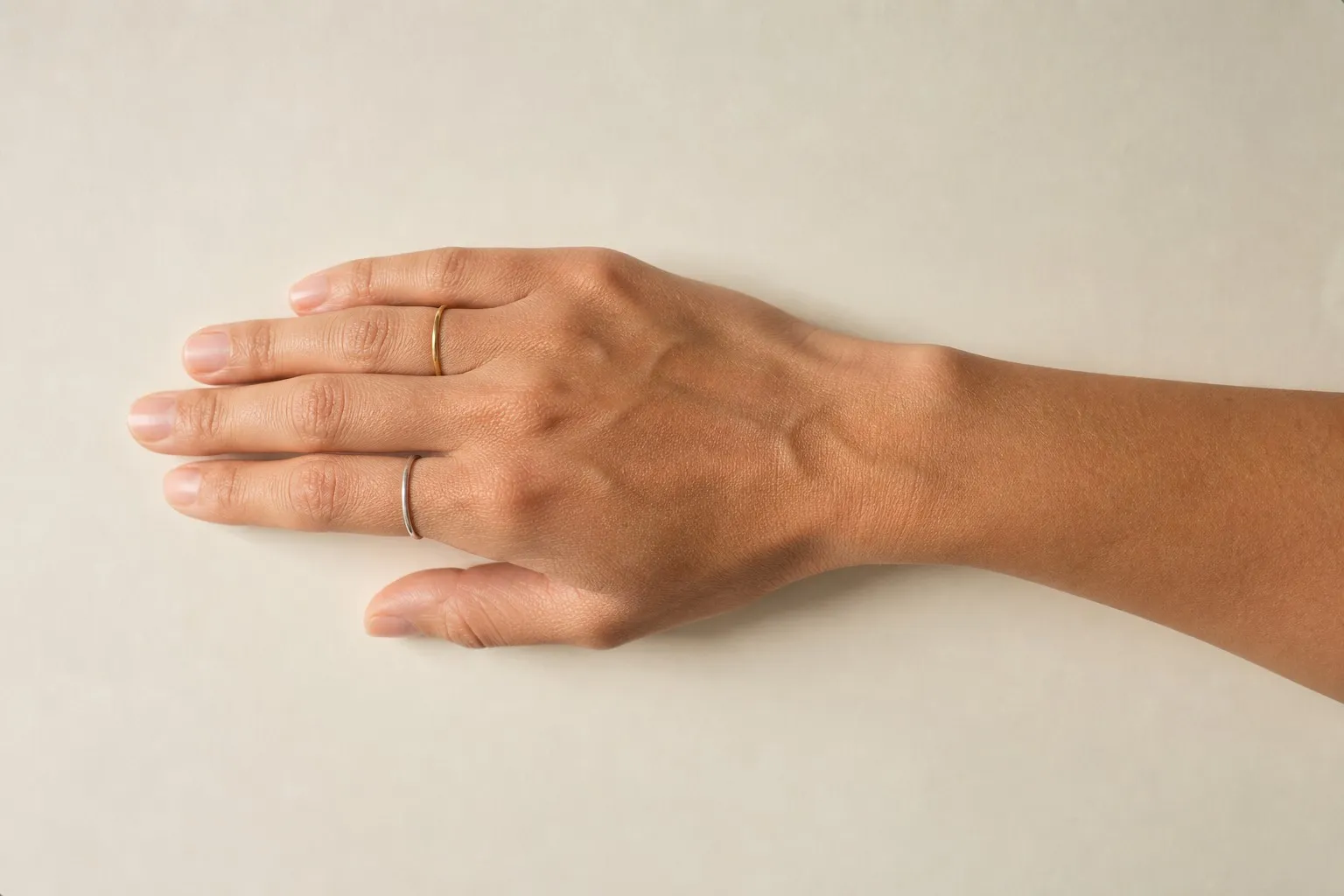
Hold a gold piece and a silver piece against the inside of your wrist or your neck, one at a time. Look at your skin, not the jewelry.
- Silver makes the skin look clearer and brighter: cool.
- Gold makes the skin look warm and healthy, silver makes it look grey: warm.
- Both look fine: neutral.
This is the most reliable test of the four. More on choosing between them in gold or silver.
Test 2: white vs cream
Hold a pure white cloth under your chin, then an ivory or cream one. Pure white suits cool and clear coloring; it can look harsh on warm skin. Cream flatters warm skin and can make cool skin look yellowish.
Test 3: the veins
Look at the veins on your inner wrist. Blue or purple suggests cool; green or olive suggests warm; a mix suggests neutral. It is the best-known test and the least reliable. Veins look blue because of how skin absorbs and scatters light, and the yellowness of the skin on top shifts how green they look. Use it as a tie-breaker, never on its own.
Test 4: your natural coloring
Hair with golden, copper or red glints in sunlight and eyes with gold flecks point to warm. Ashy hair and grey or icy blue eyes point to cool.
If two tests agree and two don’t, believe the metals and the white cloth.
What about the sun test?
“Do you burn or tan?” appears in many undertone quizzes, but it mostly measures how much melanin your skin has: your depth, not your undertone. Dermatologists sort sun reaction into Fitzpatrick skin types I to VI. It is useful for judging depth in color analysis, not temperature.
What the result changes
| Undertone | Metals | Whites | Easy colors |
|---|---|---|---|
| Cool | Silver, platinum, white gold | Pure white | Blue-reds, berry, navy, emerald |
| Warm | Gold, brass, copper | Cream, ivory | Coral, rust, olive, camel |
| Neutral | Both, or mixed | Soft white | Muted teal, dusty rose, jade |
Undertone is one of three axes in seasonal color analysis. The Color Season Quiz uses these same tests, then adds depth and clarity.