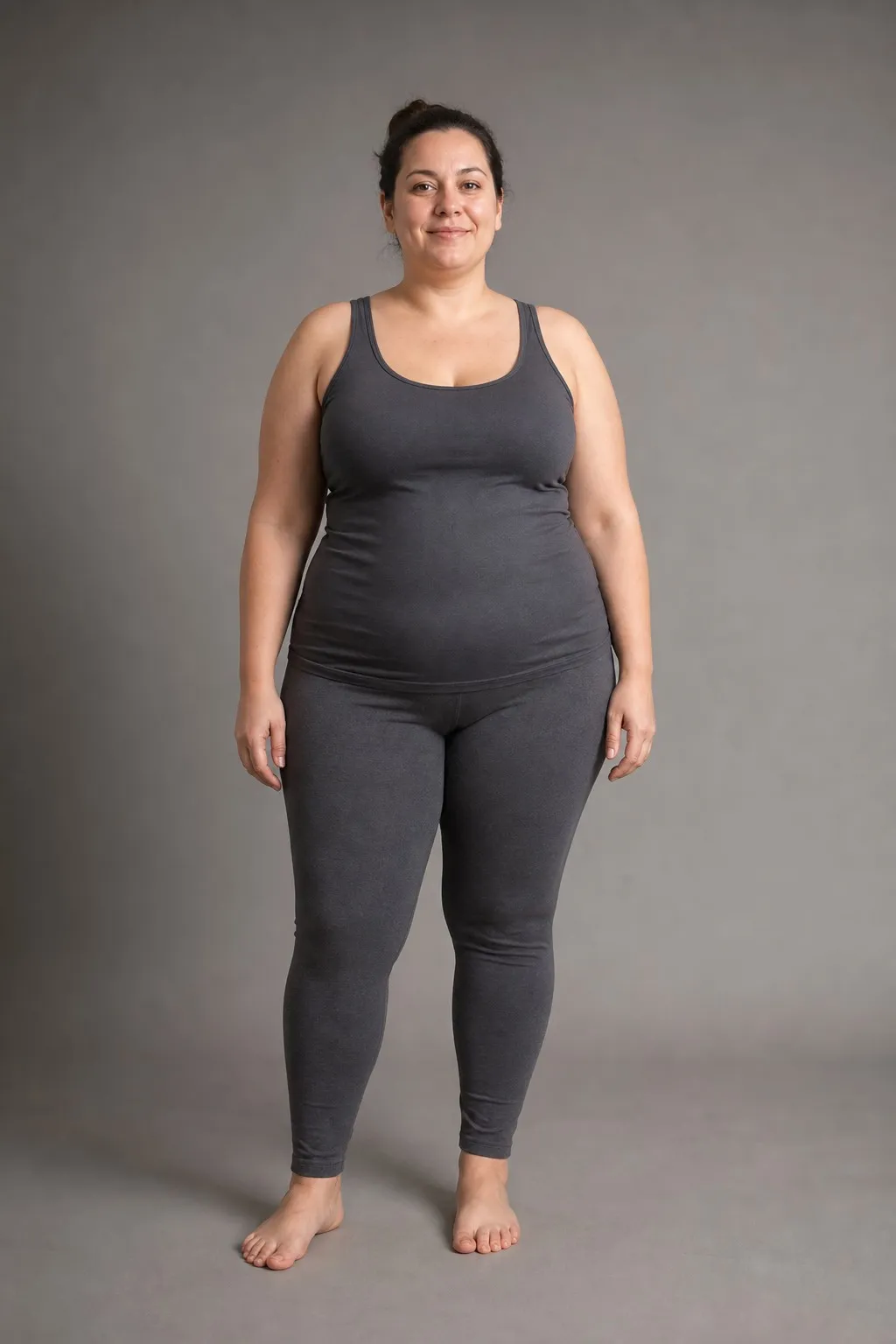
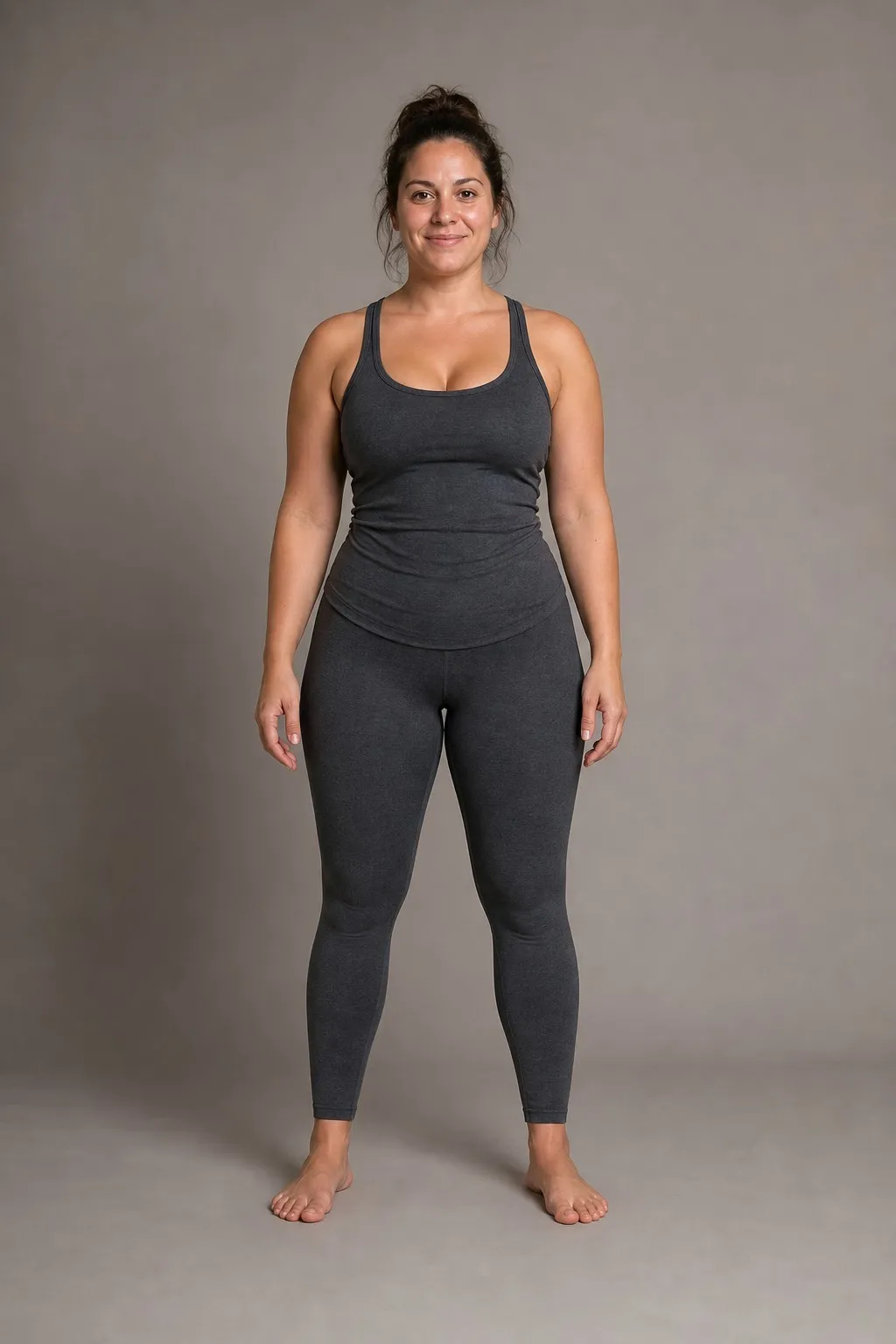
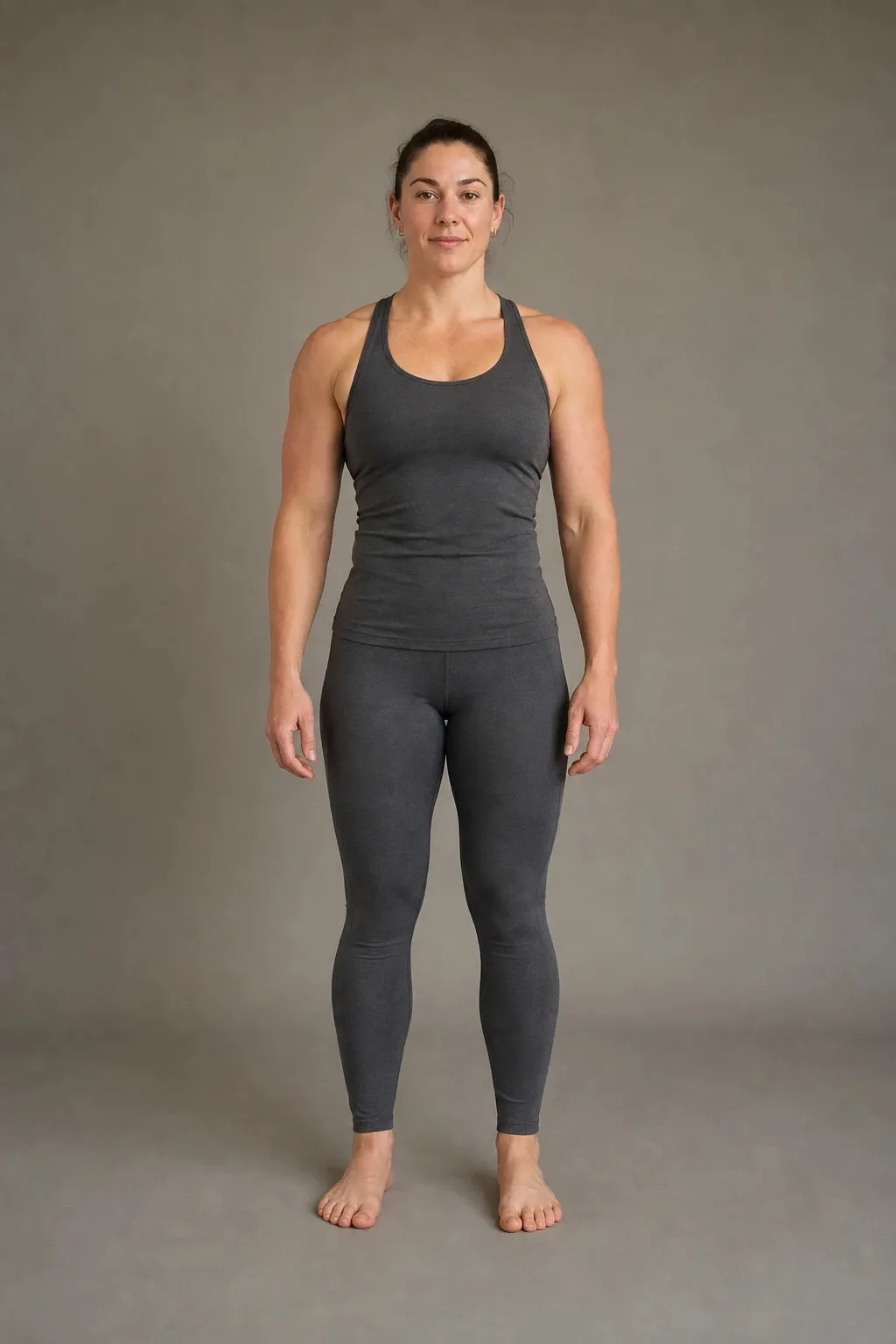
A rectangle body shape has bust and hips of about the same size and a waist that curves in only a little, so the torso runs fairly straight from shoulder to hip. The calculator’s reference point is a bust equal to the hips and a waist around 82 percent of them. You can dress it two ways. Either follow the straight line with clean, tailored pieces, or build a waist with structure, such as a seam, a dart or a belt on a coat that holds its shape. The one approach that rarely works is cinching soft fabric.
Body shapes are a fitting framework, not a measure of health or size. The calculator compares three measurements with five reference points, and most bodies sit between two.
Not sure yet? Three tape measurements settle it. The Body Shape Calculator divides them for you and shows how close each neighboring shape comes.
How to tell if you have a rectangle body shape
Run a soft tape around the fullest bust, the natural waist and the fullest hips, level and snug, reading the waist after a normal breath out. Divide bust by hips, then waist by hips, and compare both numbers with the reference points:
| Body shape | Bust : hips | Waist : hips |
|---|---|---|
| Hourglass | 1.00 | 0.70 |
| Pear | 0.88 | 0.74 |
| Rectangle | 1.00 | 0.82 |
| Inverted triangle | 1.12 | 0.80 |
| Apple | 1.02 | 0.95 |
The rectangle row is the strictest in the table. Its bust spread is 0.05 and its waist spread 0.06, the narrowest waist spread of the five. That puts the window where it still scores well at about 0.95 to 1.05 on the bust ratio and about 0.76 to 0.88 on the waist, and a rectangle needs balance on both counts at once.
It’s also the middle of the map. Place the five reference points on two axes and the rectangle sits in the center. Hourglass is below it on the waist axis and apple above it, with inverted triangle to one side with a larger bust and pear to the other with fuller hips. Every other shape is one step away, which is why a rectangle’s runner-up can point in any direction.
Here’s a worked example in inches: bust 35, waist 29, hips 36. Bust divided by hips is 0.97 and waist divided by hips 0.81, both inside the rectangle window. The calculator scores it 91 percent rectangle, and the other four bunch together behind it at hourglass 59, pear 57, inverted triangle 55 and apple 54. A clear rectangle often reads like this, with one high score and four similar ones, because it sits at a similar distance from each neighbor.
The shoulder check never moves the rectangle score. Answering “wider” lifts only the inverted triangle. At 36, 30 and 36 inches the result is 99 percent rectangle either way, while the inverted triangle rises from 59 to 71. Your shoulders still matter for necklines and jackets, as the sections below show. They just don’t change the label.
Rectangle, hourglass or apple?
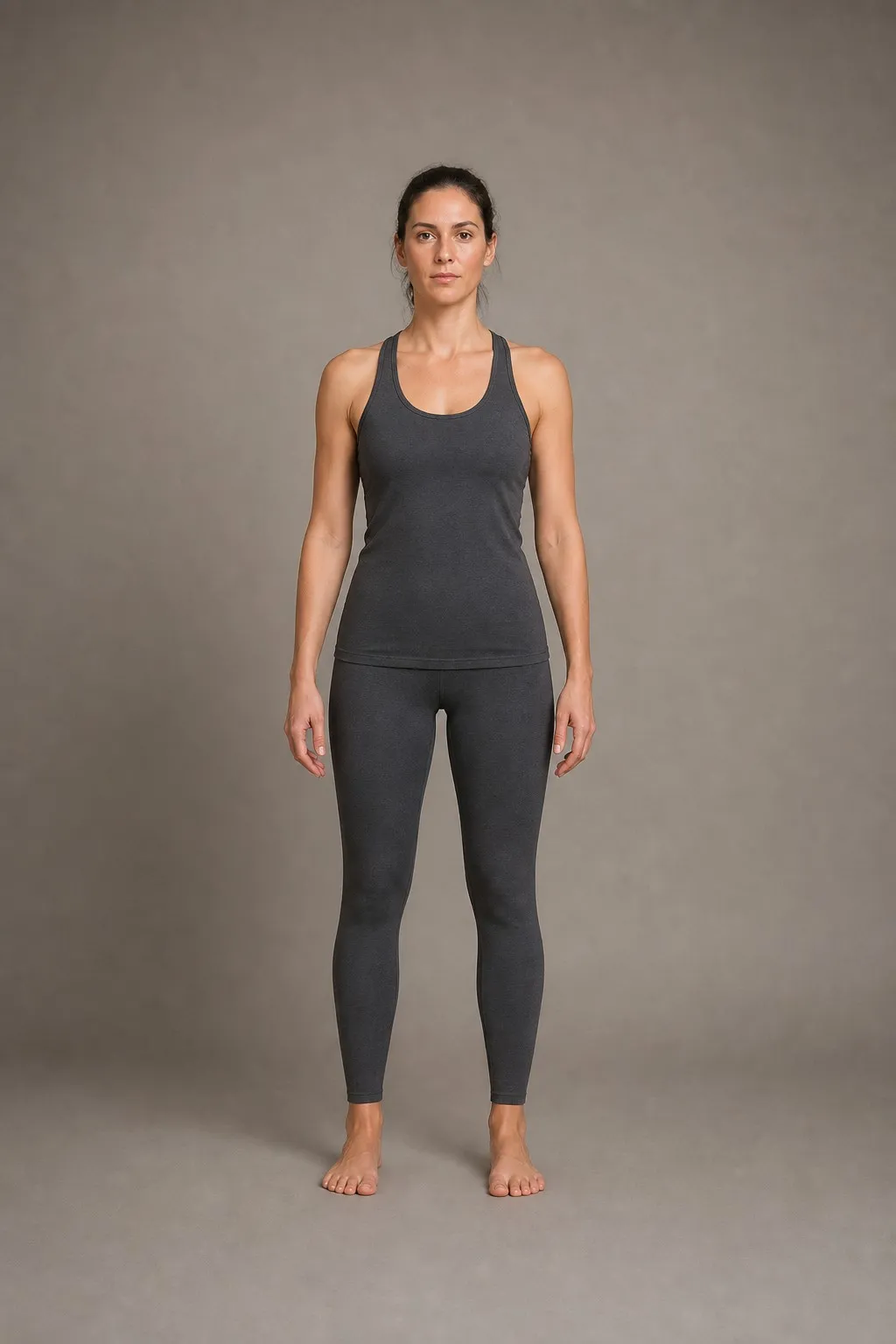
The rectangle’s two most common neighbors sit on the same axis. Hourglass, rectangle and apple all have bust and hips of about the same size, and only the waist moves. So if your bust ratio is close to 1.00, one number places you, and that’s waist divided by hips.
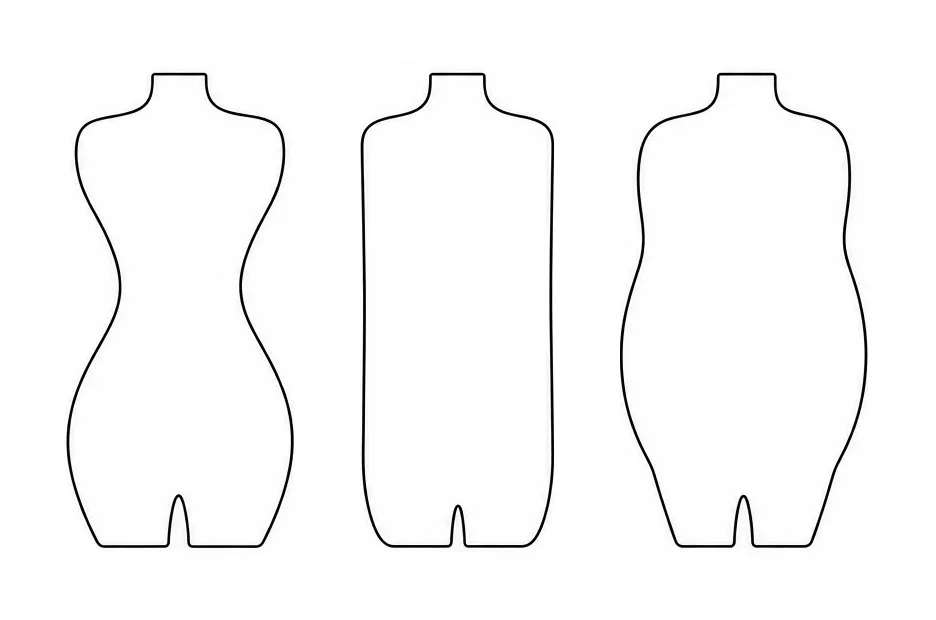
Here is the whole axis with bust and hips at 100 cm, so the waist in centimeters reads directly as the ratio:
| Waist | Waist : hips | Calculator result |
|---|---|---|
| 70 cm | 0.70 | Hourglass 100, rectangle 57 |
| 74 cm | 0.74 | Hourglass 92, rectangle 71 |
| 76 cm | 0.76 | Hourglass 85, rectangle 80 |
| 78 cm | 0.78 | Rectangle 90, hourglass 76 |
| 82 cm | 0.82 | Rectangle 100 |
| 85 cm | 0.85 | Rectangle 94, apple 72 |
| 87 cm | 0.87 | Rectangle 85, apple 79 |
| 88 cm | 0.88 | Apple 83, rectangle 80 |
| 90 cm | 0.90 | Apple 90, rectangle 71 |
With bust and hips equal, the rectangle leads for any waist from about 77 to 87 percent of the hips. Near either edge the result page adds a note that you’re close to the neighbor too, and it’s worth reading both sets of advice.
At the hourglass edge, your clothes can break the tie. If jeans cut straight through the hip fit your waist without a gap at the back, you’re dressing a rectangle. If waistbands stand away at the back, or button shirts that fit the waist pull at the bust, your waist is more defined than the rectangle reference, and the hourglass body shape guide is the better fit. At the apple edge, the waist does the same job from the other side, and the apple body shape guide works through that tie with its own checks.
One neighbor sits off this axis. Once the bust passes roughly 1.05 times the hips, the result tips toward inverted triangle. Broad shoulders alone don’t get you there, since the shoulder answer leaves the rectangle score where it was. The inverted triangle body shape guide has the worked examples.
Shape, not size or age
Rectangle describes a proportion, and it says nothing about your size. Measurements of 36, 30 and 36 inches and of 48, 40 and 48 are the same ratios scaled up, and the calculator gives both exactly the same score, 99 percent rectangle. It isn’t a missing curve either. Much of the advice written for this shape says “create curves”, which quietly assumes the hourglass is the goal. Here, building a waist is one option out of two, and nothing about a straight figure needs repairing.
What can change a rectangle is time. The Menopause Society describes midlife weight gain as driven mainly by aging, while menopause itself moves fat storage toward the abdomen. That raises the waist ratio, and the rectangle reference sits only a few hundredths below the apple edge. Bust 36, waist 30 and hips 36 inches reads 99 percent rectangle, while bust 37, waist 34 and hips 37 reads 95 percent apple. Re-measure when your waistbands start fitting differently, and dress the body you see in the mirror, even if your closet was bought for a different one. Questions about waist size and health belong with a clinician. This page only covers proportion and fit.
Follow the line or build a waist
The eye reads a waist by comparison, so it looks small only against wider shoulders and hips. On a rectangle there’s little contrast to start with. You either dress the straight line as it is or build the contrast with garments.
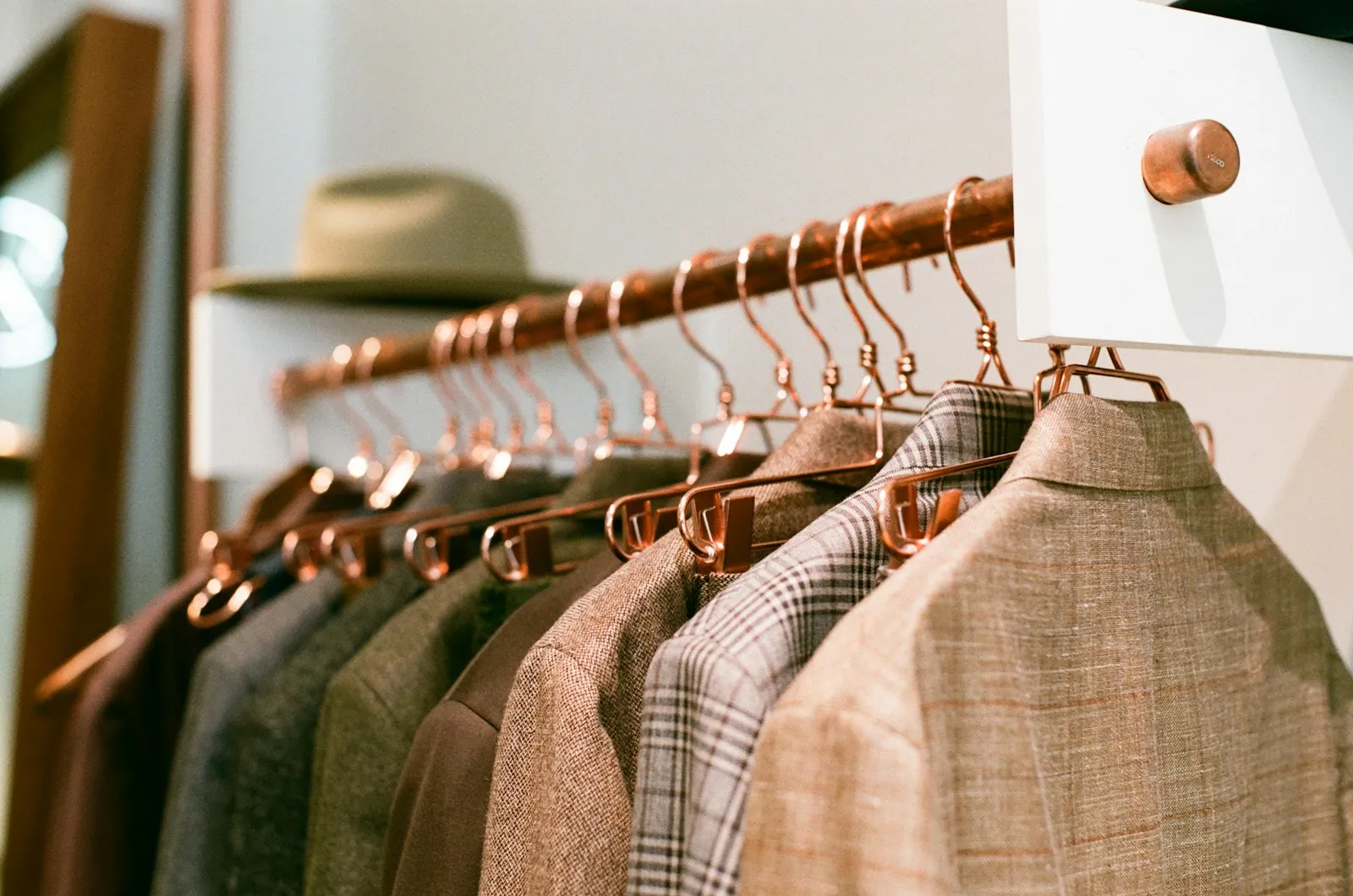
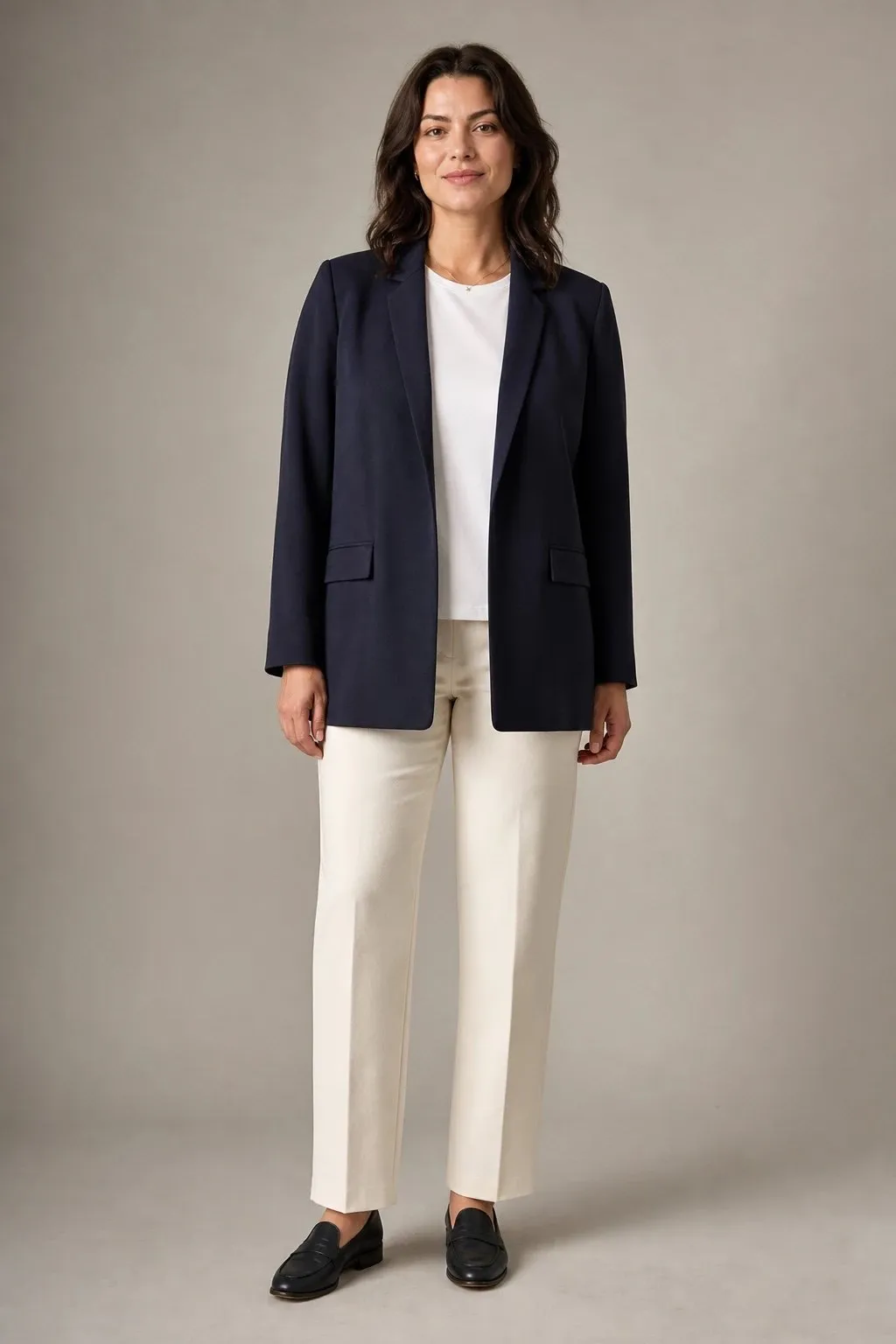
Follow the line. Tailored trousers, straight-leg jeans, shift and column dresses, long blazers and crisp shirts sit on a rectangle exactly as they were cut. In solid colors and good fabric this looks modern and deliberate, and a straight frame carries bold color blocking well.
Build a waist. Add a little width above and below, then mark the middle with structure: a seam, darts, a jacket nipped at the waist, a belted coat in a firm fabric, a skirt with some flare. Width away from the waist counts as much as the waist itself, so pockets at the hip, a short peplum or a flared hem all help.
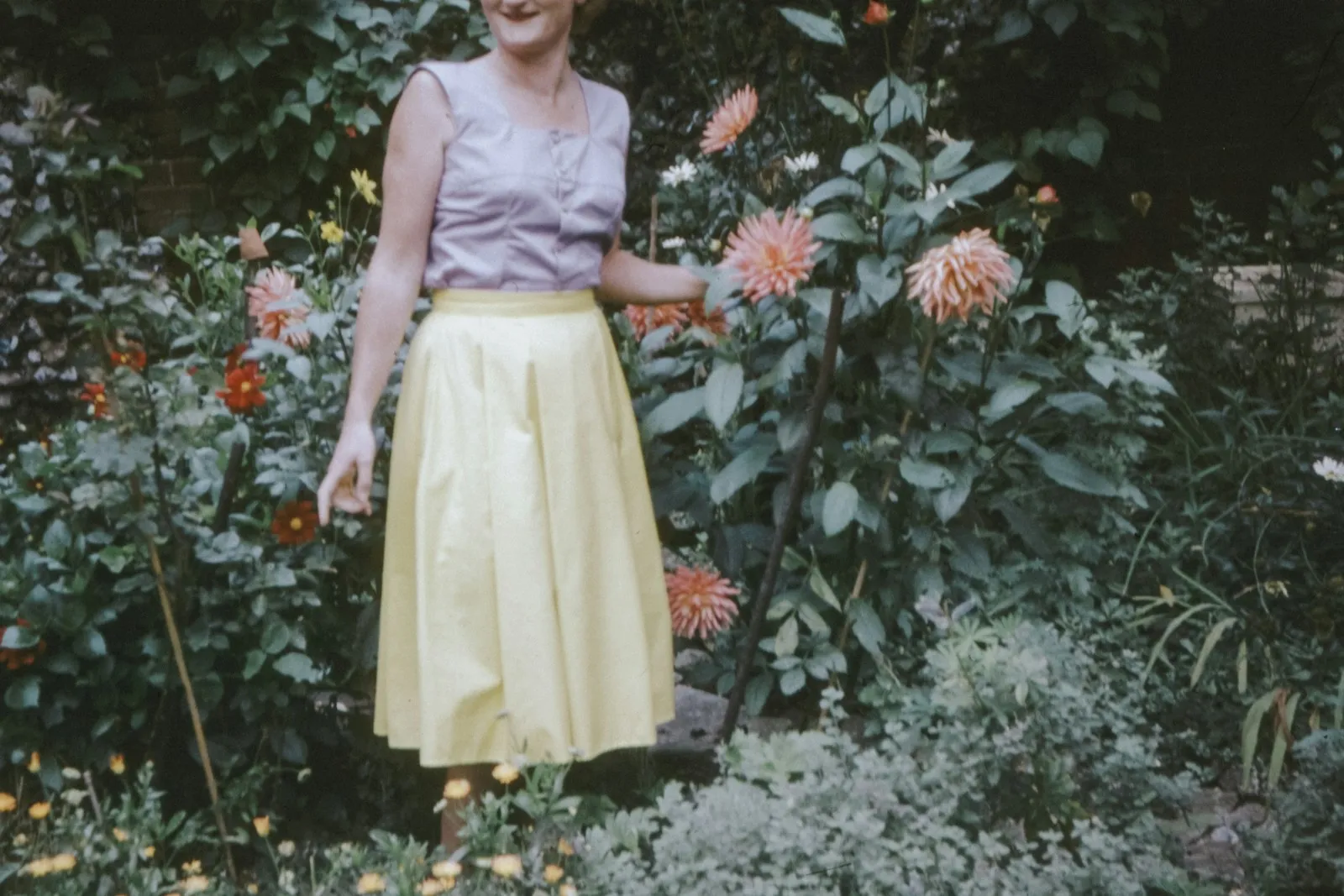
Structure creates shape. Stretch only follows it.
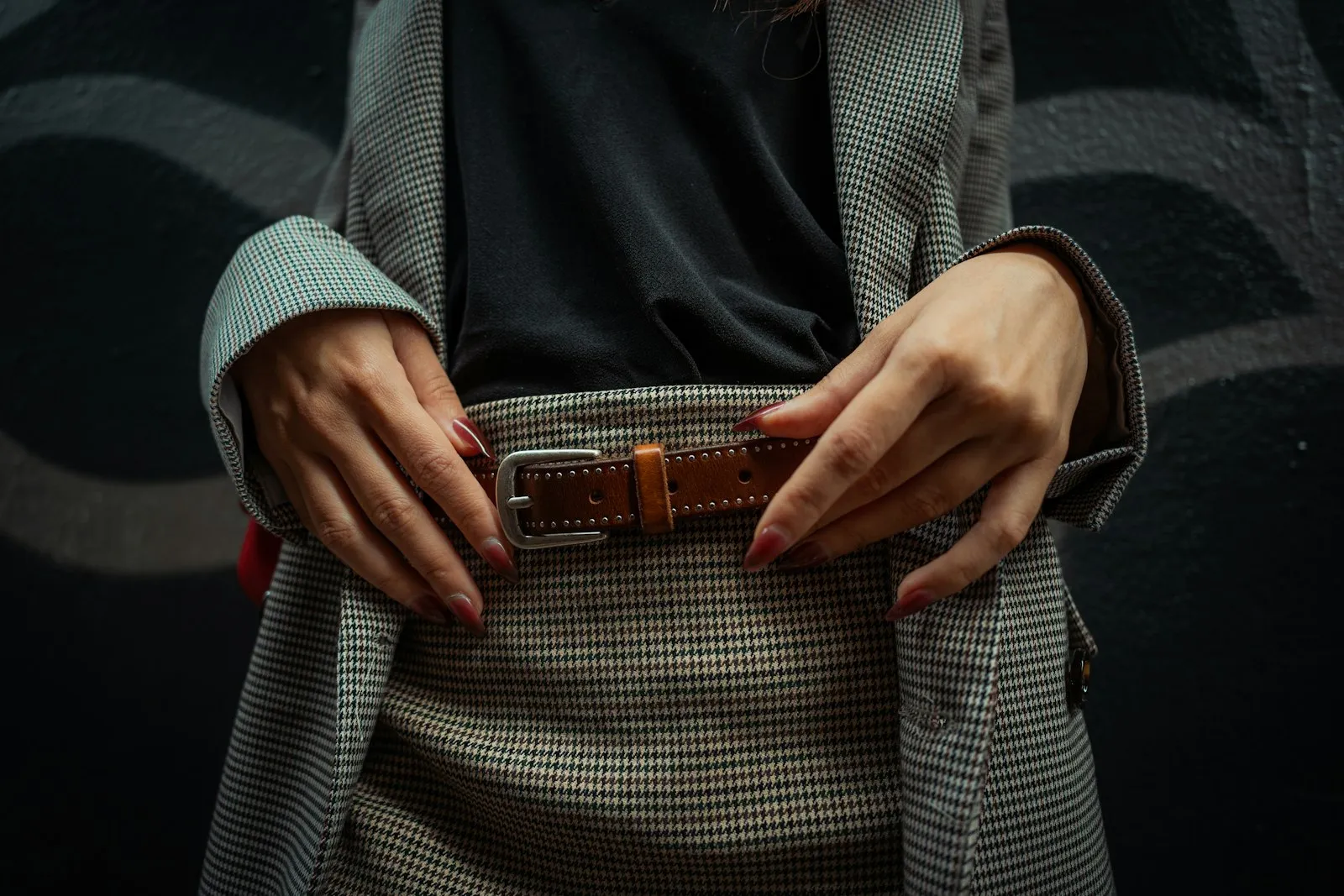
That’s why the belt is the weakest tool here. Pulled around a soft knit, it gathers fabric above and below the buckle and doesn’t draw a waist at all. A tailored seam does the job on its own, and a belt works best on a garment that already holds its shape.
Tops, necklines and sleeves
Necklines that add width at the shoulders make the waist below look narrower by comparison. Square and boat necklines do this best. A wrap top in a fabric with some body adds a diagonal and a waist in one piece. V-necks and scoops are neutral on this shape, so let your face and bust choose between them.
Sleeves can add the same width. A structured or slightly puffed shoulder widens the top line, which suits the build-a-waist route. If your shoulders are already broad, keep the sleeve plain and let the neckline do the work.
Tucking does a great deal for very little. A shirt or fine knit tucked into a high waistband draws a waist break, while the same knit worn loose keeps the straight line. A peplum top adds shape at the hip, as long as the peplum is short and the fabric structured, because a long, floppy one only adds bulk.
Two things need care. Very clingy jersey shows a straight line plainly, which is fine if that’s the look you want and less so if you’re after curves. Boxy, oversized pieces from neck to hem can swamp the frame, so keep at least one part of the outfit fitted.
Dresses
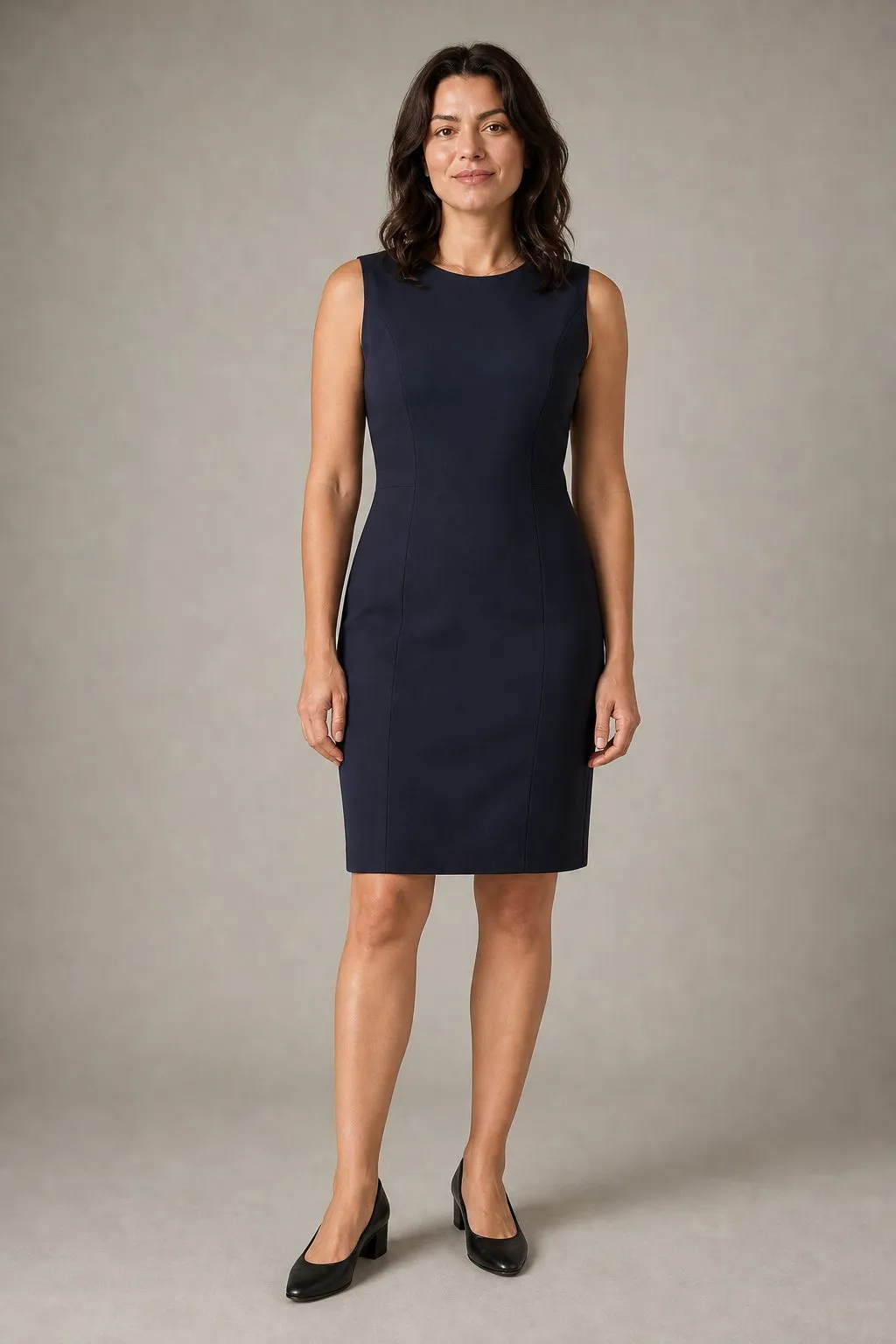
Which dress is best for a rectangle? That depends on the route you’ve picked. Some cuts follow the line, some build a waist, and the fabric decides whether the second kind works.
| Cut | Route | What makes it work |
|---|---|---|
| Shift | Follow the line | Hangs straight from the shoulders and bust |
| Column or slip | Follow the line | Falls cleanly on a straight frame; a bias cut skims |
| Drop waist | Follow the line | A seam at the high hip and fullness below suit a torso without a deep waist |
| Sheath with darts or seams | Build a waist | The seams draw a waist the body does not insist on |
| Wrap | Build a waist | Needs fabric with body; thin jersey tied at the waist only gathers |
| Fit-and-flare | Build a waist | A structured bodice and a flared skirt add width above and below the waist |
| Peplum | Build a waist | A short, structured flare at the hip suggests a waist above it |
| Soft dress with a thin belt | Hardest | The belt gathers fabric instead of shaping it |
Fabric weight decides the second half of the table. Crepe, ponte, poplin and other fabrics with body hold the shape a seam gives them. Thin jersey follows the body, so it shows the straight line you have and can’t draw a new one.
Jeans, trousers and skirts
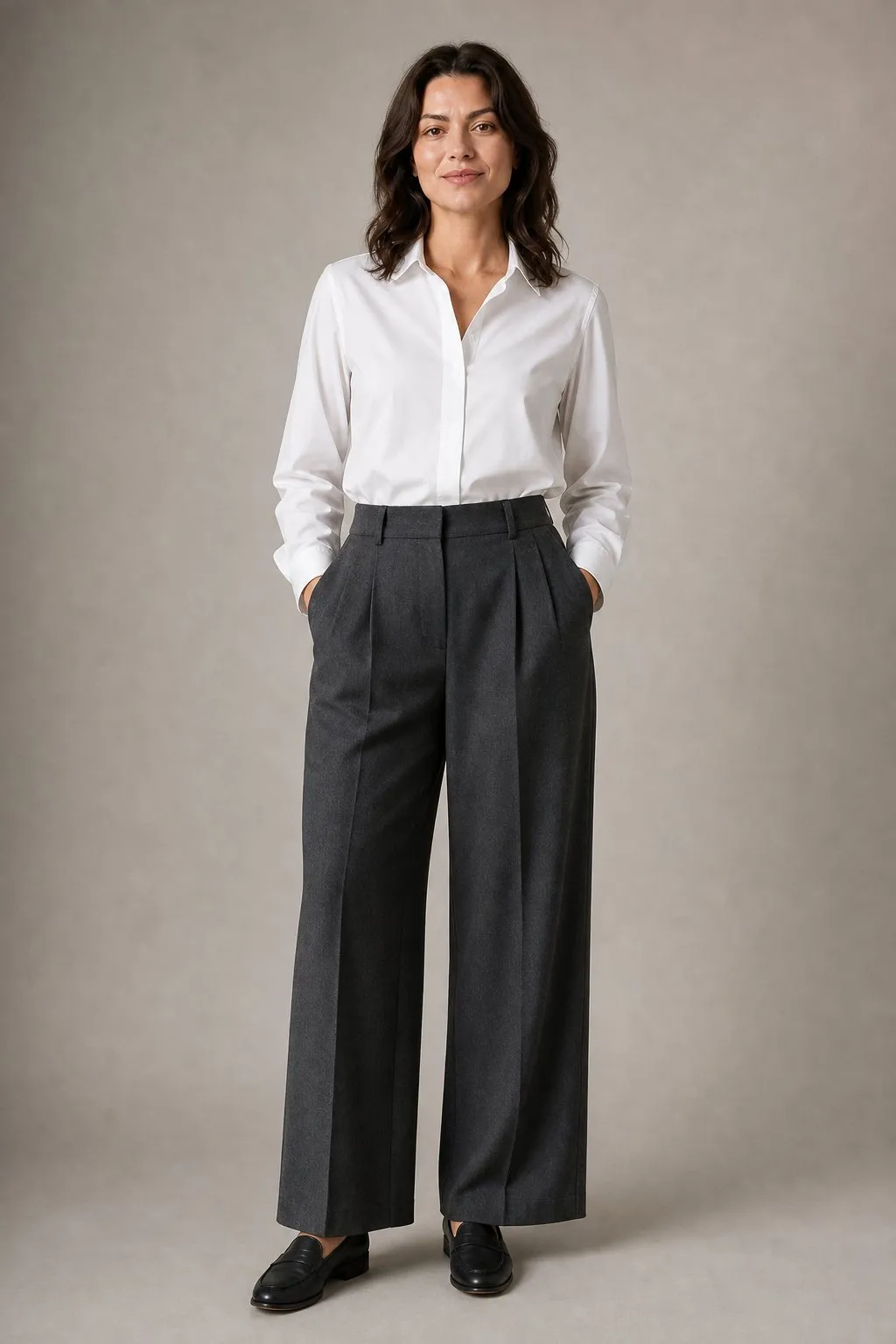
Trousers are the easiest category for a rectangle, because your waist and hips are close in size and most straight cuts fit both at once. Any rise works. Straight, wide and relaxed legs follow the line. High-waisted trousers with front pleats add volume just below the waistband, so the waist above reads more defined. Pocket detail at the hip is welcome, since width there makes the waist look smaller.
In jeans, the one combination to watch is a very low rise with a short top. The waistband sits on the hips and the top stops near it, so the torso reads as one block.
Skirts offer both routes too. A-line, pleated and bias-cut midi skirts bring movement and a little flare at the hem, which adds curve. A wrap skirt adds a waist. A pencil skirt is easy on a straight hip and keeps the line clean.
Jackets, blazers and coats
A tailored, single-breasted jacket with a slight inward shaping at the sides suggests a waist without a belt, because the seam does the work. A straight, longer blazer follows the line instead. Both work, and so does a double-breasted jacket, whose extra width across the chest a balanced frame can carry. Shoulders can be natural or structured.
Where a jacket fastens matters as much as its length. A straight middle looks longest with a lower single button or with the jacket worn open, which keeps a vertical line through the torso.
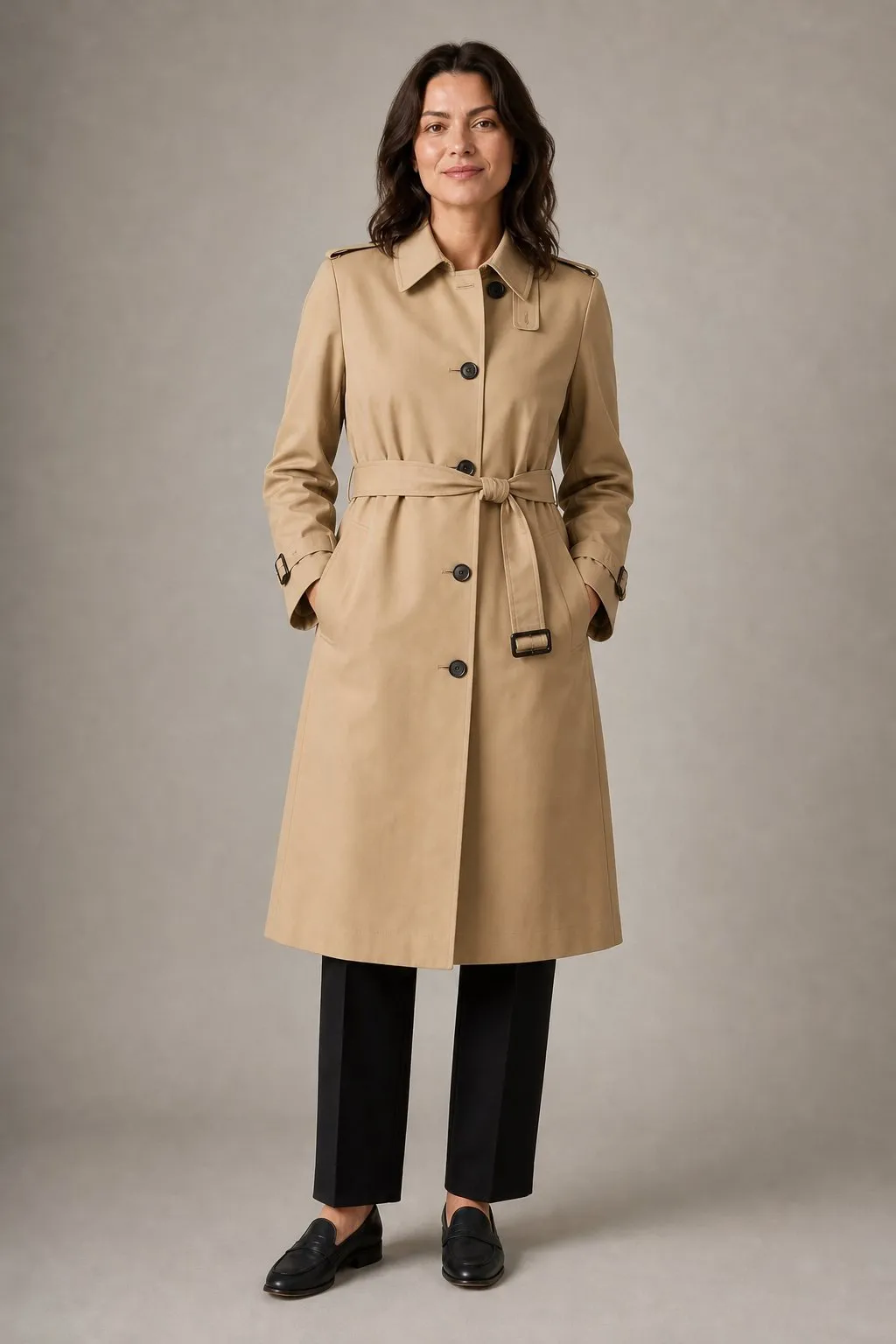
Coats follow the same choice. Pick a straight tailored coat, or a belted one in a fabric that holds its own shape, such as firm wool or gabardine. On a soft, thick or quilted coat a belt just crumples the fabric, so if you want a waist on a puffer, it has to be sewn in.
Swimwear
Swimwear gives you the same two routes as clothes. To add shape, look for ruffles, twists or a triangle top, side ties, a high leg, and cut-outs at the waist, which draw a waist on the suit itself. To follow the line, a clean, sporty one-piece with a scoop back suits a straight frame as it is.
Fit is the other question. A one-piece has a fixed length from shoulder to crotch, and torso length isn’t part of a dress size. A long torso makes it pull, with straps digging in and leg openings riding up, and a short torso makes it bunch at the waist. Adjustable straps, a long-torso size or separates solve it, and separates also let you pair a detailed top with a plain bottom, or the reverse.
Work and occasions
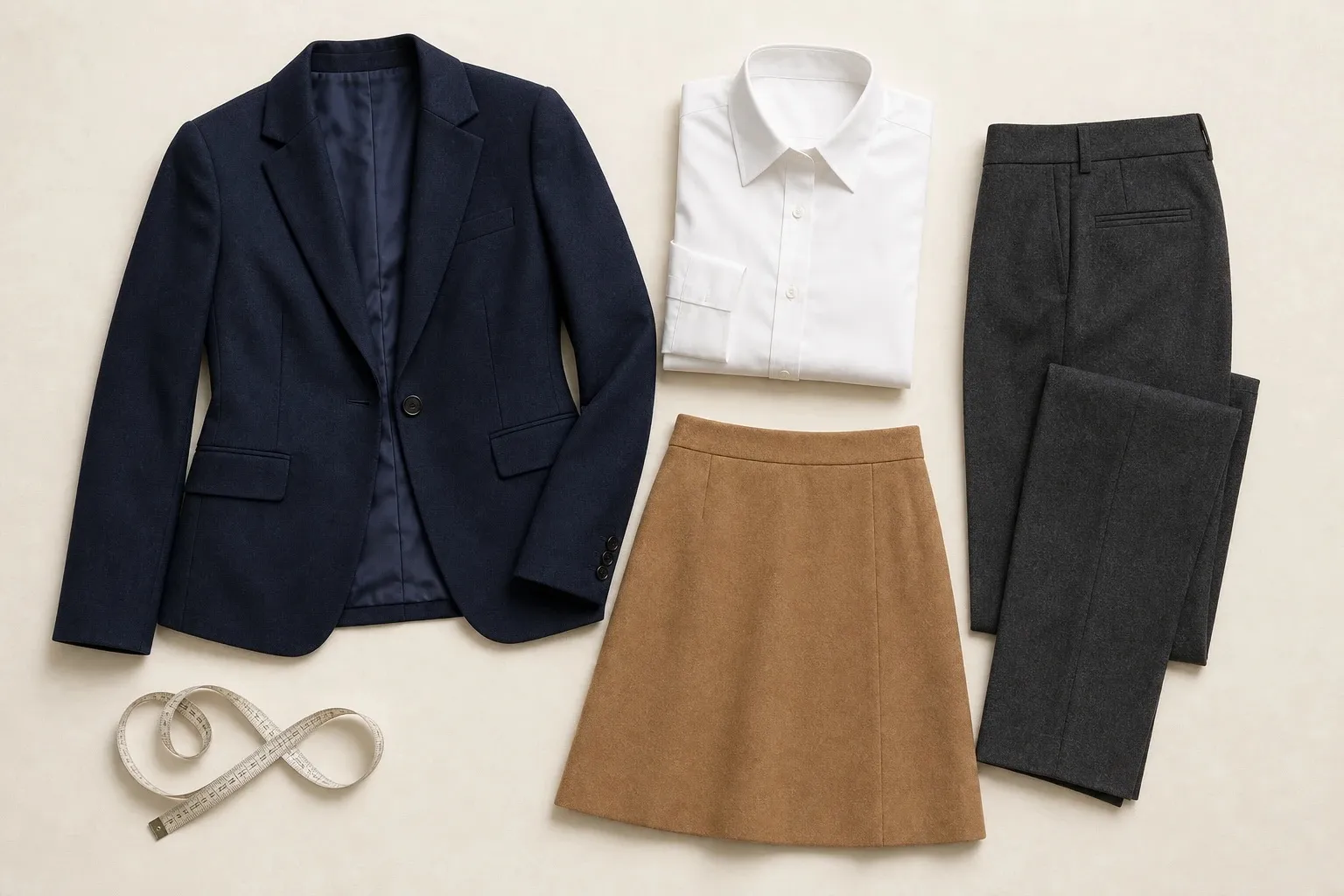
At work, a rectangle can wear almost any blazer. It can be long and straight or shorter with a nipped waist, single- or double-breasted. Pair it with straight or wide trousers in any rise, or with a pencil skirt. A one-button blazer over a white shirt covers both routes. Worn with trousers it follows the line, and over an A-line skirt it adds a little curve.
A wedding guest dress for a rectangle is a column, a slip or a sheath, or a structured waist over a fuller skirt. The one I’d pass on is a soft dress pulled in with a thin belt. Before you buy, sit down in it for a minute. A structured waist shouldn’t dig in, the skirt shouldn’t ride up, and the neckline should stay put when you lean forward. Fabric with a little ease at the waist passes this test far more often than a rigid one cut close to the body.
Color is the other half of an occasion outfit, and it depends on your coloring, whatever your shape. The Color Season Quiz finds your season. In most Western weddings, white and ivory are left to the bride.
Petite, plus size and torso length
Petite. A petite rectangle can skip waist definition entirely and wear straight lines at a slightly shorter length: cropped or waist-length straight jackets, shift or slip dresses just above or just below the knee, straight or tapered trousers at full length. Keep the breaks in an outfit few and quiet. Every horizontal line cuts a short frame into pieces, and a contrast belt, a cropped trouser and an ankle strap together can cut it in three.
Plus size. The ratios behave the same at every size, as the scaled-up example above shows. The practical difference is finding the waist. If you don’t have a clear narrowest point, use the landmark from the World Health Organization protocol. It’s halfway between the bottom rib and the hip bone’s upper edge, read as you finish breathing out. Fabric with weight and recovery, such as ponte, heavier crepe or denim with some body, holds the seams that build a waist, while thin jersey follows every contour instead.
Torso length. Where your waist sits changes where to mark it. If you’re short-waisted, with the waist close under the bust, a belt or seam at the natural waist crowds the bust. A slightly lower button stance on a blazer, or a drop waist, gives the torso room. A long torso does the reverse and suits a higher rise and a waist-length jacket, which shorten the torso and lengthen the leg. Two quick tests for torso and leg length sit under the calculator on the Body Shape Calculator page.